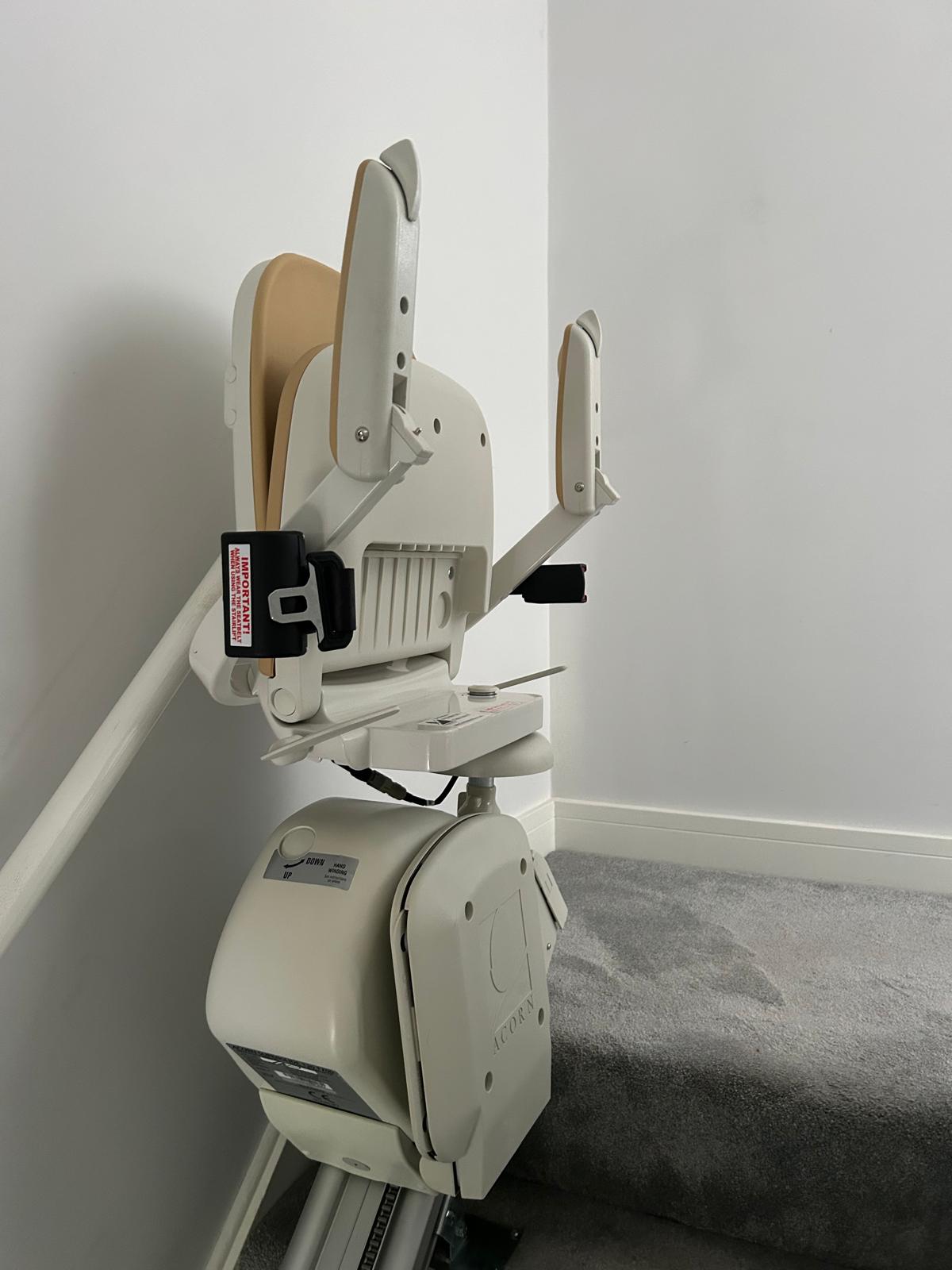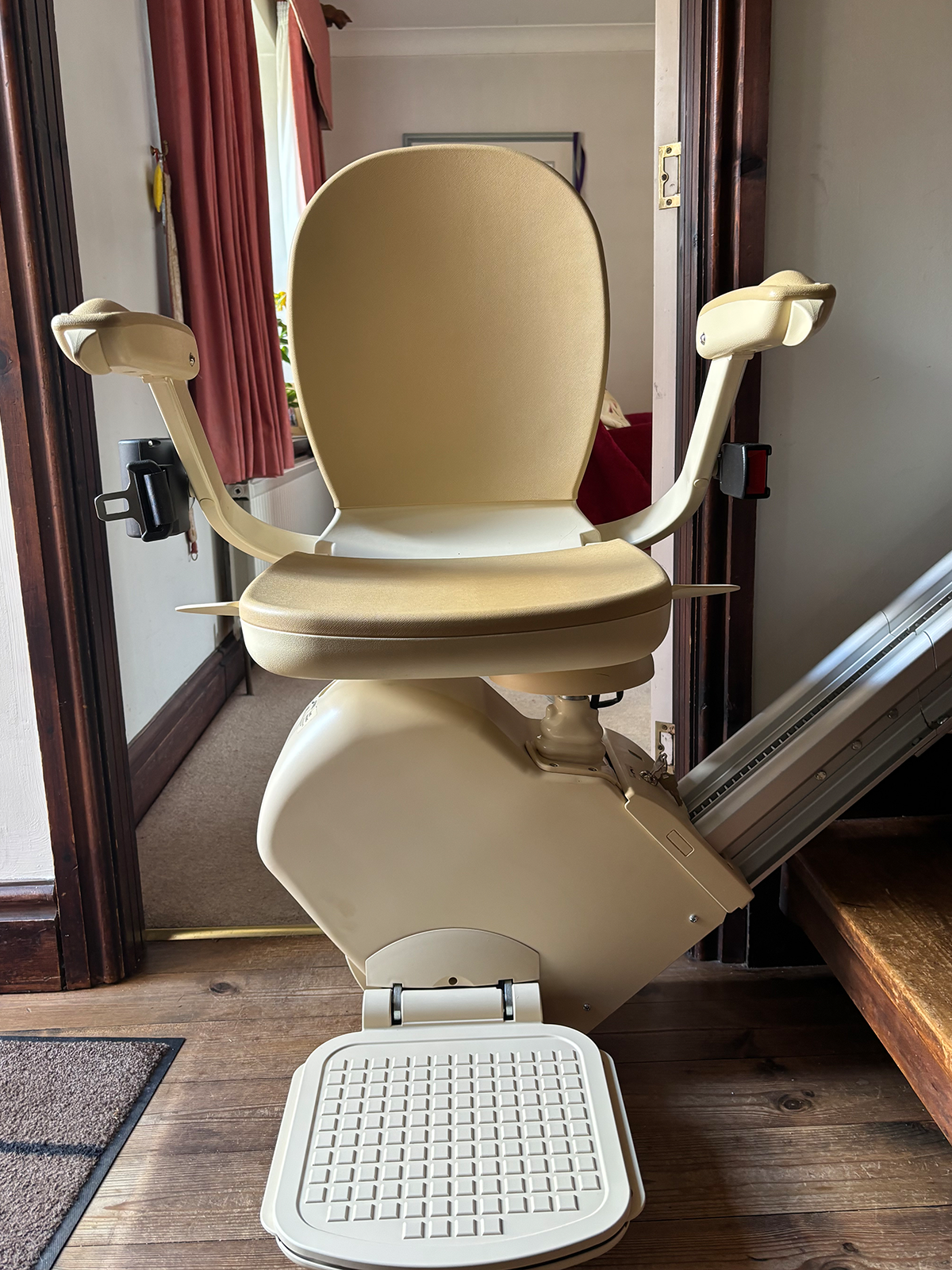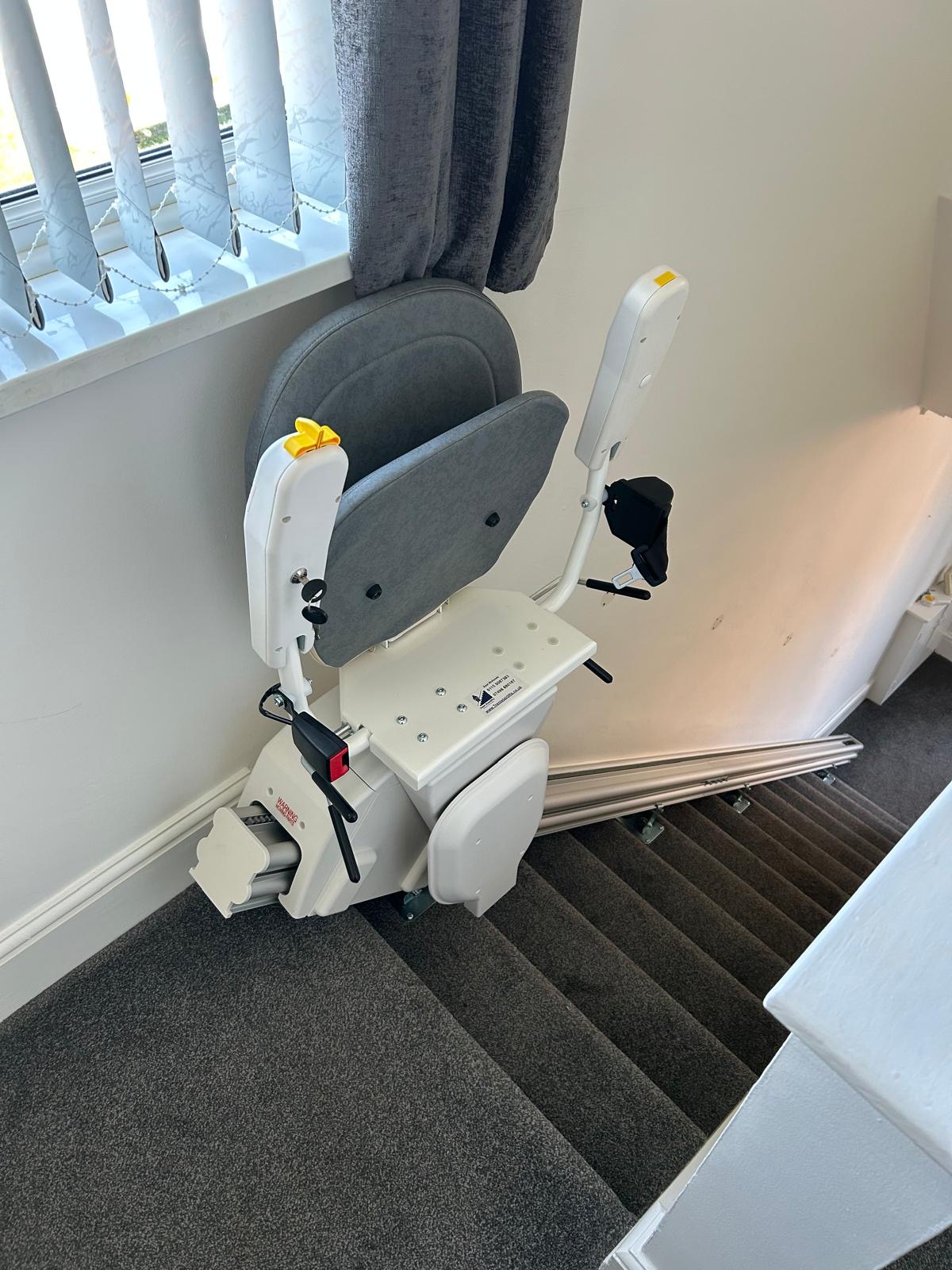
Can You Replace a Stairlift Chair Without the Track?
If an older stairlift develops a fault or simply reaches the point where replacing the main unit makes more sense than repairing it, one question that often comes up is whether the existing track can be kept.
In some cases, yes — it may be possible to replace the stairlift carriage and chair while leaving the existing track in place.
However, this depends heavily on the age, condition and compatibility of the original rail.
When can the existing track be reused?
If the track is still in very good condition and the replacement stairlift is compatible with it, reusing the rail can sometimes be a sensible option.
This can potentially reduce:
- Installation time
- Material costs
- The amount of work required in the home
- Waste from replacing a perfectly usable track
The important thing is that the track needs to be inspected properly before making that decision.
Track condition matters just as much as the stairlift
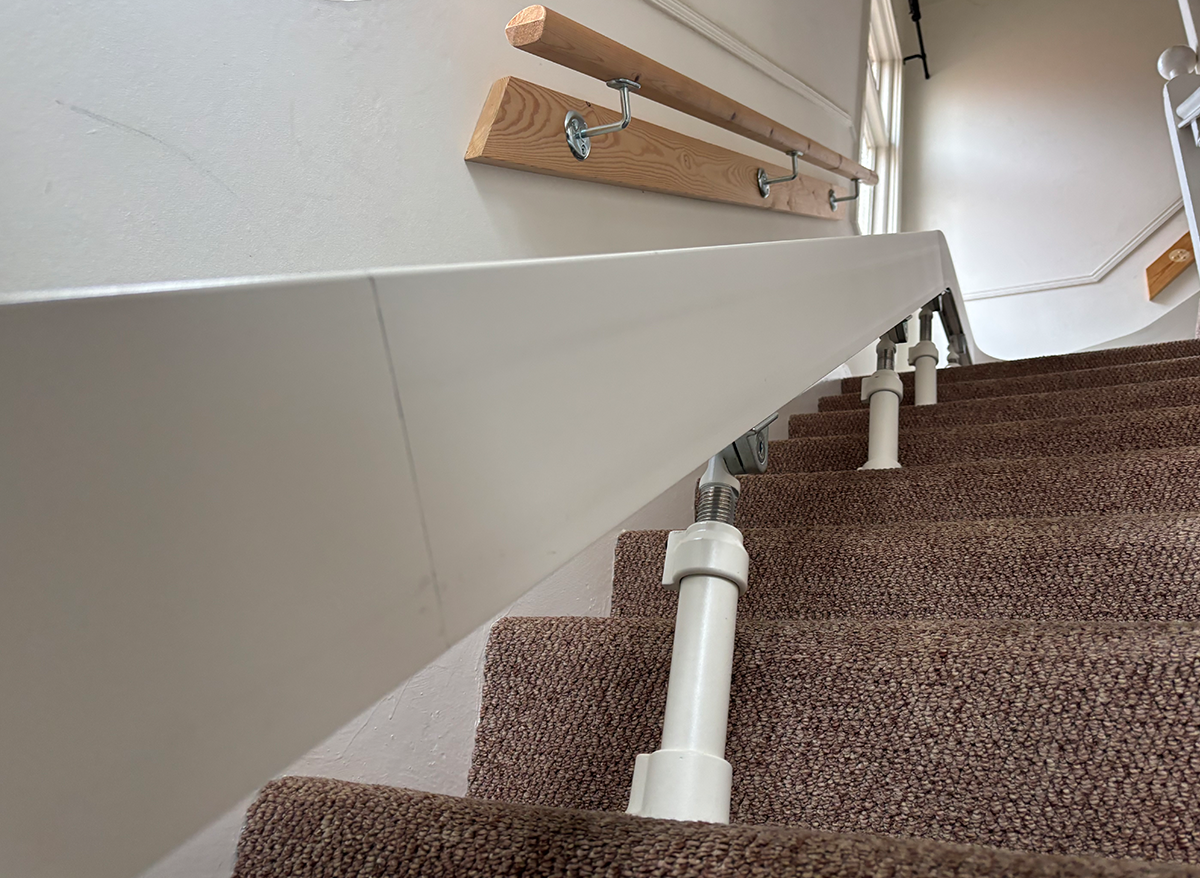
A stairlift track may look fairly simple from the outside, but it is still a working mechanical component.
On many stairlifts, the track contains a toothed rack which the drive gear inside the carriage engages with as the lift travels.
Over many years, the track and rack can experience wear just like the motor, gearbox, rollers and other components inside the stairlift.
If a newer stairlift is installed onto a badly worn track, that wear can potentially affect the replacement machine too.
This is why an engineer should look at the complete system rather than automatically assuming the old rail should remain.
The age difference between the two lifts matters
If the existing track and the replacement stairlift are from roughly the same generation, compatibility may be relatively straightforward.
However, if there is a very large age gap between the old system and the replacement lift, keeping the original track may not always make sense.
Manufacturers update:
- Rail profiles
- Drive racks
- Charging systems
- Mounting arrangements
- Electronic systems
over time.
Even where something can technically be made to work, it isn’t always the best long-term solution.
When would we recommend replacing everything?
There are several situations where replacing both the stairlift and track may be the better choice.
These can include:
- Significant wear on the existing track
- Damaged or worn racking
- A very old installation
- Poor compatibility with the replacement stairlift
- Corrosion or physical damage
- A track that has already been altered several times
In those cases, fitting a fresh stairlift onto a fresh rail means the whole system starts from the same point.
That can make more sense than putting a much newer machine onto an ageing track.
Can straight stairlift tracks be reused more easily?
Straight stairlift tracks are generally simpler than curved systems.
If the rail is compatible and in good condition, there can sometimes be more flexibility around keeping it.
Straight rails can also sometimes be shortened or adjusted to suit the installation.
That said, compatibility still needs to be checked properly. A straight rail from one model or manufacturer cannot simply be assumed to work with another lift.
You can view the current straight stairlifts supplied by Trent Stairlifts here.
What about curved stairlift tracks?
Curved stairlifts are more complicated because the track is designed around the shape of the staircase.
If the replacement carriage is designed to operate on exactly the same rail system, reuse may sometimes be possible.
But with older bespoke curved tracks, changing only the chair and drive unit is not always practical.
Modular curved systems can offer more flexibility because individual track sections can sometimes be reused or changed.
Each installation really needs to be assessed on its own merits.
Can replacing only the stairlift save money?
Potentially, yes.
If the existing track is in excellent condition and compatible with the replacement lift, keeping it can reduce the amount of equipment that needs to be supplied.
But saving money upfront shouldn’t come at the expense of reliability.
If an old rail is already showing significant wear, the cheaper option today could create additional repair costs later.
What should be checked before reusing a track?
An engineer would normally want to look at areas such as:
- Overall rail condition
- Rack or drive teeth
- Track joints
- Support legs and fixings
- Charging points
- Signs of excessive wear
- Compatibility with the proposed replacement lift
The condition of the staircase installation itself also matters.
Reconditioned replacement stairlifts can be another option
Replacing an ageing lift doesn’t automatically mean buying brand new.
A quality reconditioned stairlift can provide a more affordable replacement while still giving the customer a fresher machine and warranty.
Depending on the system, it may be possible to combine a compatible reconditioned lift with an existing good-quality track, or install a complete reconditioned replacement system instead.
You can see our reconditioned stairlift options here.
Final thoughts
Yes, sometimes a stairlift chair and carriage can be replaced without changing the track.
The key question is whether the existing rail is still in good enough condition to justify keeping it.
If the track is relatively young, compatible and showing little wear, reuse can make good sense. If there is a large age difference between the old track and the replacement lift, or the rail is already worn, replacing the entire system may be the better long-term option.
If you’re in Nottingham or the East Midlands and you’re deciding whether to repair, replace or reuse an existing stairlift track, Trent Stairlifts can inspect the system and explain the realistic options. You can request a free, no-obligation quote here.
Replacing a stairlift – FAQs
Can I replace the stairlift but keep the old track?
Sometimes, yes. The track must be compatible with the replacement lift and in good condition.
Why would an engineer recommend replacing the track too?
An older track may have significant wear, damaged racking or compatibility issues with a newer stairlift.
Can an old track damage a newer stairlift?
A badly worn track or drive rack can potentially increase wear on the replacement machine.
Are straight tracks easier to reuse?
They can be, but the rail still needs to be compatible with the replacement model.
Can curved stairlift tracks be reused?
Sometimes, especially with suitable modular systems, but bespoke curved tracks are more complicated.
Is replacing the whole stairlift always more expensive?
Not necessarily. In some situations a full replacement can provide better value long-term than fitting a newer lift onto a heavily worn older track.
post tags :
view related content
Previous Jobs