How Much Does a Stairlift Weigh?
Stairlifts are fairly substantial pieces of equipment, so it’s natural to wonder how much weight is actually being added to the staircase once one is installed.
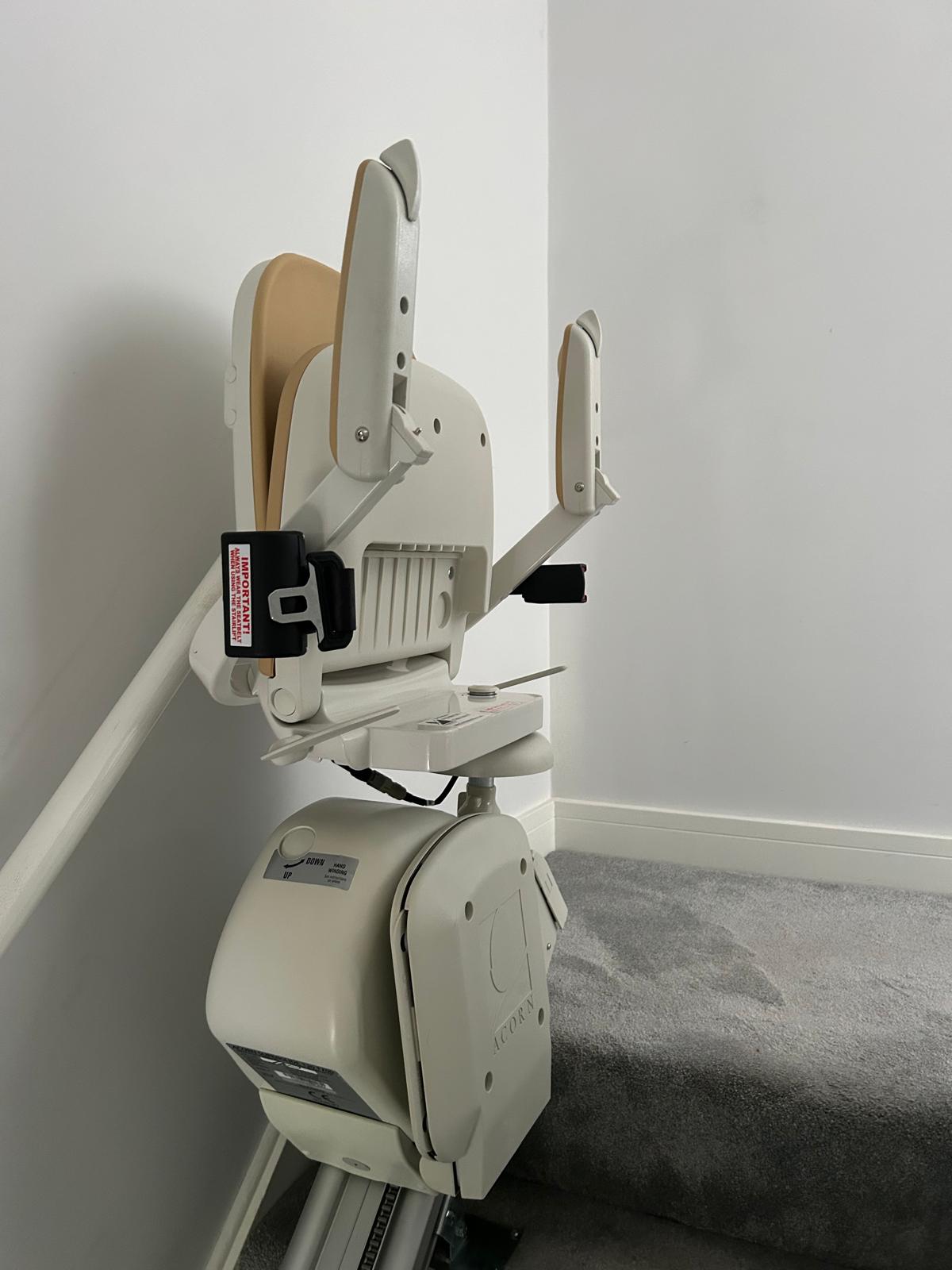
The exact weight varies depending on the make, model and whether it’s a straight or curved stairlift, but the main stairlift carriage itself will often weigh somewhere around 30–50kg.
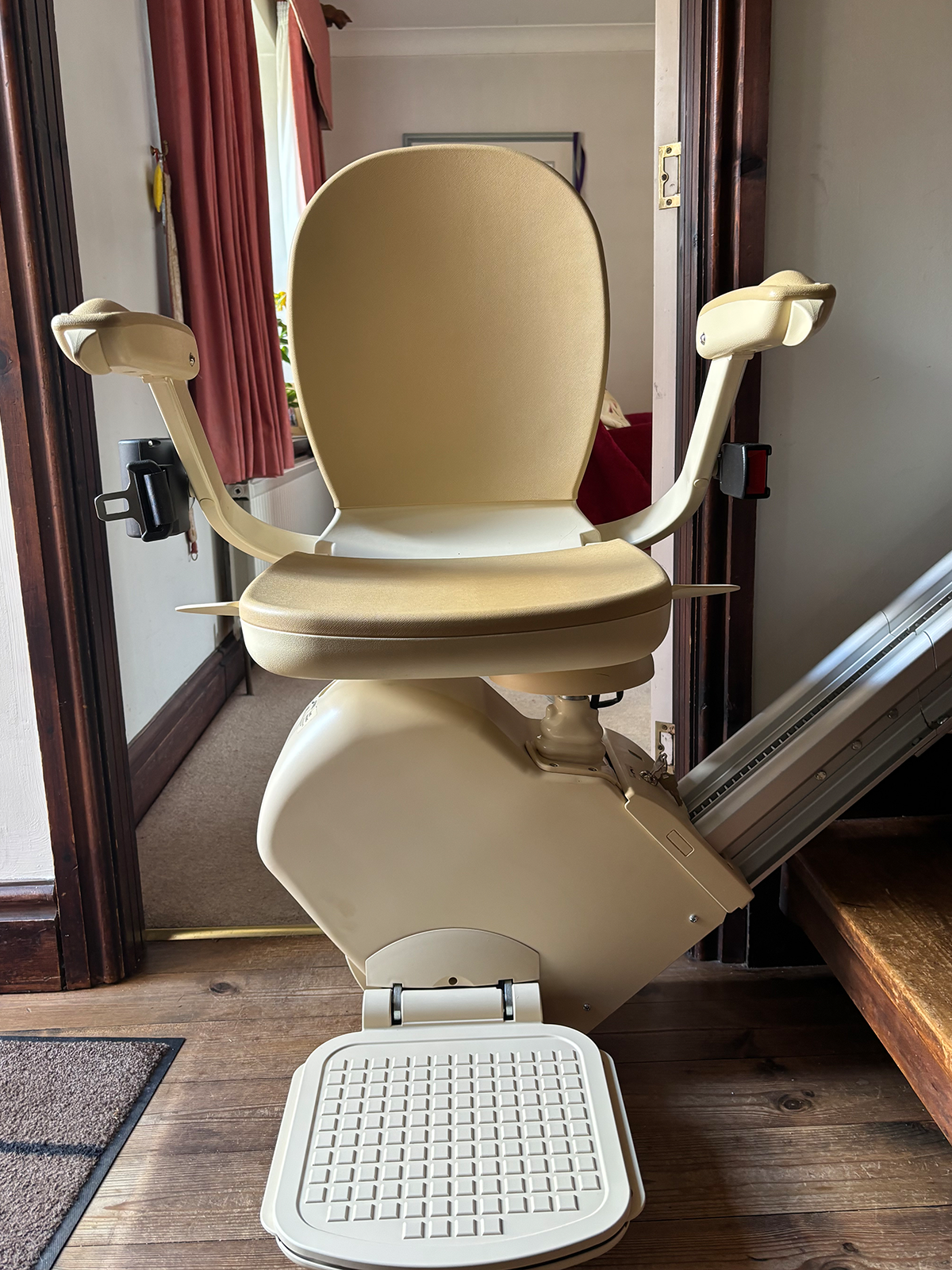
The seat assembly can then add another 10–15kg depending on the design.
That means the complete moving part of the stairlift can easily weigh around 40–65kg before you even consider the track.
Why stairlifts are heavier than they look
A stairlift contains much more than just the chair you can see.
Inside the main carriage are components such as:
- The electric motor
- Gearbox
- Batteries
- Drive gear
- Brake system
- Safety switches and sensors
- Electronic control systems
All of these components need to be strong enough to reliably move the user up and down the staircase for many years.
That naturally makes the carriage fairly heavy.
The seat adds additional weight
The seat itself is another substantial component.
Depending on the stairlift, the seat assembly may include:
- The seat base and backrest
- Armrests
- Seatbelt
- Manual or powered swivel mechanism
- Folding components
- Powered accessories on some models
A typical seat assembly can weigh around 10–15kg, although this varies considerably between stairlift models.
Heavy-duty or more highly specified stairlifts can weigh more again.
What about the track?
The stairlift track adds additional weight, particularly on longer or curved staircases.
A straight track is normally relatively simple, whereas a curved system may contain several metres of rail, support legs, joints and additional structural components.
However, the track is not simply hanging from one part of the staircase.
The supports distribute the weight across several different steps.
Does the weight damage the staircase?
In a normal structurally sound staircase, stairlift weight is generally not a problem.
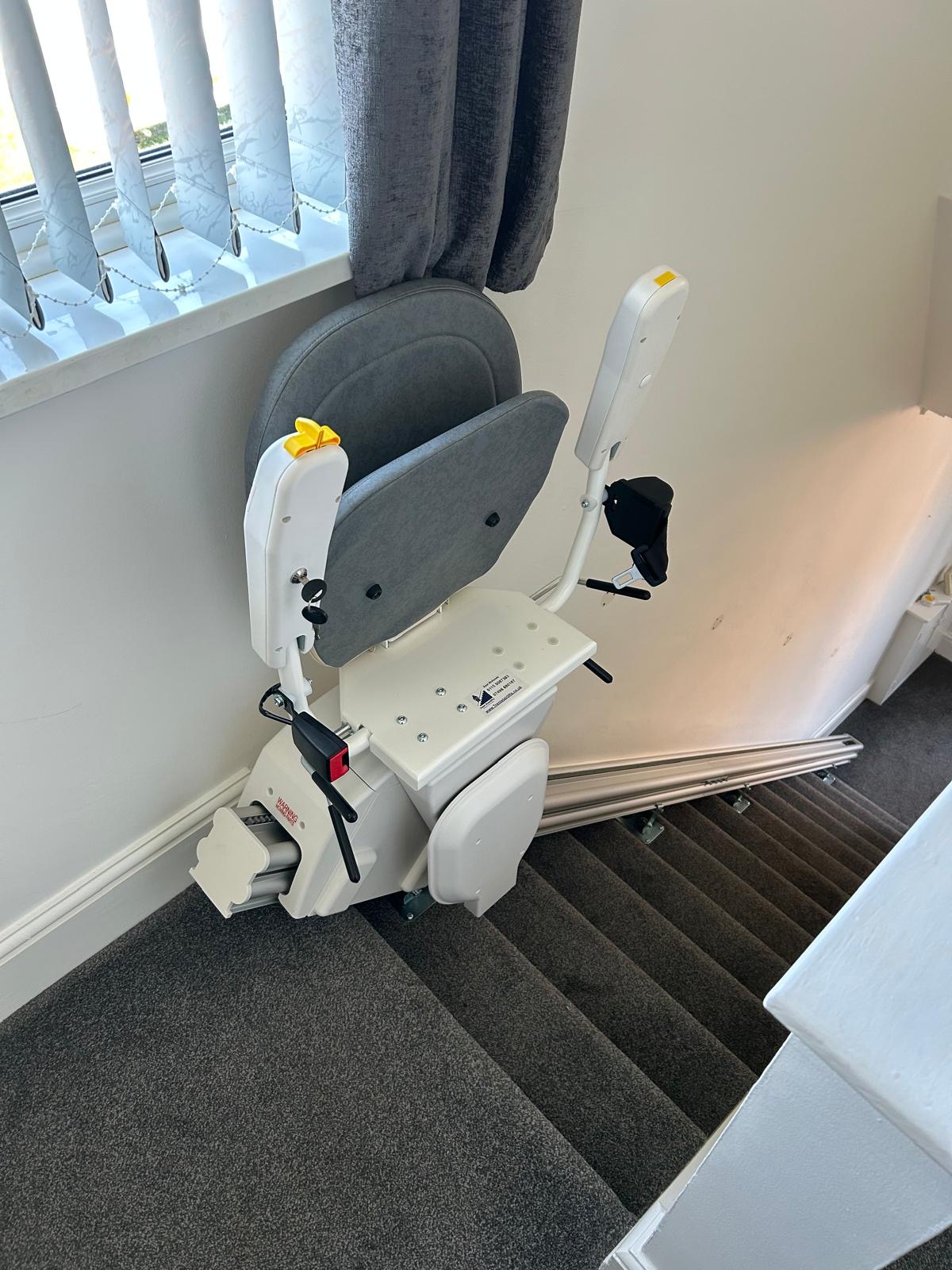
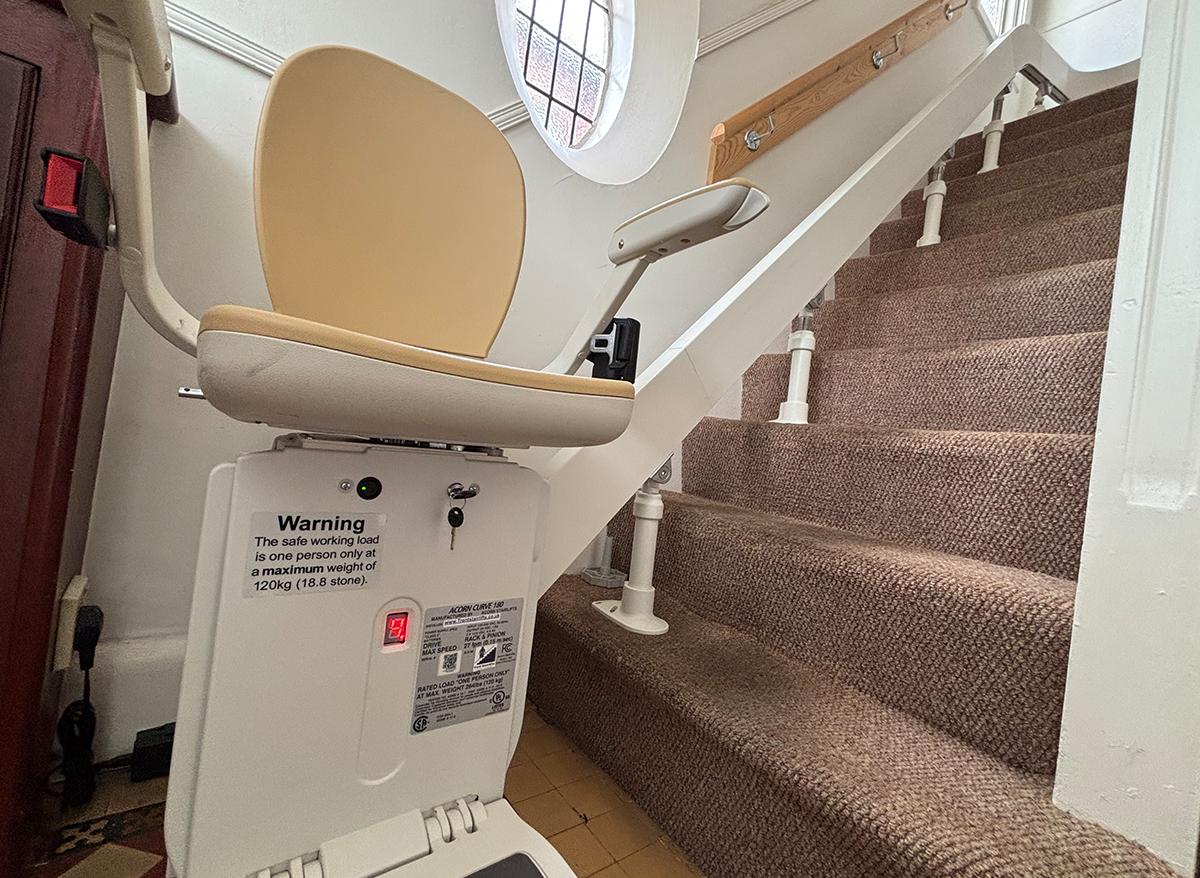
The track is supported using legs which are fixed vertically into the stair treads.
This spreads the weight of the lift and user along the staircase rather than concentrating everything onto one single step.
It’s also worth remembering that staircases are already designed to support people walking up and down them every day.
A properly fitted stairlift distributes its load in a controlled and predictable way.
Stairlifts don’t hang from the wall
One misconception we hear quite regularly is that a stairlift is attached to the wall and that the wall needs to support all of that weight.
That isn’t how a normal stairlift installation works.
The track fixes to the stairs themselves.
The wall isn’t carrying the stairlift, carriage or user.
This is why stairlifts can be installed on staircases with:
- Plasterboard walls
- Glass bannisters
- No wall immediately beside the track
- Open-riser staircases
The important structural element is the staircase rather than the wall.
Wooden stairs can support stairlifts
Standard timber staircases are perfectly capable of supporting stairlifts when they are in good condition.
The track supports are fixed securely into the stair treads at several positions.
There can be a tiny amount of natural flex in timber compared with something completely rigid like concrete, but that is normal and doesn’t mean the stairlift is insecure.
What about concrete or steel stairs?
Concrete and steel staircases can also take stairlifts.
The difference is mainly the fixing method.
Concrete stairs may use drilled fixings and Rawl plugs, while steel stairs can use suitable bolts or specialist fixings instead of ordinary wood screws.
In each case, the goal is the same: securely support the track from the staircase itself.
Does the user’s weight get added to this?
Yes.
When the stairlift is in use, the staircase is supporting both the equipment and the user.
This is why every stairlift also has a specified maximum user weight.
The lift, track, support legs and drive system are all designed around these loads.
A standard stairlift often supports a user somewhere around the 120–127kg range, with higher-capacity models available where required.
Why professional removal is recommended
The weight of the equipment is also one of the reasons stairlift removal should ideally be handled professionally.
A 30–50kg carriage is awkward enough on the ground.
Handling something that heavy while standing on a staircase creates an obvious risk of injury or damage.
Track sections can also be cumbersome, particularly on curved lifts.
It may look simple once everything is switched off, but stairlifts are still heavy machinery.
Does a heavier stairlift mean it is better?
Not necessarily.
Different manufacturers use different materials and designs.
A lighter stairlift can be every bit as strong and reliable as a heavier one if it has been properly engineered.
Weight alone isn’t a useful way of judging stairlift quality.
The important things are suitability for the staircase, user requirements, reliability and correct installation.
You can view the different systems we supply on our stairlift range page.
Final thoughts
A typical stairlift carriage can weigh around 30–50kg, with the seat adding another 10–15kg depending on the model.
While that sounds substantial, it normally presents no issue whatsoever for a suitable staircase.
The stairlift does not hang from the wall. Its track is supported by multiple legs fixed directly into the stair treads, spreading the load along the staircase.
If you’re in Nottingham or the wider East Midlands and are concerned about whether your staircase is suitable for a stairlift, Trent Stairlifts can assess it properly during a home survey. You can request a free, no-obligation quote here.
Stairlift weight – FAQs
How much does a stairlift weigh?
The main stairlift carriage often weighs around 30–50kg, with the seat adding approximately another 10–15kg depending on the model.
Does the stairlift track add more weight?
Yes. The rail and support system add additional weight, especially on longer curved installations.
Can wooden stairs support a stairlift?
Yes. A structurally sound wooden staircase can normally support a stairlift without any issue.
Does a stairlift attach to the wall?
No. The stairlift track is supported by legs fixed directly into the staircase steps.
Can concrete and steel stairs support stairlifts?
Yes. They simply use different fixing methods appropriate to the staircase material.
Why should a stairlift be professionally removed?
The carriage and track components are heavy and awkward to handle on stairs, so professional removal reduces the risk of injury or damage.
post tags :
view related content
Previous Jobs