Can You Keep Your Handrail With a Stairlift?
Many homeowners have a handrail fixed to the wall beside their staircase. If you are thinking about fitting a stairlift, a natural question is whether that handrail can stay where it is.
Sometimes it can. In other cases, removing the wall-mounted rail makes the installation more practical, particularly with a straight stairlift fitted close to the wall.
There is also an important difference between a wall handrail and the staircase banister. These are not the same thing, and it helps to look at them separately when planning the installation.
Why are straight stairlifts often fitted on the wall side?
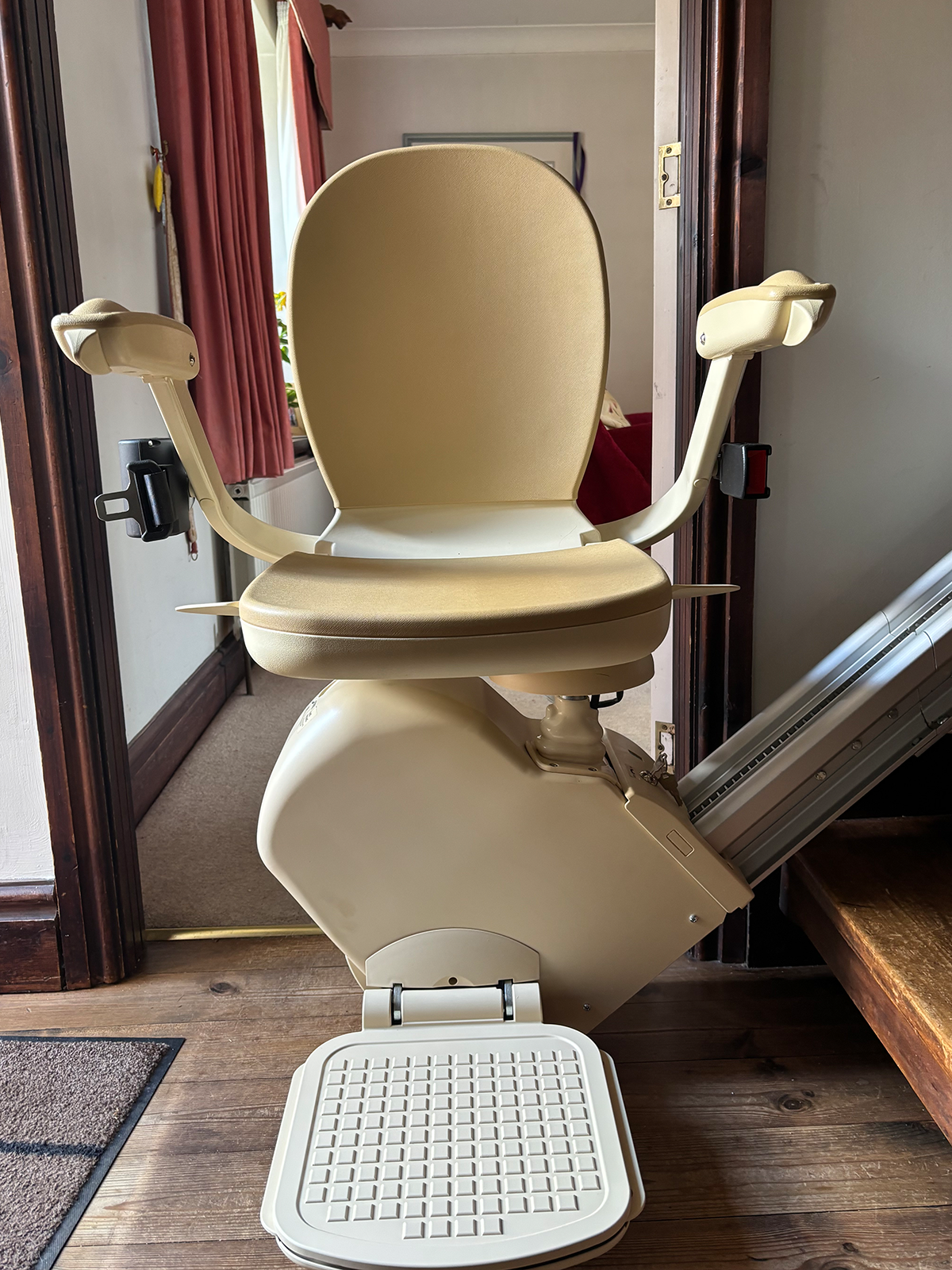
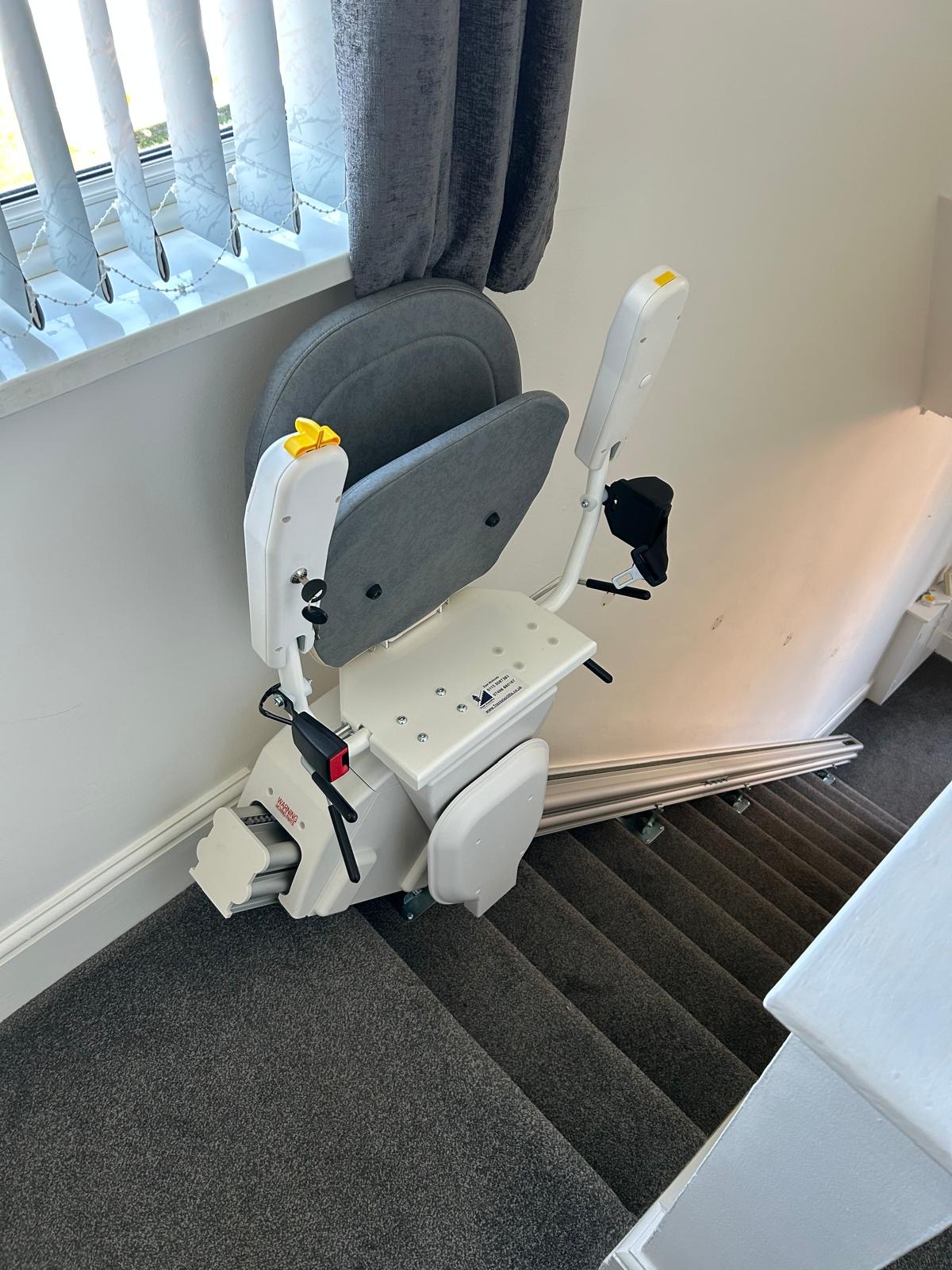
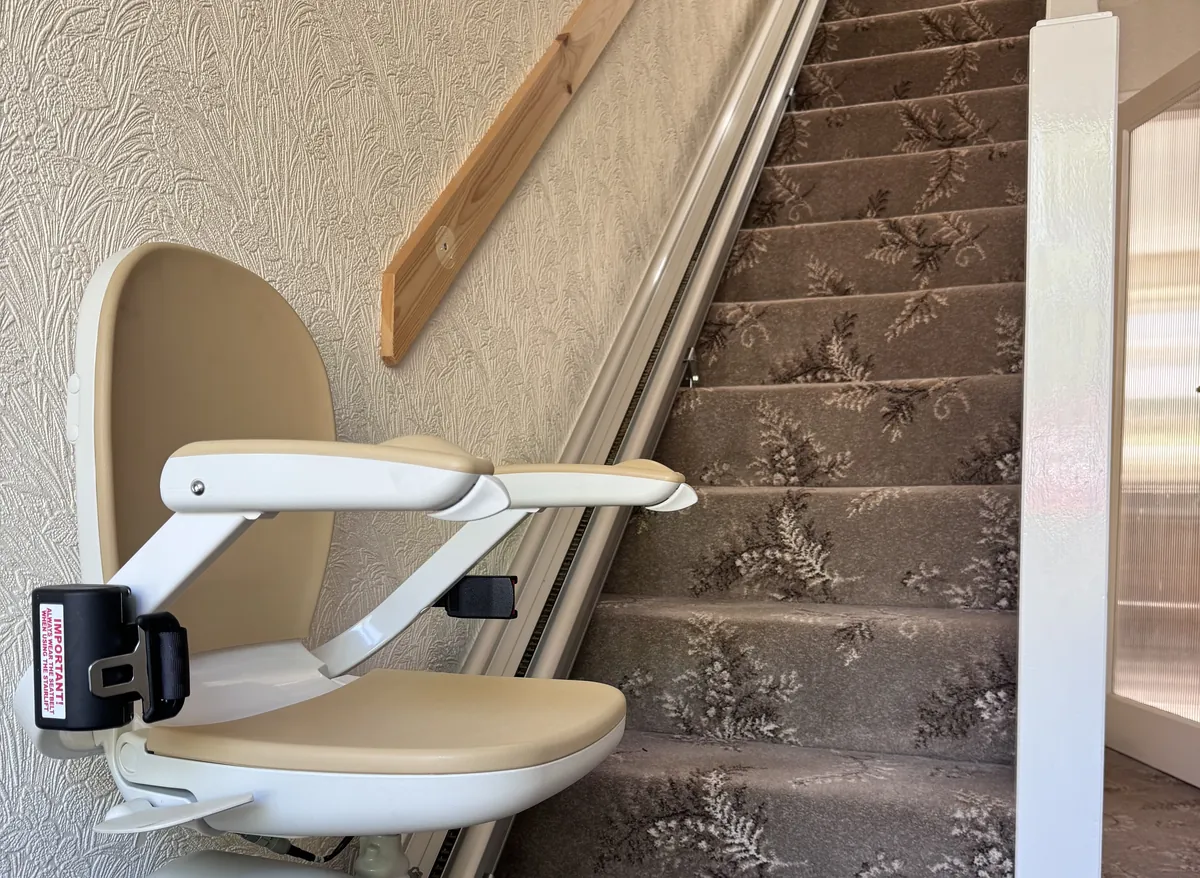
On a standard straight staircase, engineers will often prefer to place the stairlift rail along the wall side. It is frequently the simplest layout and can leave the banister side available for other people using the stairs.
The stairlift rail itself is normally fixed to the stair treads using support legs, rather than being hung from the wall.
Although a straight lift can occasionally be fitted on the banister side, the wall side is a common choice because of the available layout and parking position.
Why can a wall handrail be in the way?
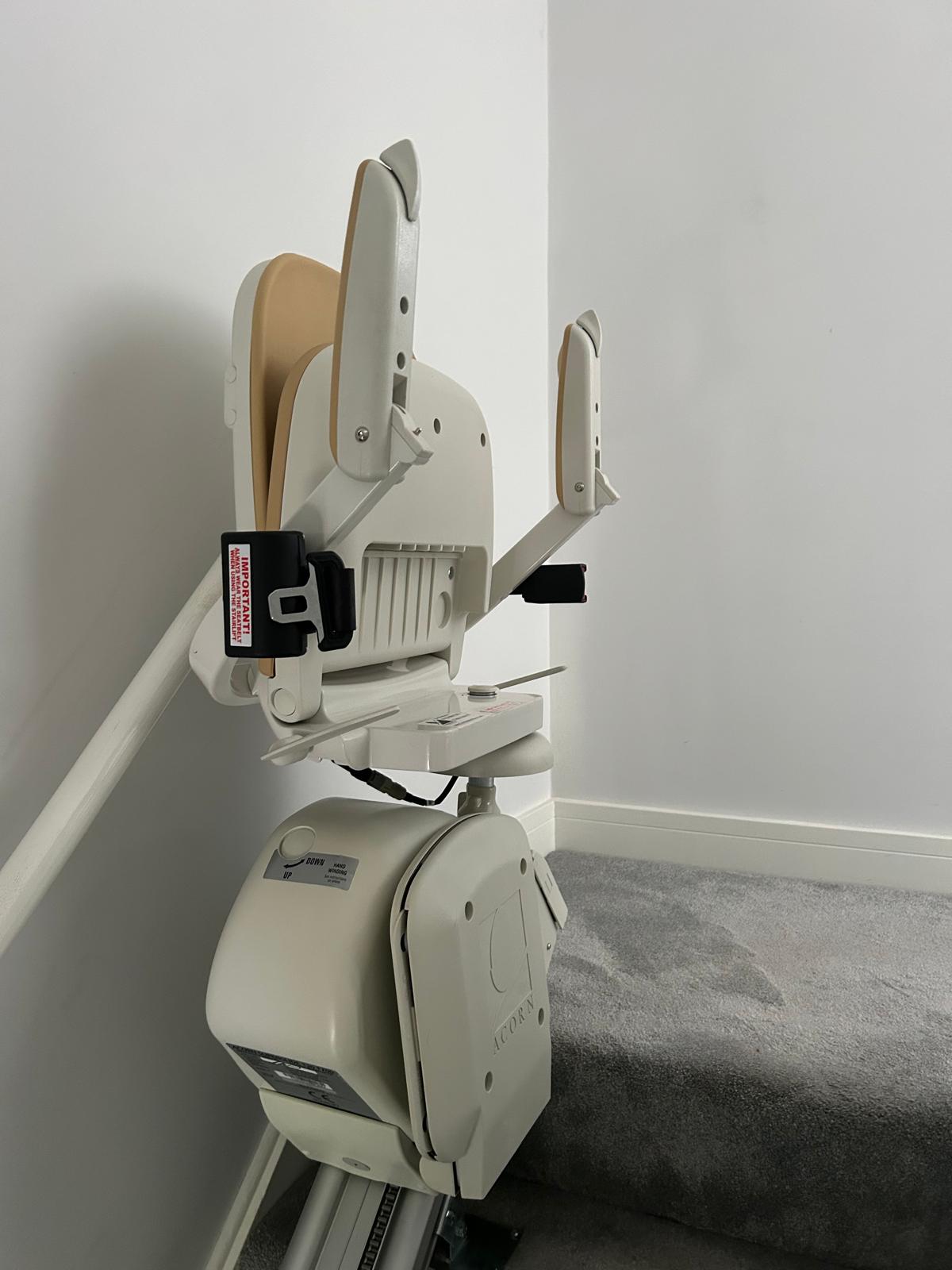
A wall-mounted handrail occupies space at exactly the height where a seated stairlift user’s arm, shoulder or knee clearance may matter.
Depending on its design, the handrail and brackets may project around 100mm into the staircase. That extra intrusion can make the chair sit further into the stairs or reduce clearance while somebody is travelling.
On many straight stairlift installations, removing the wall handrail is therefore recommended to recover that space. But it should be decided from measurements and household needs, not assumed on every job.
What about the staircase banister?
The staircase banister is usually a fixed part of the staircase guarding and should not be confused with the separate wall handrail.
A normal stairlift installation does not generally require the banister to be removed. It may be used by other members of the household, and it often provides essential guarding against a fall from the stairs or landing.
Any proposal to alter a banister needs specific professional consideration. Taking away safety guarding merely to make room for a stairlift is not an appropriate shortcut.
Curved stairlifts offer more choices
With a curved staircase, it may be possible to design the rail to travel along either the inside or outside of the staircase, depending on the geometry and available clearances.
If the stairlift runs along the banister side and has enough room to operate safely, the wall-mounted handrail on the opposite side may be able to remain in place.
This is one benefit of planning a curved stairlift around the particular property, rather than assuming the rail must always follow the wall.
What if somebody in the house still relies on the handrail?
This needs to be part of the conversation from the beginning. A wall handrail might be unnecessary for somebody who will use the stairlift on every journey, but another household member may depend on it for support.
People who have difficulty with the stairs should not be encouraged to keep walking just because a handrail is available. Equally, someone who safely uses the handrail should not lose an essential aid without a suitable alternative being considered.
Trent Stairlifts would need to consider the needs of everyone using the staircase, including visitors and carers, before recommending its removal.
Can the handrail be moved rather than removed?
Sometimes adjusting or relocating a wall handrail may be possible, but there are practical limits. It still needs to be securely fixed at an appropriate position and it must not interfere with the stairlift chair, user or moving carriage.
A handrail that looks clear while the chair is parked may catch the user’s knees or elbow when the stairlift is travelling.
Any alternative arrangement should be checked on site with the proposed stairlift model and the intended users.
The home survey is where the decision is made
A proper survey takes account of the full staircase, its narrowest points, the rail position, top and bottom landings and the clearance needed for the user to travel comfortably.
It should also identify obstructions such as radiators, window sills, wall-mounted handrails and door frames.
For straight stairs, Trent can advise if handrail removal would allow a tidier installation. For curved stairs, we can look at whether the lift can be placed on the other side instead.
Final thoughts
You can sometimes keep the existing handrail when a stairlift is installed, particularly with a curved rail that can be routed away from the wall.
On a straight stairlift, removing the wall-mounted handrail is often the more practical option because it can save roughly 100mm of space and improve travelling clearance. The staircase banister is a different matter and is normally retained.
For advice on fitting a stairlift in Nottingham and the East Midlands while keeping the stairs practical for the whole household, contact Trent Stairlifts for a free quote.
Frequently asked questions
Do I have to remove my handrail to fit a stairlift?
Not always. It depends on the handrail position, proposed stairlift and usable width of the staircase.
Why do installers remove wall handrails?
A wall-mounted handrail and its brackets can take up around 100mm of space and interfere with the chair or the user’s clearance.
Will my staircase banister be removed?
Not as part of a typical installation. A banister is important staircase guarding and should be retained unless separately assessed by appropriate professionals.
Can a curved stairlift run on the banister side?
Often yes, if the shape of the staircase and the required clearances make it suitable.
Can other people still walk upstairs?
Usually yes, but this depends on the available clear width when the stairlift is folded and the needs of the other users.
Should I take the wall handrail down before the survey?
No. Leave it in place until the installer has assessed whether it needs to be removed.
post tags :
view related content
Previous Jobs