What Is the Carriage on a Stairlift?
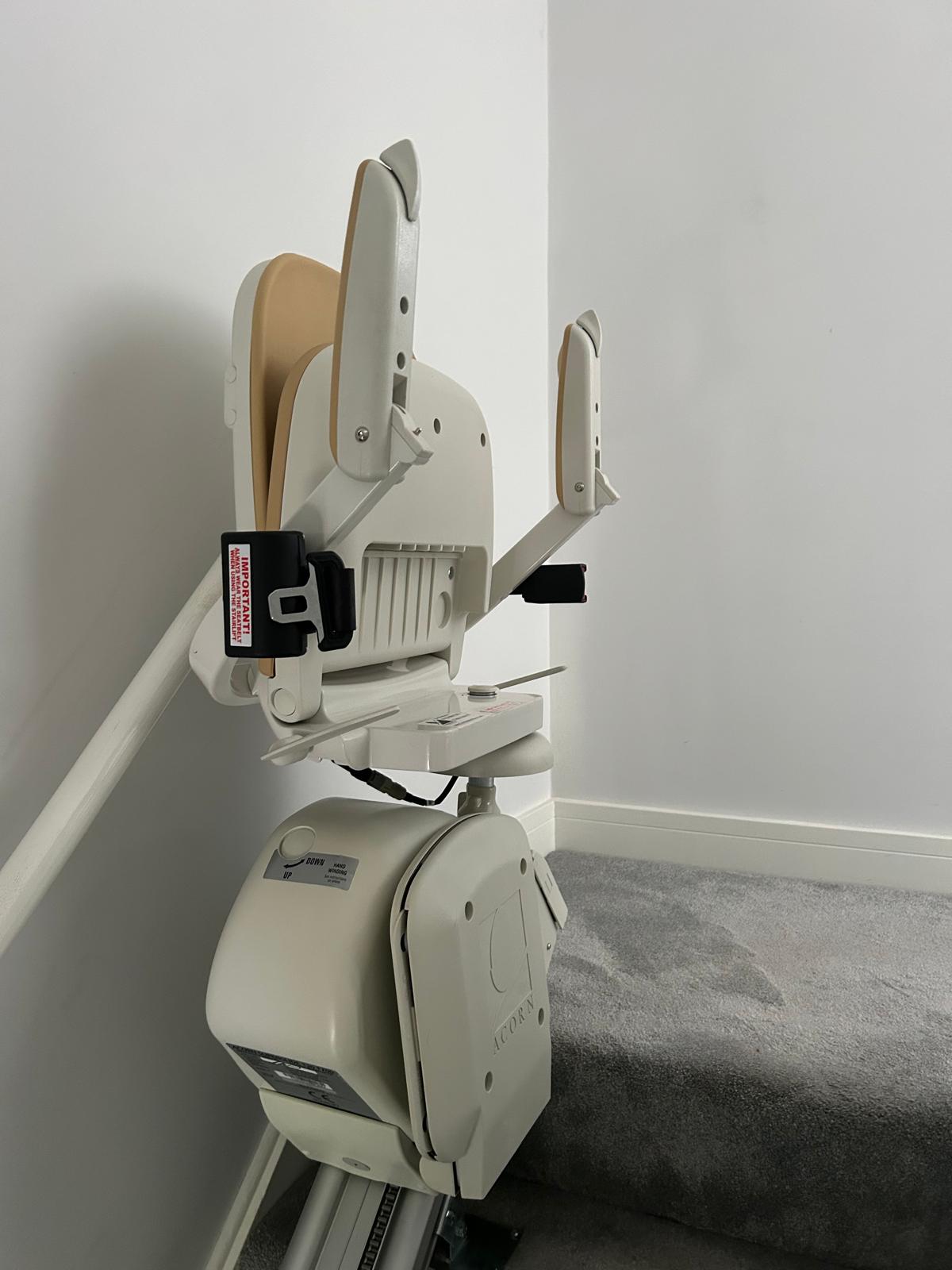
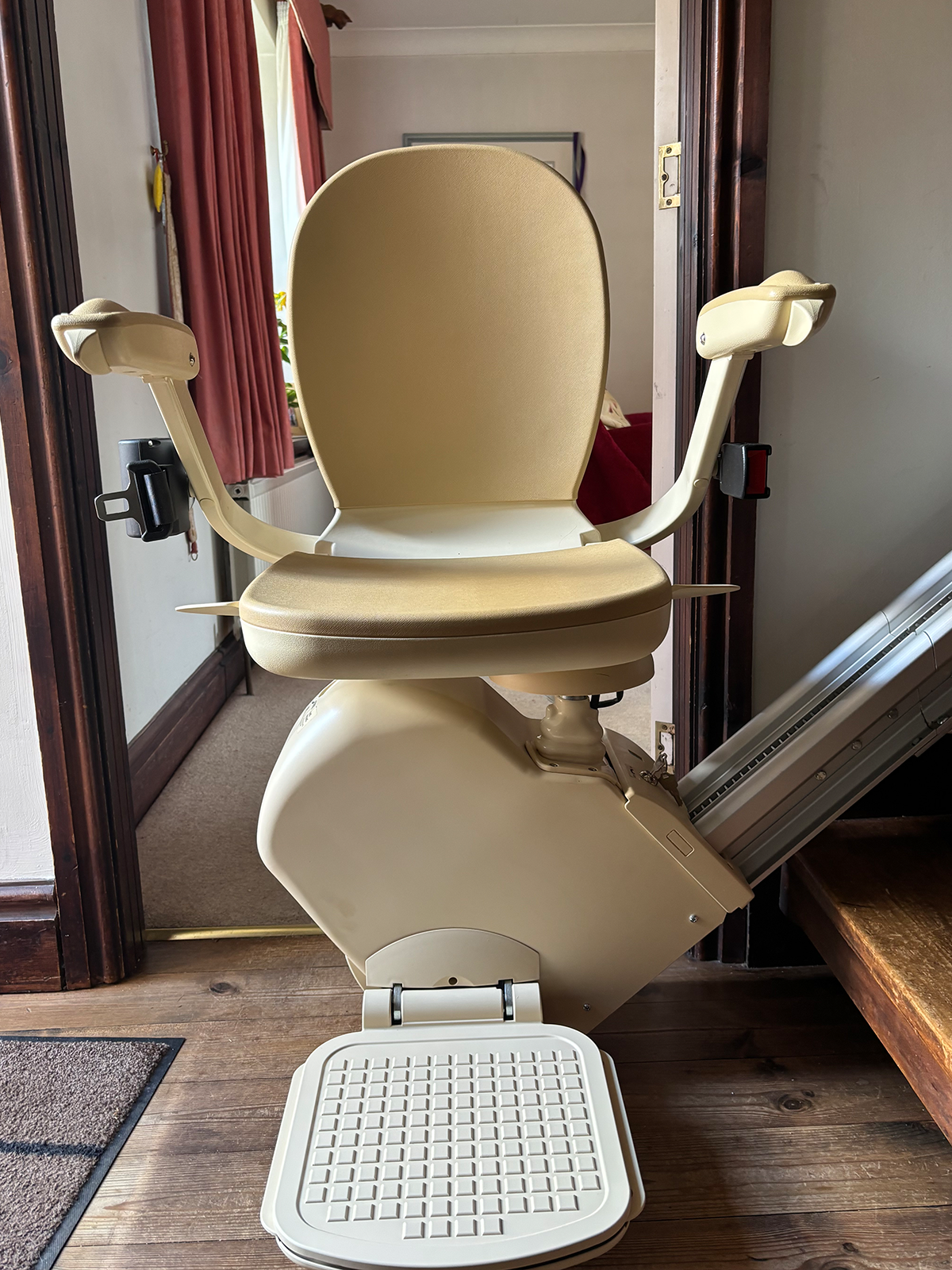
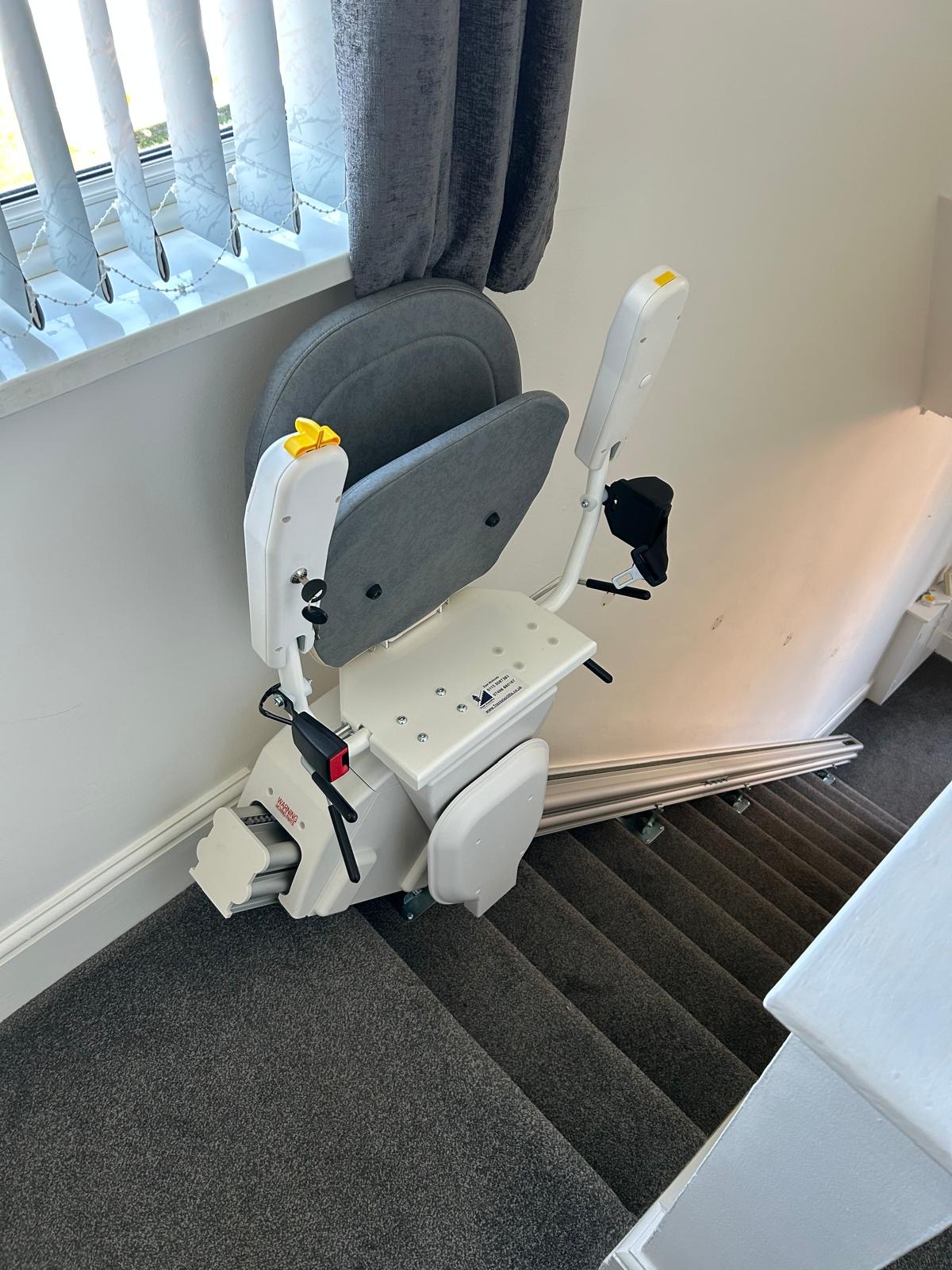
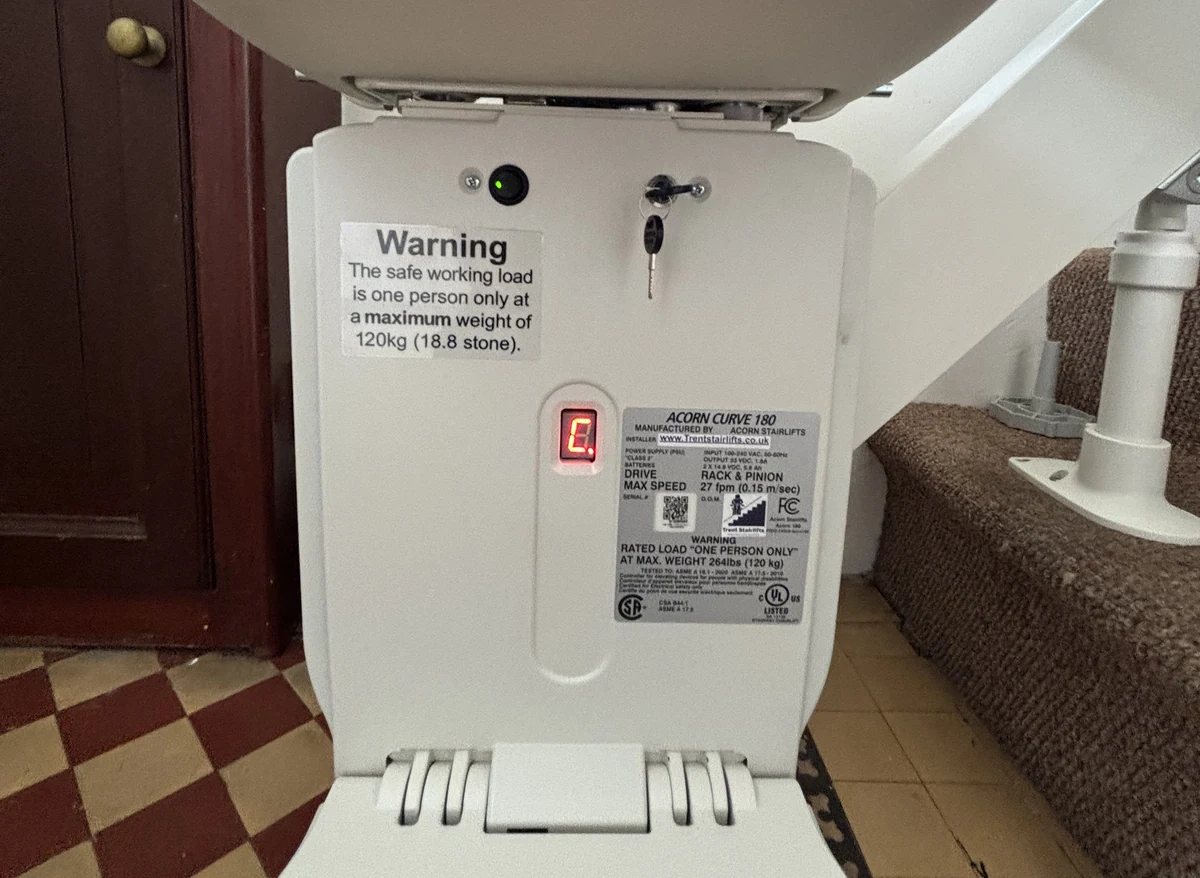
When you look at a stairlift, the part that stands out is the seat. But the seat is only one piece of the machine. The larger housing underneath or behind it is known as the carriage, sometimes called the drive unit.
The carriage is the working heart of the stairlift. It contains many of the components that power, guide and control the journey up and down the staircase.
Understanding what is inside it can make it easier to understand how a stairlift works, why regular servicing matters and why repairing one component is not the same as replacing the whole machine.
The carriage is the main drive unit
A stairlift carriage is the substantial moving assembly that travels along the rail. It supports the seat and, on many models, provides the main mounting structure for the footrest and other attached parts.
Inside the carriage are normally the electric motor, gearbox, batteries, electronic control board, wiring and parts of the safety system. Its precise layout varies from one manufacturer to another.
It is more than a plastic housing. The carriage has a structural role and must support the forces involved in carrying the user safely along an incline.
The electric motor provides the power
Inside most domestic stairlifts is an electric motor which provides the power needed to move the carriage.
Most modern domestic systems run from rechargeable batteries. The lift can therefore draw its travel power from the battery system while the household mains supply keeps those batteries charged.
The motor does not generally drive the chair along the rail unaided. Its power passes through a transmission or drive system designed for controlled movement.
The gearbox makes the motor useful on a staircase
On many rack-and-pinion stairlifts, the motor is connected to a reduction gearbox. That gearbox converts high motor speed into the slower, higher-torque movement needed to carry a person up the stairs.
It also helps transmit power to the final drive mechanism. Different makes use different gearing and arrangements, so not every carriage looks the same inside.
A gearbox is a major working component. Unusual rumbling, grinding or harsh mechanical noises may be reasons for an engineer to investigate the drive system, although they do not automatically mean the gearbox has failed.
The pinion gear engages with the track
Many familiar stairlift designs use a rack-and-pinion drive. The rail has a toothed section called the rack or racking, and a gear attached to the drive unit is called the pinion.
As the pinion turns, its teeth engage with the rack and move the whole carriage along the track. It is a proven mechanical method of moving a heavy machine along a fixed route.
Not every stairlift uses this exact arrangement: some models use alternative drive systems. But rack-and-pinion is very common, especially among stairlifts with a visible toothed rack.
What do the rollers do?
The carriage has rollers or other guide components which keep it correctly positioned on the rail while it travels.
These are important because the machine must remain accurately guided as it climbs, descends and, on curved models, moves around bends or changes in gradient.
When rollers are worn, the lift can develop extra play, vibration or noise. A service engineer can check them along with the rail and drive components for signs of wear.
The batteries and control board are usually inside
The carriage normally also contains the batteries and much of the electronic control system.
The control board processes signals from the user’s travel control, safety switches, charging system and other components. Depending on the model, it also manages motor operation, speed and fault diagnostics.
Keeping these parts within the moving carriage allows the stairlift to travel along the fixed rail without needing a long trailing mains cable.
Safety components are built into the carriage
Stairlift carriages commonly carry sensors or switches designed to prevent travel when a safety condition has not been met, or to stop the lift if it encounters an obstruction.
There is also a normal holding brake on many designs and appropriate protection against dangerous uncontrolled movement.
These are safety-critical parts, so removing carriage covers or attempting electrical repairs is not something a householder should do. If a safety fault appears, the cause should be assessed by an experienced engineer.
Can the carriage be repaired or replaced?
Often, yes. A fault inside the carriage does not automatically require a completely new stairlift and track. Depending on the model, an engineer might replace the batteries, a controller, a sensor, a roller or another component.
In some circumstances the carriage and seat can be replaced while an existing track remains in place, provided the track is compatible and in good condition.
With older or discontinued stairlifts, parts availability and repair cost become more important. You can read about our repair and servicing options or browse reconditioned stairlifts if a replacement is being considered.
Final thoughts
The stairlift carriage is the main drive unit, carrying the motor, batteries, controls, rollers, safety components and, on many models, the gearbox and pinion gear.
It is the moving mechanical core of the stairlift, with the seat and footrest attached to it. Keeping the carriage in good condition is essential to reliable everyday travel.
If you have a stairlift in Nottingham or the East Midlands and are unsure about a noise or fault from the carriage, Trent Stairlifts can inspect it. Get in touch for a free, no-obligation quote.
Frequently asked questions
What is the carriage on a stairlift?
It is the main moving drive unit that travels along the rail and supports the chair assembly.
Is the carriage the same as the seat?
No. The seat is attached to the carriage, which houses the components that power and guide the lift.
Are the batteries inside the carriage?
On many domestic stairlifts, yes. They are usually housed within the moving unit.
What is a pinion gear?
It is the gear that engages with the toothed rack on many stairlift rails to move the carriage.
Can a noisy carriage be repaired?
Often, yes. The cause might be a roller, gearbox, drive component or another part and needs proper diagnosis.
Can I replace only the carriage?
Sometimes, provided the replacement is compatible with the existing rail and the track is in suitable condition.
post tags :
view related content
Previous Jobs