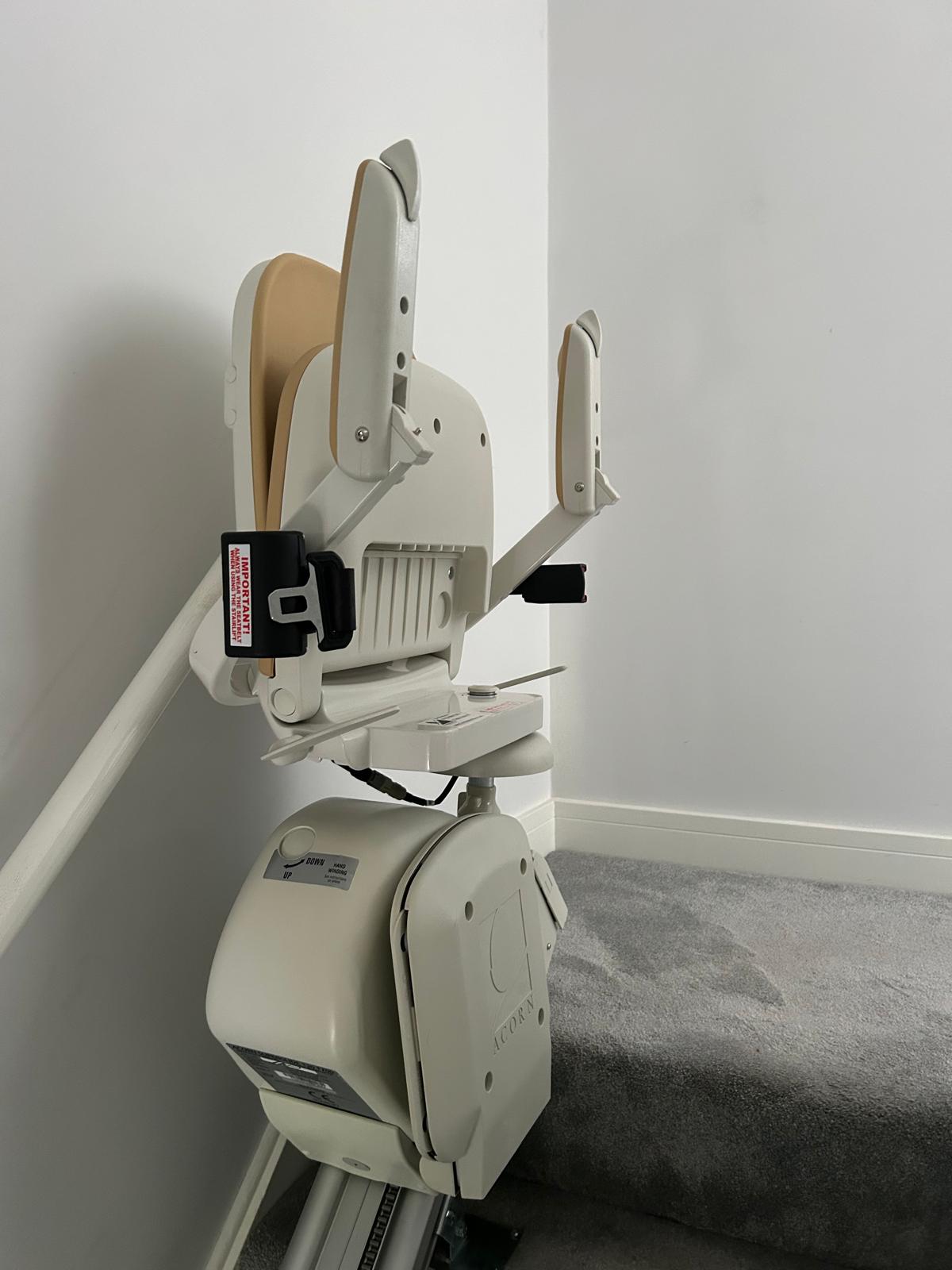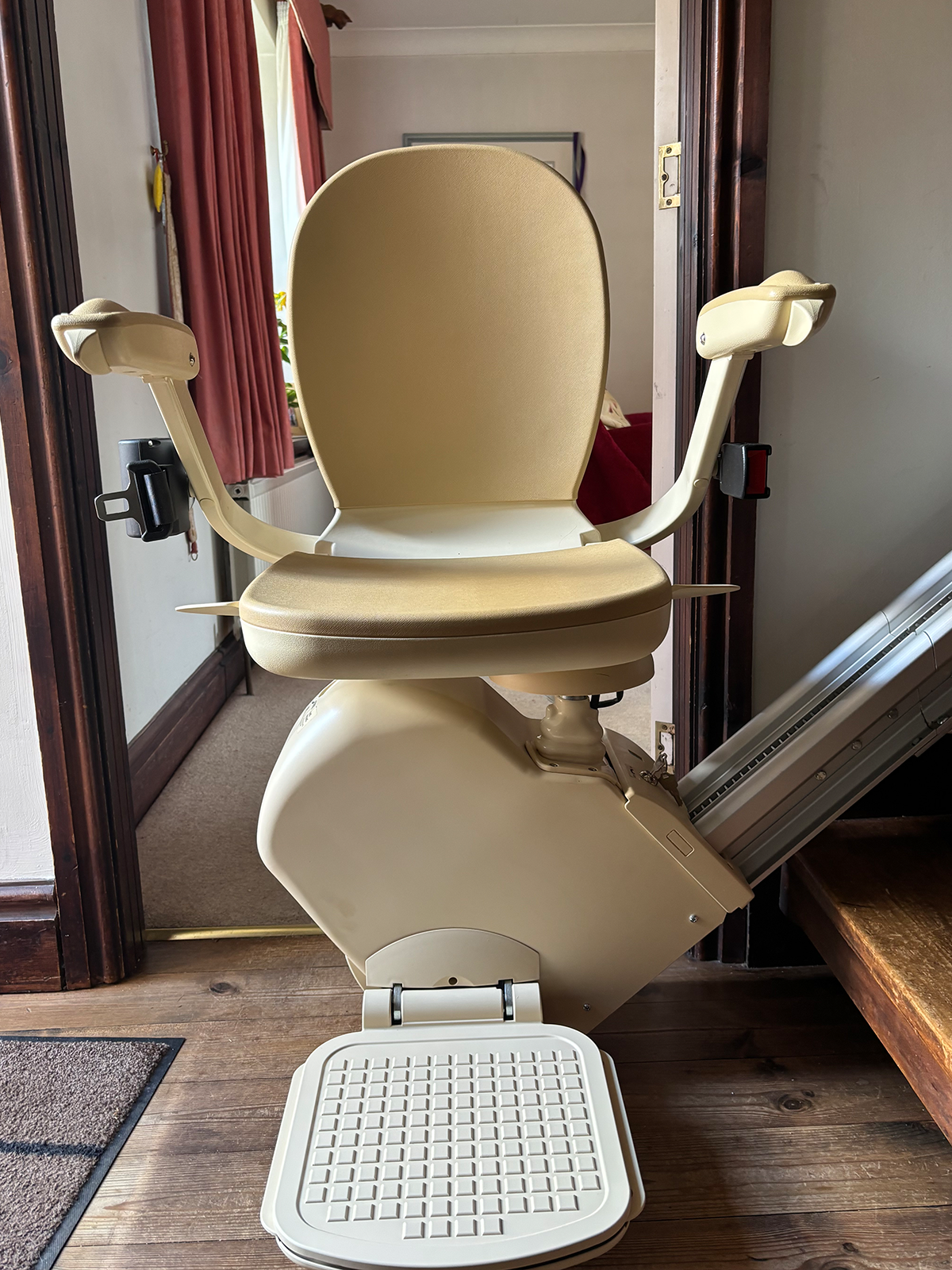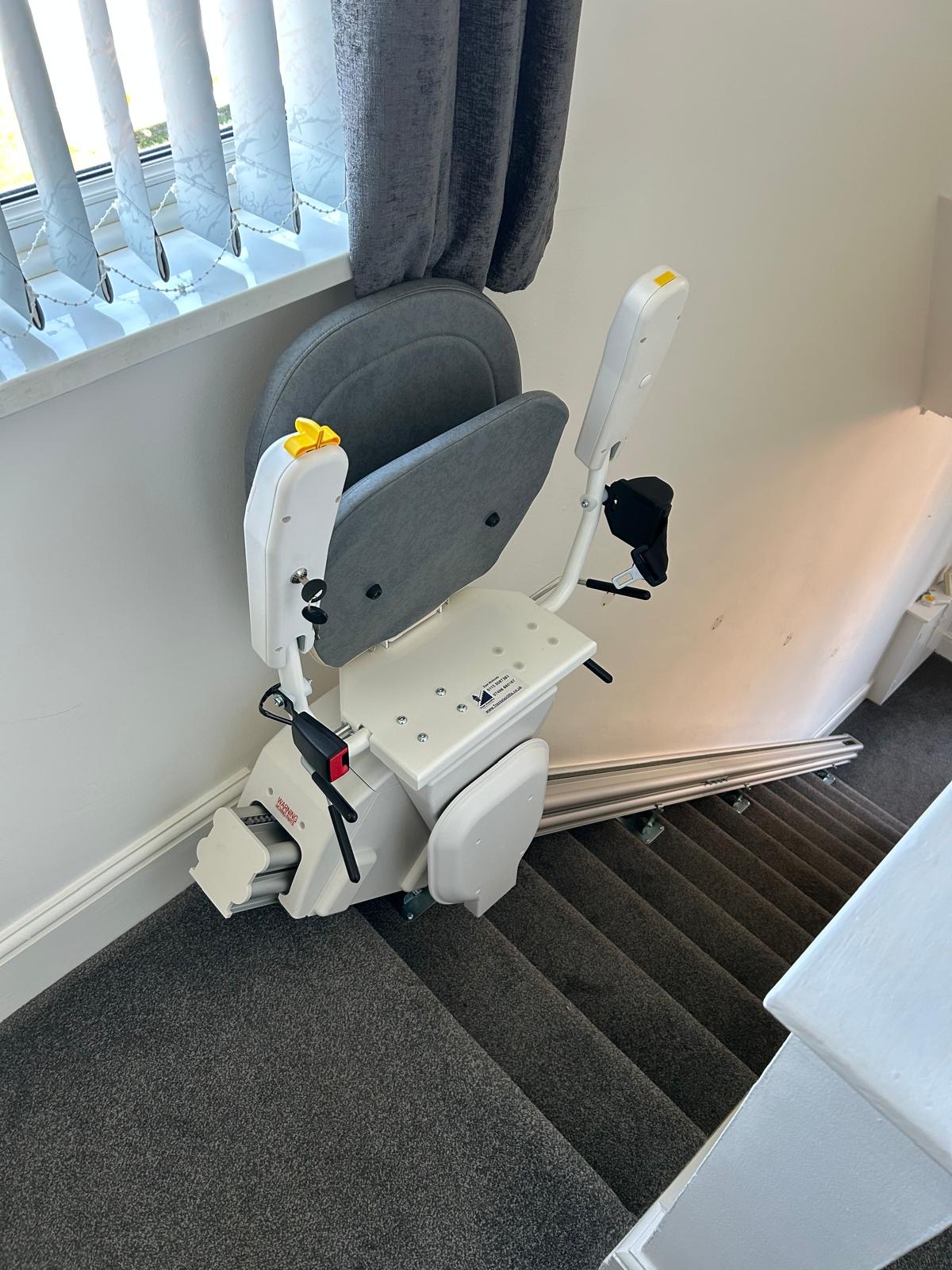
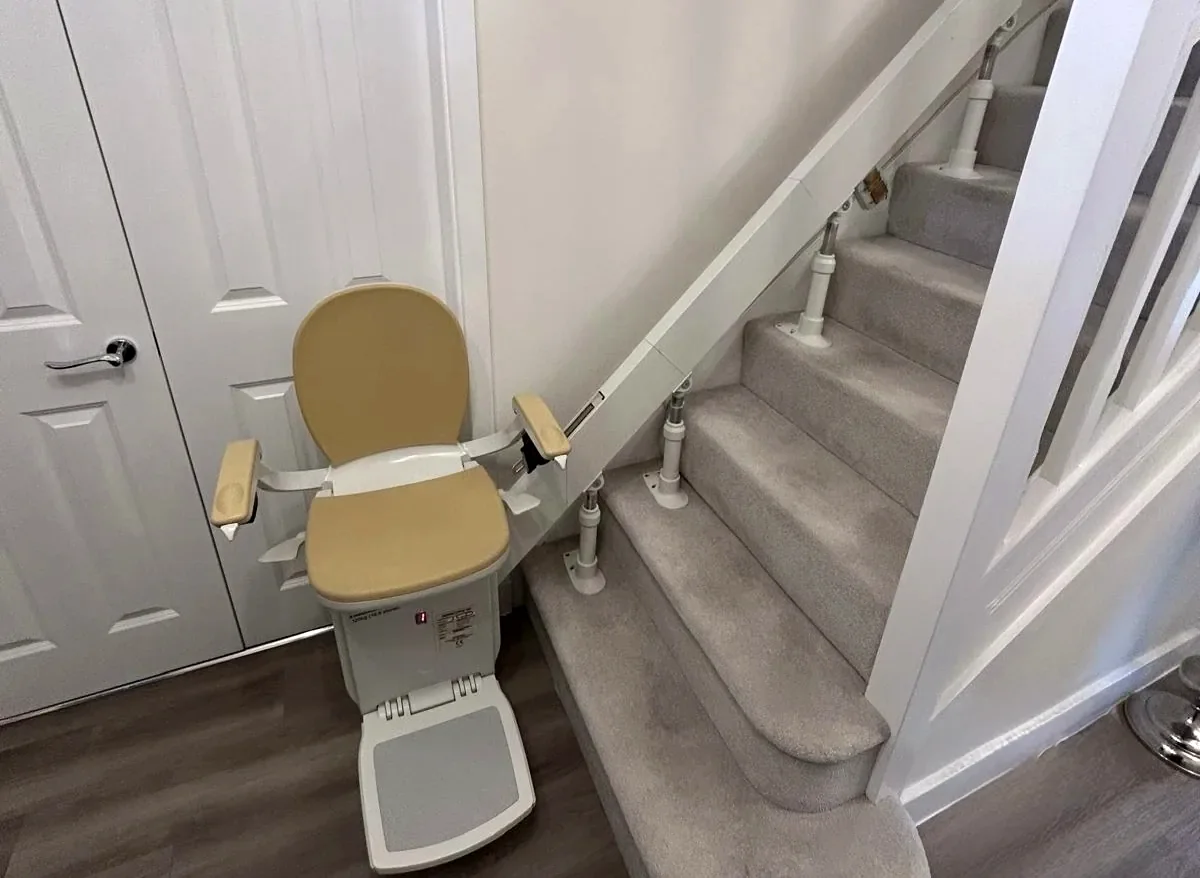
If you have young children or pets at home, a stair gate may already be fitted at the top or bottom of the stairs. So what happens when somebody in the same household needs a stairlift?
In most cases, the stair gate will need to be removed or relocated before a stairlift can be fitted safely.
The two pieces of equipment are both trying to use a fairly small area of the staircase. A gate that swings across the steps or landing can interfere with the stairlift chair, track and normal access, particularly near the top or bottom.
Why stair gates can cause problems
A stairlift needs space to approach its stopping point, park and allow the user to get on and off safely.
A stair gate is normally fitted across the same opening. The gate, its posts and the way it swings can all sit directly in the path that the stairlift needs to travel.
Even if the track itself appears to clear the gate, the chair, armrests, footrest or user may not. This is why simply measuring the rail and ignoring the rest of the moving machine isn’t enough.
The bottom of the stairs is often the most difficult area
A straight stairlift normally needs some space beyond the lowest step for parking and getting on or off.
If a stair gate is installed right across that area, the lift may block the gate or prevent it opening correctly. Equally, an open gate could swing into the stairlift’s travel or boarding area.
A hinged track may help with a nearby doorway in some properties, but it doesn’t automatically make a conventional stair gate compatible with the installation.
What about a gate at the top?
There is usually limited room at the top landing for the swivel seat to turn safely towards the floor.
A gate positioned across the top of the flight can interfere with that movement or prevent the user stepping off correctly. A gate must never be left where it creates an obstacle in the stairlift’s access area.
Do the gate brackets have to come down as well?
Often, yes.
Many stair gates are screwed into a wall, bannister or suitable fixing point. Where the gate has to be removed, its hinges, catches and mounting hardware may also need to come off so there is nothing protruding into the travel or boarding space.
That can leave small screw holes from the original gate fixings. These are separate from the stairlift track fixings, which are normally secured directly to the steps rather than to the wall.
Are there any situations where both can remain?
There are occasional exceptions.
For example, if a bannister or protected landing area extends substantially beyond the actual staircase, sometimes by a foot or more, there may be a position for the gate that is genuinely clear of the stairlift’s track, chair and boarding area.
Whether that works depends on the exact layout. It should never be assumed that a gate is safe simply because it can still close when the lift is parked.
What if a stair gate is essential for the children?
This is where planning matters. The solution shouldn’t be to leave an obstruction beside a moving stairlift and hope everyone avoids it.
The household may need to consider a different gate location or another suitable safety arrangement for children or pets. The best option depends on the home, and the gate manufacturer’s installation and safety instructions also need to be followed.
A staircase may be suitable for a stairlift while the existing gate position is not suitable at all.
Curved stairlifts and gate positions
Curved stairlifts can sometimes offer more flexibility in how the track approaches and leaves the stairs, including alternative parking positions.
However, they still require clear access and enough room for the chair and user. A curved track does not mean the gate can automatically remain in place.
You can see our curved stairlift range here if the staircase has turns or unusual landing arrangements.
What would be checked during the survey?
An installer should look at the gate’s position and movement as part of the overall staircase layout.
Important questions include:
- Where does the gate swing when opened?
- Does it interfere with the chair or track?
- Will it obstruct boarding or getting off?
- Can the gate be moved somewhere safely clear?
- Is there enough landing space for both systems?
- Will the gate still work as intended in a new position?
In many normal domestic layouts, the existing gate will have to be removed.
Final thoughts
Generally, stair gates and stairlifts don’t work well together when both are positioned directly at the top or bottom of the same staircase.
The track, chair and boarding area all need proper clearance, so a gate and its mounting hardware will usually need removing. A rare exception may be possible where the bannister or landing extends far enough beyond the stairs to keep the gate fully clear.
If you have a stair gate at home and need a stairlift in Nottingham or the East Midlands, Trent Stairlifts can assess the layout before installation. You can request a free, no-obligation quote here.
Stairlifts and stair gates – FAQs
Can I keep a stair gate when a stairlift is installed?
Normally not in its existing position. Most gates at the top or bottom interfere with the stairlift’s access or movement.
Will the gate need removing?
Usually yes, including any brackets that protrude into the stairlift’s space.
Is a stair gate at the bottom a problem?
Often, because the stairlift needs room to park and the gate may block the chair or track.
Can a gate remain if the bannister extends beyond the stairs?
Sometimes, if there is genuinely enough separation and clearance. The layout needs individual assessment.
Can a curved stairlift work with a gate?
It depends on the exact track and parking arrangement, but a curved lift doesn’t automatically solve the conflict.
What if I still need a safety gate for children?
A different gate position or safety arrangement may be needed; it must not obstruct the stairlift or prevent safe access.
post tags :
view related content
Previous Jobs