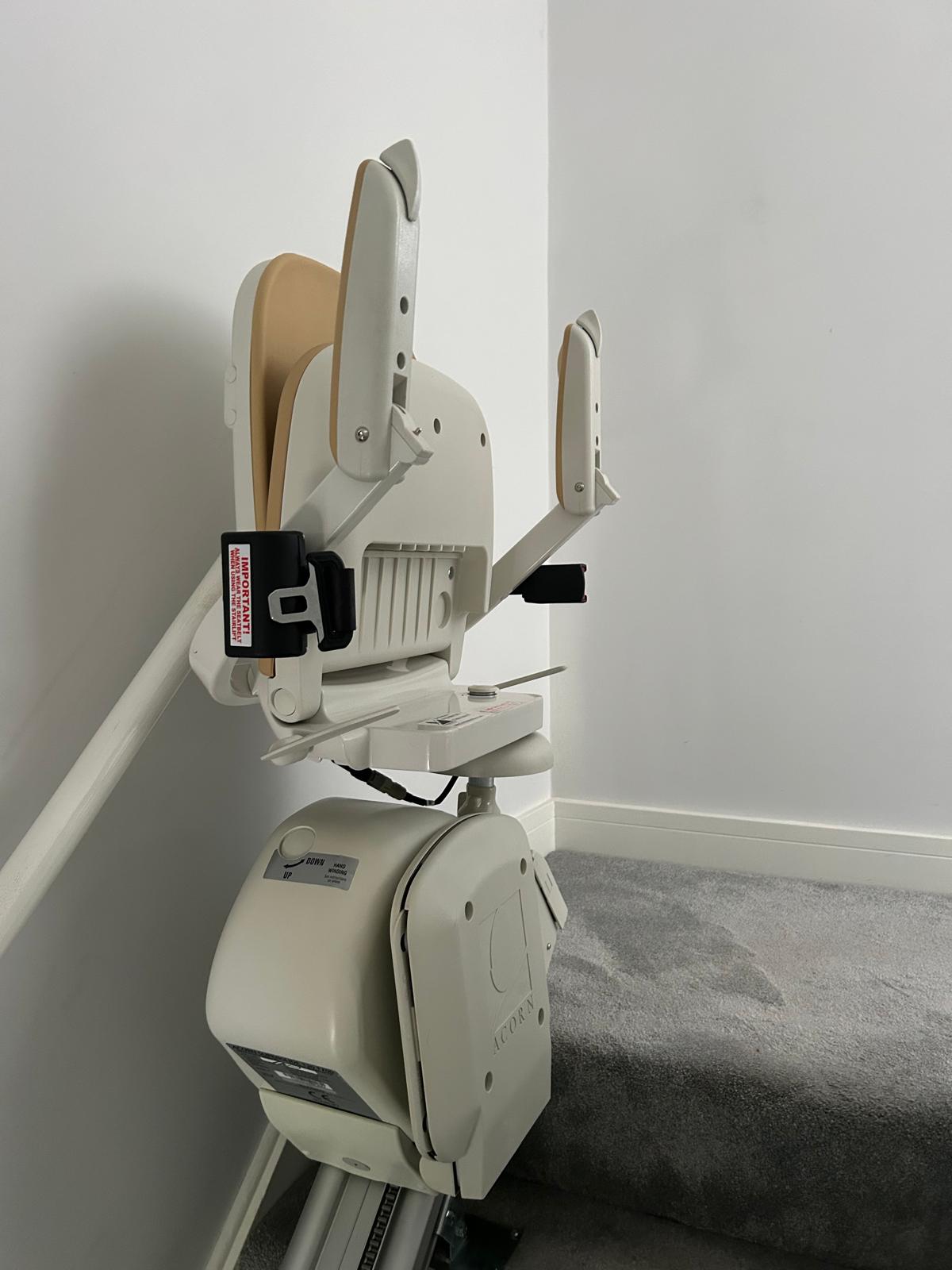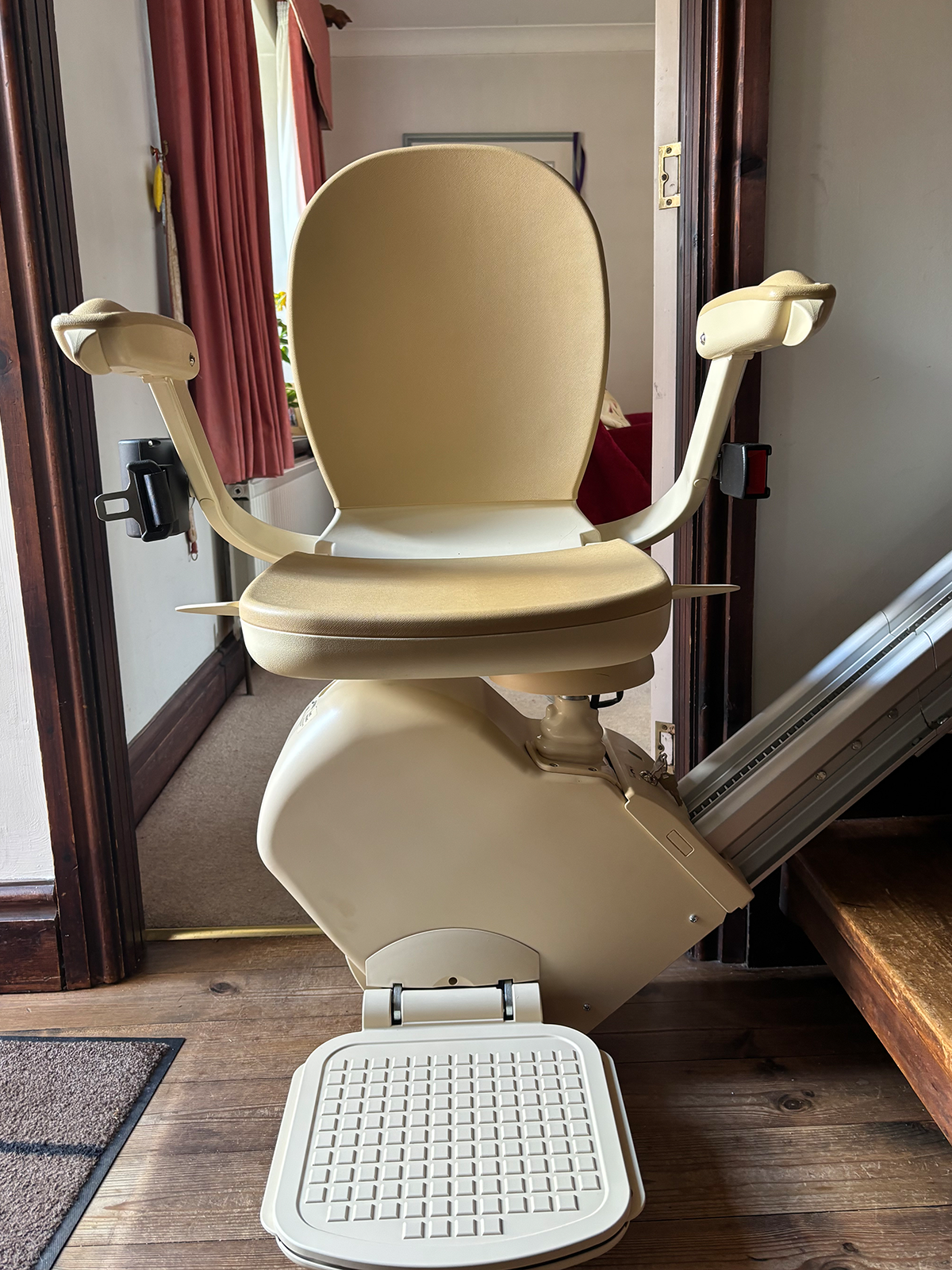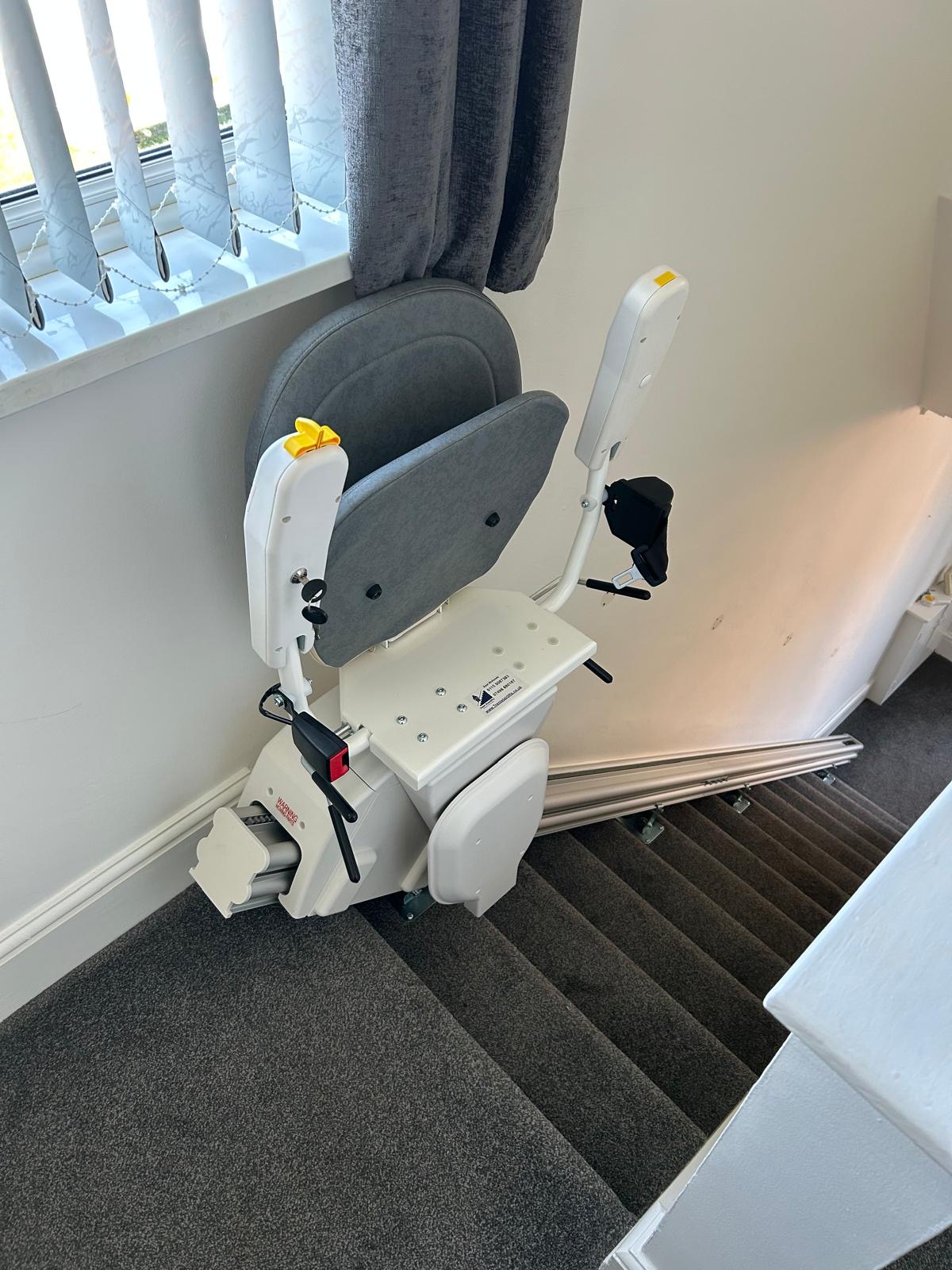
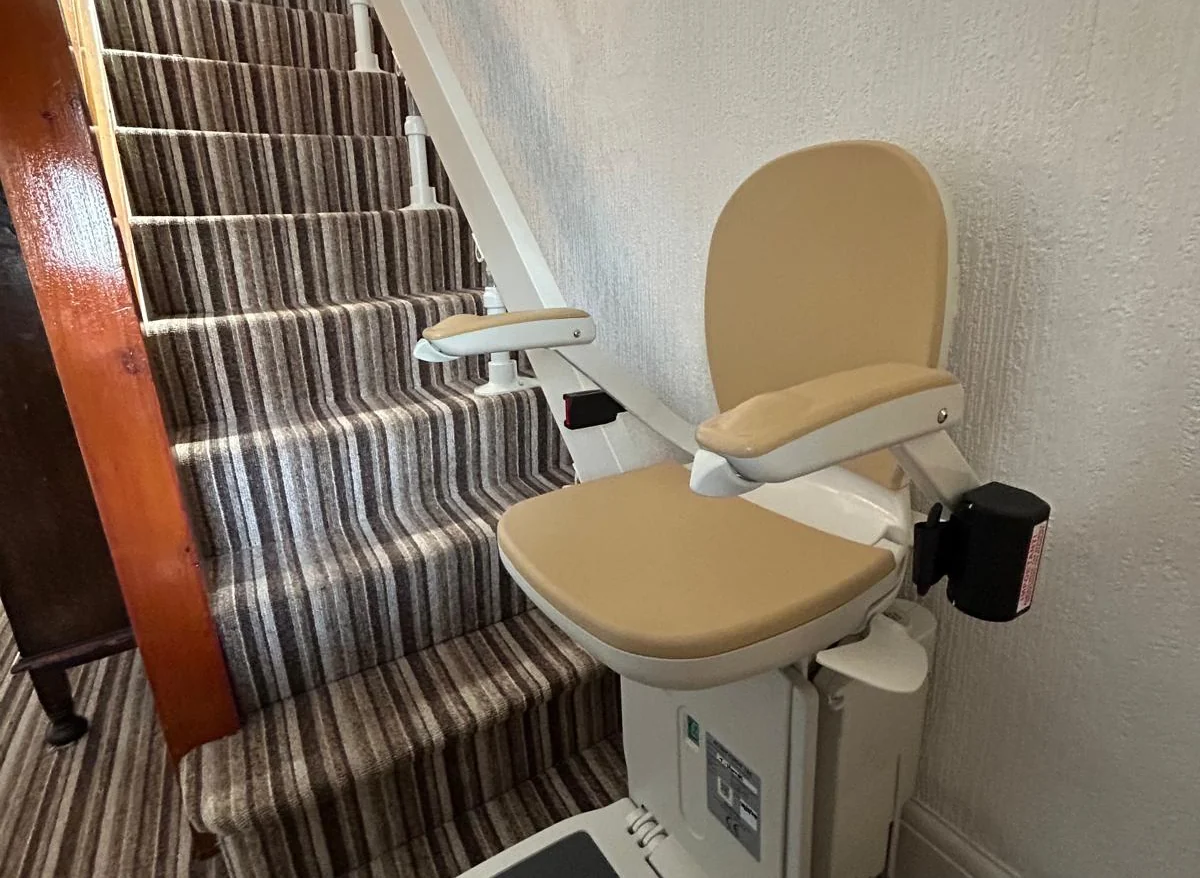
Can a Stairlift Fit Over a Stair Runner and Rods?
A traditional stair runner with decorative rods can be an important feature of a staircase. It might have been fitted for years, or it may be something the homeowner has chosen carefully to complement the rest of the hallway.
Fortunately, a stair runner and rods will not usually prevent a stairlift being installed. In many homes they can stay in place.
The main things the engineer needs to consider are where the rail support legs will sit, whether the rods or their fixings are in the way and how to deal with any difference in height between carpeted and uncovered parts of the tread.
How does a stairlift attach to stairs with a runner?
A normal stairlift rail is supported by brackets or legs fixed securely into the stair treads.
On a staircase with a runner, the rail support points may sit partly over carpet and partly over exposed timber, depending on the width of the runner and the side chosen for the lift.
The engineer needs to make sure each support is properly secured to the underlying staircase rather than relying on the carpet itself to carry a load.
Will the stair rods get in the way?
Stair rods are usually positioned towards the back of each tread, where the tread meets the riser above it. On a traditional installation, they sit across or alongside the runner at the junction.
When they are in their normal position, they frequently do not clash with the places where the stairlift support legs need to be fitted.
However, decorative rods, brackets and fittings vary quite a bit. A particularly large rod end or unusually positioned fitting may require the installer to plan the support location carefully.
A runner can create a small difference in height
One of the more common details is that the middle of the tread is covered by carpet while the area closer to the wall may be uncovered.
This creates a slight step in height. The runner may be thick enough that a support sitting partly over carpet would not sit level without additional preparation.
Rather than simply tightening the bracket down unevenly, the engineer may use suitable packing, washers or approved spacers to keep the stairlift rail correctly supported and aligned.
Why correct packing matters
A stairlift rail needs to be securely supported along the length of the staircase. If one bracket sits at the wrong height, it can affect the rail alignment and how the carriage runs.
Correctly fitted spacing or packing can help account for the difference between the carpeted and uncovered portions of the step.
The exact method should follow the stairlift manufacturer’s fixing requirements. Random loose washers or improvised materials are not an acceptable replacement for a properly designed and secured bracket installation.
Does the carpet need to be cut away?
Usually not. A well-planned installation can often retain the existing runner and avoid cutting into it.
Where a difference in level needs correcting, using approved packing or spacers is often preferable to removing sections of a decorative carpet.
That said, if the material prevents a safe fixing or the proposed rail position clashes with an unusual fitting, the installer will need to explain the options. The right decision is the one that gives a secure installation with the least unnecessary disruption.
What if the runner goes right to the wall?
Some carpets cover almost the full width of the tread, while others leave a clear strip of timber on either side.
That affects where the stairlift supports will be positioned and whether any packing is needed. The absence of exposed timber at the edge does not automatically make installation impossible.
The important thing is understanding the tread construction beneath the carpet and using the appropriate fixing system.
Can the runner remain in place if the stairlift is removed?
In many cases, yes. When a stairlift is removed, the runner will often remain intact, although the installation may leave small fixing holes or impressions where brackets were secured.
Exactly how visible these marks are depends on the carpet, the fitting position and how long the stairlift has been installed.
If preserving the appearance of the staircase is particularly important, tell the surveyor before work begins so potential fixing positions and their likely effects can be discussed.
What about curved staircases with runners?
Curved stairlifts often need more support points than a simple straight installation because the rail follows bends, corners or landings.
The same principles apply: check rod positions, secure the supports to the structural treads and maintain correct rail alignment where carpeting varies in thickness.
The layout can be more complicated, so it is especially useful to assess the whole staircase in person. Trent Stairlifts supplies both straight and curved stairlift options.
Final thoughts
Most stair runners and decorative stair rods can remain in place when a stairlift is installed. Rods fitted in their usual positions at the back of the treads rarely create a major problem.
The main detail is making sure the support legs are level and securely fixed if one part of a tread is covered by carpet and another is not. Suitable spacers or packing can often solve this without cutting away the runner.
If you have traditional stair carpets or rods in Nottingham or across the East Midlands, Trent Stairlifts can assess the staircase and explain how a lift can be fitted with minimal disruption. Request a free, no-obligation quote here.
Frequently asked questions
Can you fit a stairlift on carpeted stairs?
Yes. Stairlift supports can be fixed to suitable structural treads beneath carpet using the correct method.
Do stair rods need to be removed?
Often not. Normally positioned rods usually sit away from the main support points, but the exact layout must be checked.
Will the installer cut my stair runner?
Usually there is no need. Approved spacers or packing may be used where carpet creates a difference in height.
Can a stairlift bracket sit over part of a runner?
Potentially, provided it is correctly aligned and securely fixed to the tread in line with the manufacturer’s requirements.
Will a curved stairlift damage a runner?
It can usually be planned to minimise disturbance, although fixing holes or impressions may be left by the supports.
Should I remove carpet rods before the survey?
No. Leave them in place so the engineer can assess their actual position and design the installation around them where possible.
post tags :
view related content
Previous Jobs