Can a Stairlift Fit With Under-Stair Storage?
Lots of houses make good use of the space beneath the stairs. It might be a cupboard for coats, a storage area for cleaning equipment or even part of an open-plan hallway.
That does not usually prevent a stairlift being installed. The rail is normally supported by legs fixed into the staircase treads, so the equipment above the stairs and the storage space underneath can often coexist.
There is one detail worth checking, particularly where the underside of the wooden steps is exposed: the stairlift fixings must not create a sharp or unsafe protrusion into the storage area.
How is a stairlift attached to the staircase?
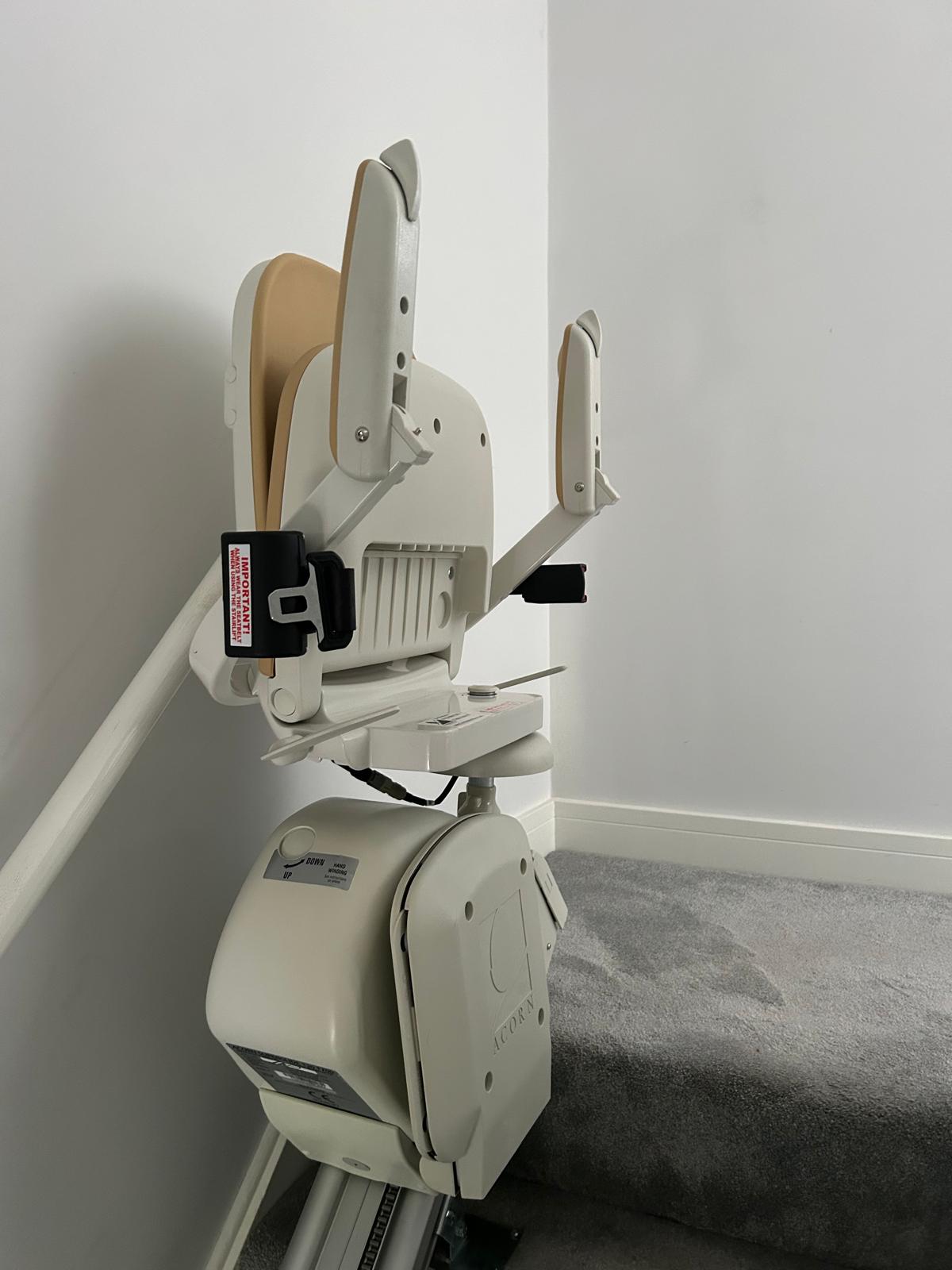
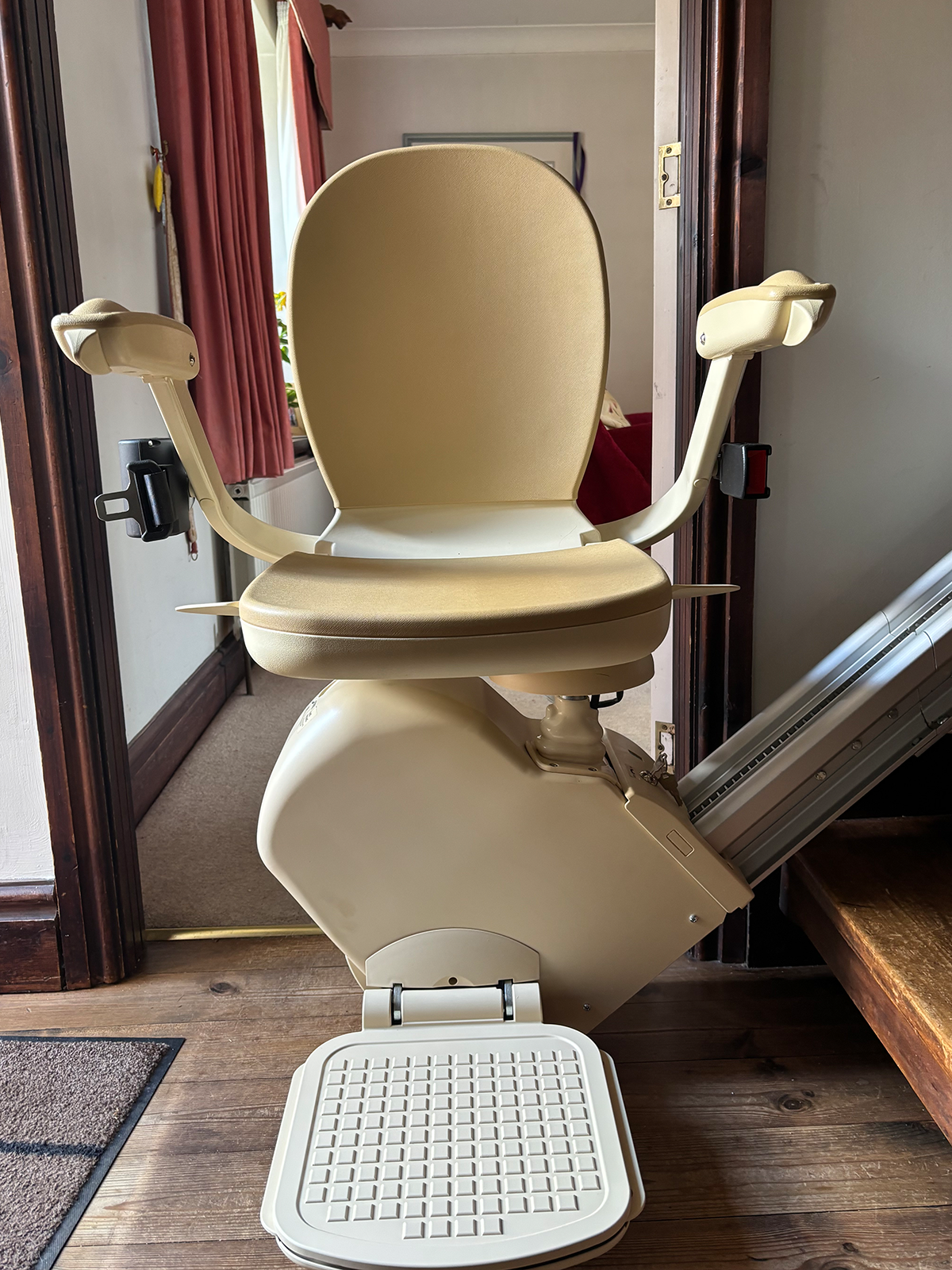
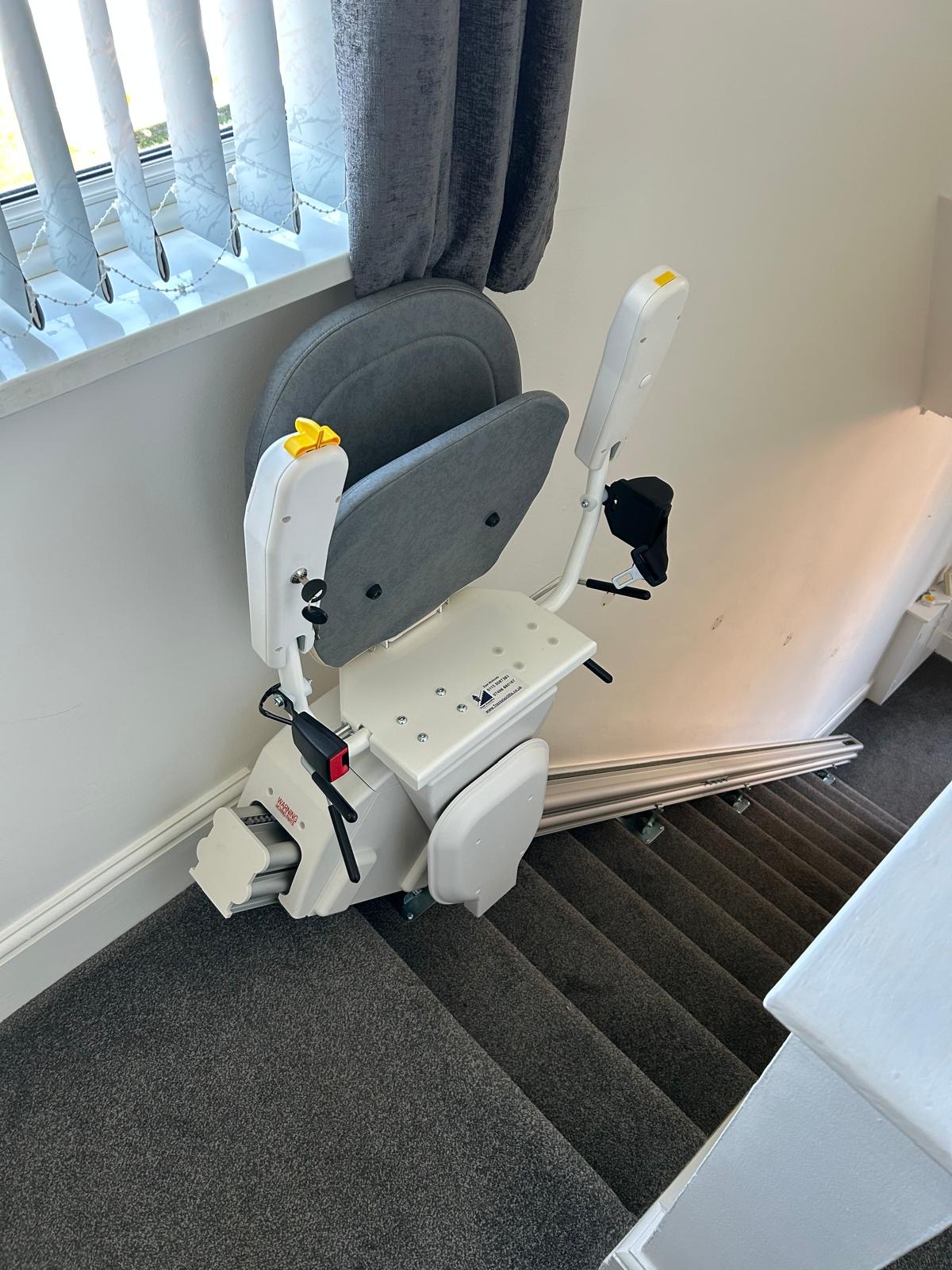
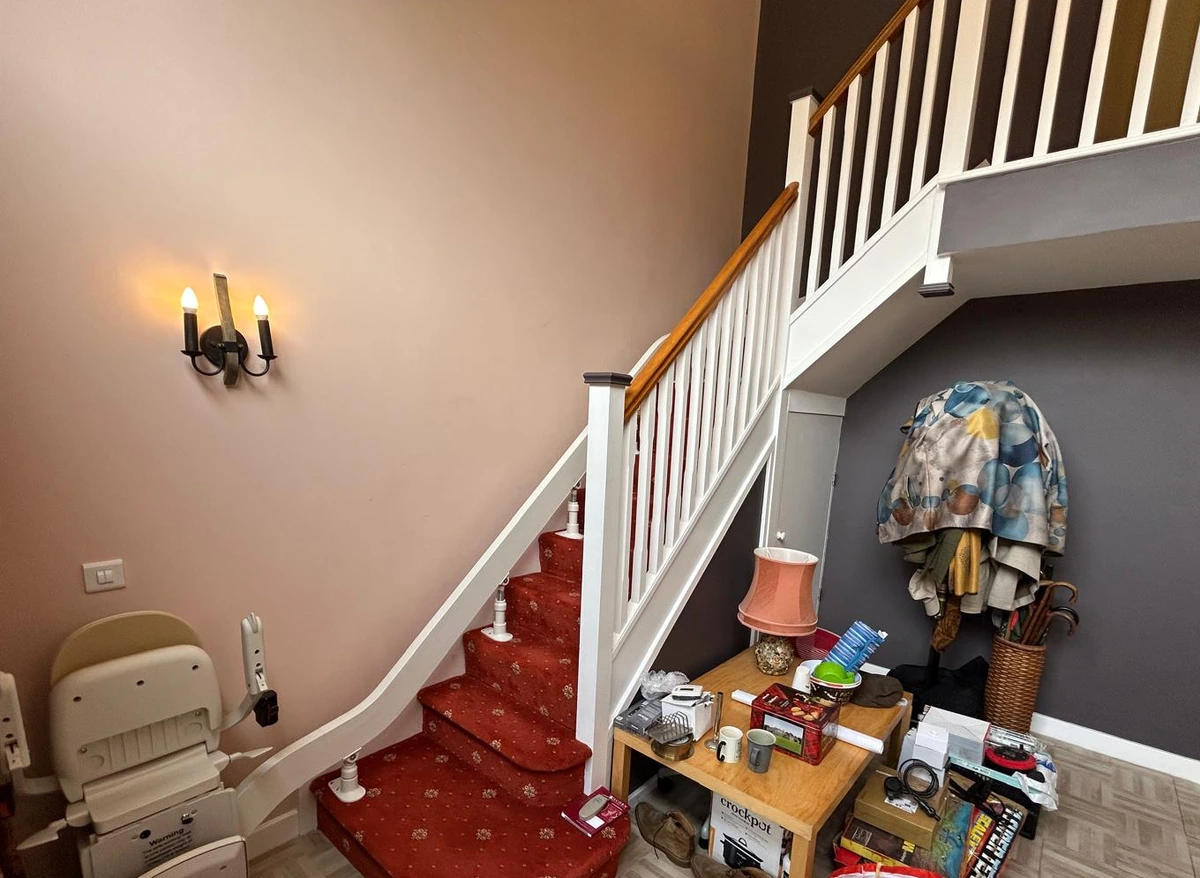
Most domestic stairlift rails are supported on legs or brackets fixed directly to the stair treads. A typical installation does not require the rail to hang from a wall or take up the space inside an under-stairs cupboard.
On timber staircases, suitable screws are used to secure the support legs. Concrete and other staircase materials may need a different fixing arrangement.
The fixing positions are chosen to support the track along its route, which means several steps may have supporting brackets.
Why under-stair cupboards usually aren’t a problem
If the cupboard is enclosed beneath the staircase, the stairlift itself sits above it on the steps. In many homes, the underside of the staircase is lined or boxed in, so the customer will not even see the locations of the fixings.
The stairlift rail does not normally require cupboards or shelves to be removed just because they happen to be underneath the stairs.
However, access may be needed during a survey if an engineer needs to inspect the condition of the steps or check what is directly beneath a proposed fixing point.
Exposed undersides of wooden steps need attention
Some cupboards and storage areas leave the bare underside of the timber treads visible. In those cases, it is worth checking whether a screw could pass through or project from the underside.
The screws used for a stairlift support bracket may be around 50–60mm long in some installations, but this varies with the model and fixing method. The bracket thickness and timber depth determine how much of that length enters the step.
On a sufficiently thick tread the screw may not protrude at all. With a thinner tread, an unsuitable fixing could create a sharp point below the stairs. This should be checked during installation, not left for the customer to discover later.
Why a small protrusion can still matter
Under-stair storage is often used at a low height. People reach into cupboards, move boxes or store a vacuum cleaner beneath the staircase.
Even a small exposed screw point could scratch somebody or catch clothing when they are reaching into the space.
The solution is not to ignore it because it seems minor. The installer should select appropriate fixings and consider the underside of the staircase so the finished installation is safe on both sides of the steps.
What if there are pipes or electrical cables under the stairs?
Another reason to inspect the area is that some homes have wiring, heating pipes or other services passing close to the underside of the staircase.
An engineer needs to identify any potential hazards before drilling or installing fixings. The route of services is not always obvious from looking at the carpeted tread above.
If you know where cables or pipes run, mention it at the home survey. A small adjustment to a fixing position can sometimes avoid a problem, but any change still has to meet the stairlift manufacturer’s requirements.
What about open staircases?
A staircase with exposed treads, or an open underside used as a desk or storage area, may need additional care because fixings can be visible from below.
This does not automatically rule out a stairlift. What matters is the stair construction, tread thickness, safe fixing method and protection from any sharp projections.
The installer should also assess whether the steps themselves are structurally suitable before securing a rail.
Will installing a stairlift damage the storage cupboard?
In a typical installation, there is no need to alter the cupboard beneath the stairs. The stairlift’s track is positioned on the steps, and the support legs are fixed from above.
There may be small screw holes in the stair treads if the lift is ever removed, but that is different from dismantling or damaging the under-stairs storage.
If the cupboard lining is unusually close to the treads or access is limited, the survey will identify whether any specific work is required.
What should you tell the installer?
Let the engineer know whether the under-stairs space is fully enclosed, partly open or used regularly for storage. If the underside of the treads is visible, show them that area.
It is especially useful to mention thin timber steps, previous repairs, hidden pipework or electrical services.
For most normal staircases, these checks are straightforward and the installation can proceed without sacrificing useful storage space. Our straight stairlift options and curved stairlift options can both be assessed on this basis.
Final thoughts
Under-stair storage rarely prevents a stairlift being fitted. Because the rail is attached to the steps, the space below can usually remain in use.
The main detail to watch is the underside of exposed treads. An installer should ensure the fixing length and position are appropriate, so there are no dangerous screw points in the storage area.
If you have a staircase with a cupboard or exposed storage area underneath in Nottingham or the East Midlands, Trent Stairlifts can assess it properly. Get a free, no-obligation quote here.
Frequently asked questions
Can I have a stairlift if there is a cupboard under the stairs?
Usually yes. A normal stairlift installation is fixed into the stair treads above the cupboard.
Will the rail supports go through my steps?
Screws enter the treads to secure the brackets; their length and the tread thickness determine whether any tip could protrude below.
How long are the fixing screws?
Some installations use screws around 50–60mm, but the correct specification varies by staircase and stairlift.
Can screws stick out underneath a wooden staircase?
They should not be left creating a hazard. Exposed undersides must be checked and suitable fixings used.
Do I have to empty my under-stairs cupboard?
Not usually for the entire installation, though clear access may be useful if the underside needs inspecting.
Can a stairlift be fitted above electrical wiring?
Potentially, but the installer must identify and avoid any services that could be affected by the fixings.
post tags :
view related content
Previous Jobs