Can Stairlifts Be Installed on Basement Stairs?
Basement stairs can sometimes look a little different to the main staircase in a home, which often leads people to wonder whether a stairlift can be fitted to them.
In most cases, there is no problem at all.
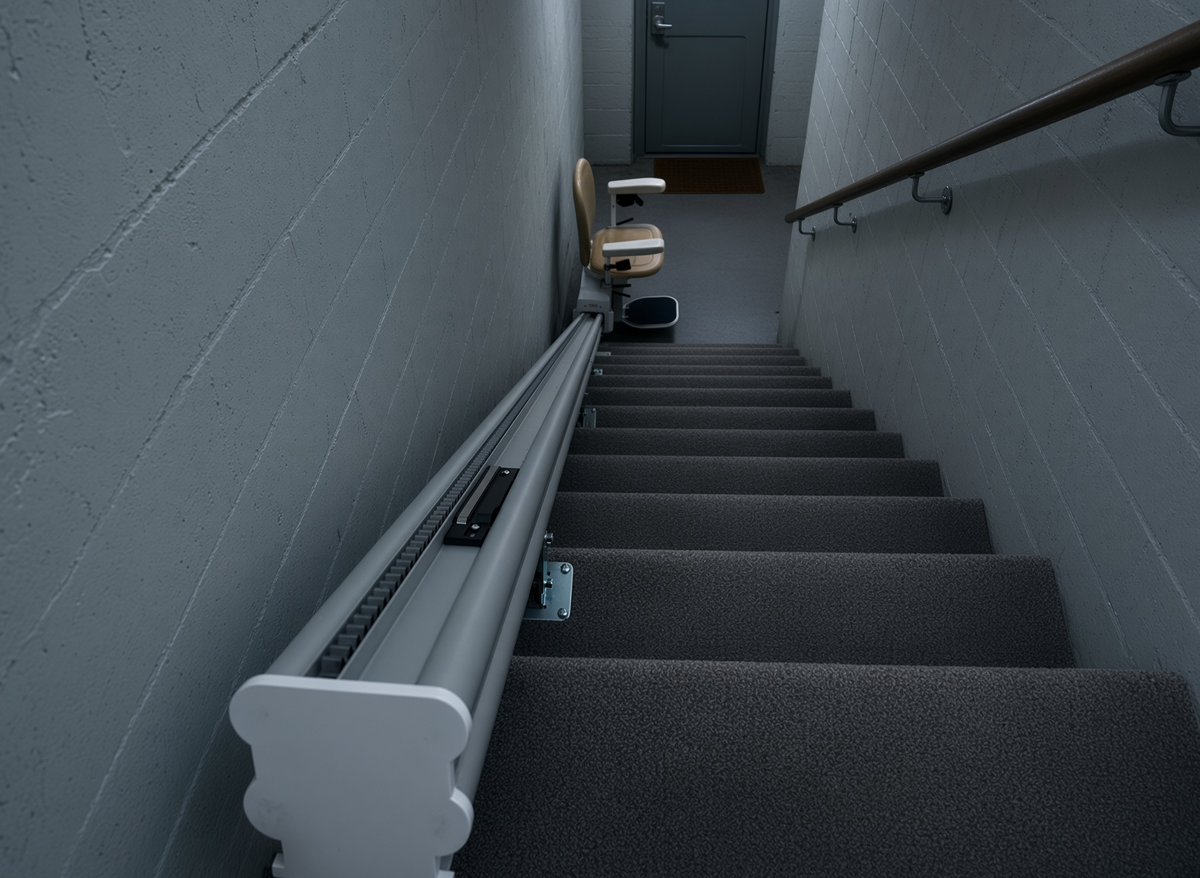
If the basement has a normal, permanent staircase in good condition, a stairlift can usually be installed in exactly the same way as it would on stairs leading to an upstairs floor.
Basement stairs can be narrower
One thing we regularly see with basement staircases is that they can be narrower than the main stairs in the house.
That doesn’t automatically mean a stairlift won’t fit, but available width becomes more important.
The wider the staircase, the easier it normally is to provide enough room for both the stairlift user and anyone who still needs to walk up and down the stairs.
User height matters as well as stair width
It isn’t enough to simply measure the staircase and decide that a lift physically fits.
The person using the stairlift matters too.
A taller user will naturally require more knee and leg clearance than somebody considerably shorter.
This becomes particularly important on narrow basement stairs. A staircase that may comfortably suit one person could feel too restrictive for somebody who is 6ft 2in, for example.
Straight or curved basement stairs
If the basement staircase consists of one straight flight with no bends, then a standard straight stairlift will usually be suitable.
If there are turns or intermediate landings, a curved stairlift may be required instead.
You can view our straight stairlift options here and our curved stairlifts here.
Does being underground affect the stairlift?
The fact that the stairs lead to a basement isn’t generally important to the stairlift itself.
What matters is that the staircase is structurally suitable, dry and provides the required space for installation and safe use.
If the basement is particularly damp, that’s something worth addressing anyway, both for the stairlift and the rest of the property.
How is a basement stairlift fitted?
Just like other domestic stairlifts, the track fixes directly to the steps and not to the wall.
This means the basement doesn’t need to have a particular type of wall construction for the stairlift to work.
The fixing method will depend on whether the steps are timber, concrete, steel or another suitable material.
Final thoughts
Basement stairs are generally no different to any other staircase from a stairlift point of view.
The biggest consideration is often width, particularly if the basement stairs were originally designed to be more compact than the main staircase.
If you’re unsure whether your basement stairs have enough room, Trent Stairlifts can measure everything properly during a home survey. If you’re in Nottingham or the East Midlands, you can request a free quote here.
Basement stairlifts – FAQs
Can a stairlift go down to a basement?
Yes. A normal fixed basement staircase can usually have a stairlift installed.
Are basement stairs too narrow?
Not necessarily, although they are sometimes narrower than the main stairs in a home.
Does the user’s height matter?
Yes. Taller users require more leg and knee clearance, particularly on narrow stairs.
Can curved basement stairs have a stairlift?
Yes. A curved stairlift can be used where there are bends or landings.
Does a basement need a special wall?
No. Stairlift tracks attach to the steps rather than the wall.
Will a survey confirm whether it will fit?
Yes. Measuring both the staircase and the user requirements is the best way to confirm suitability.
post tags :
view related content
Previous Jobs