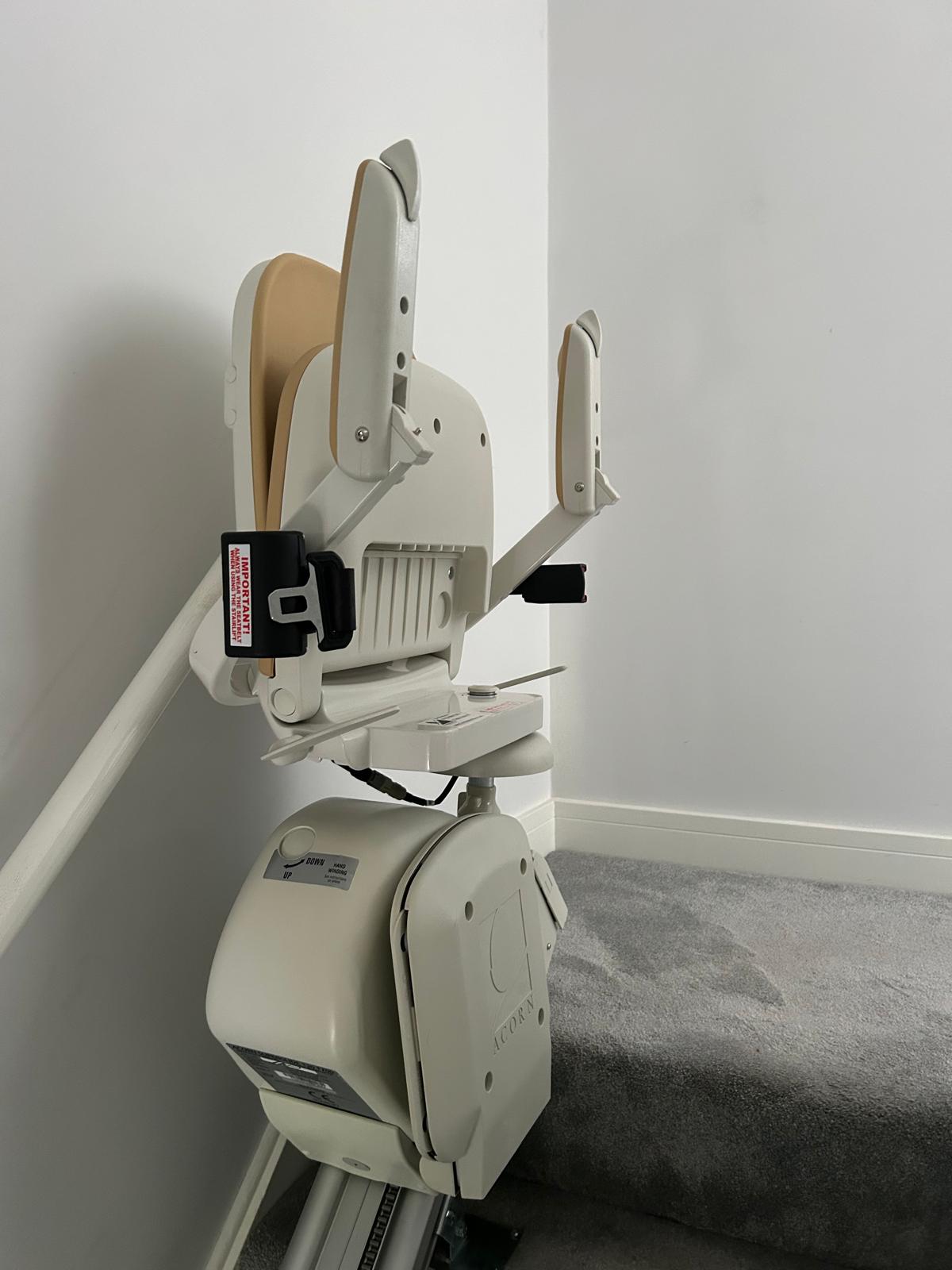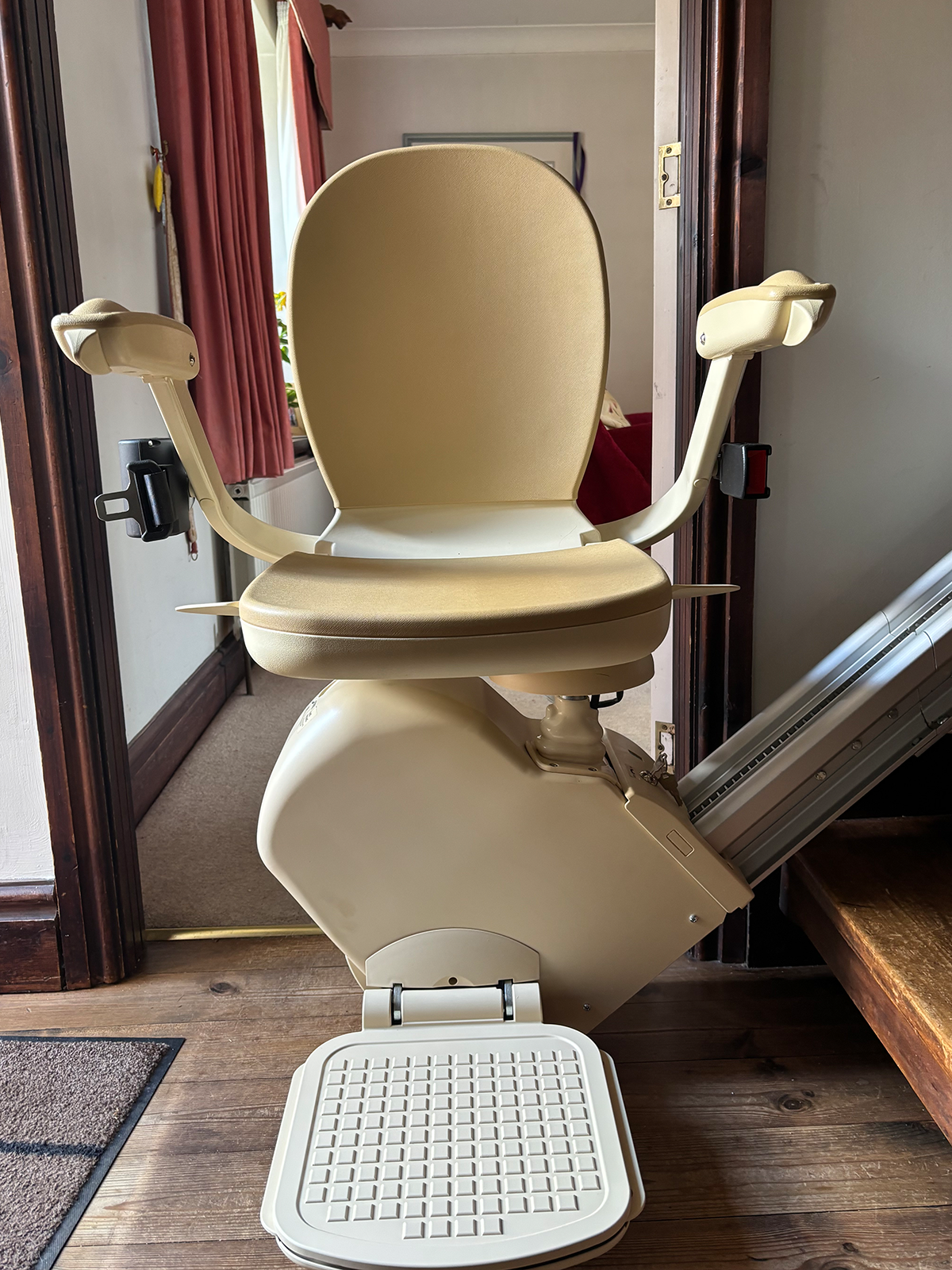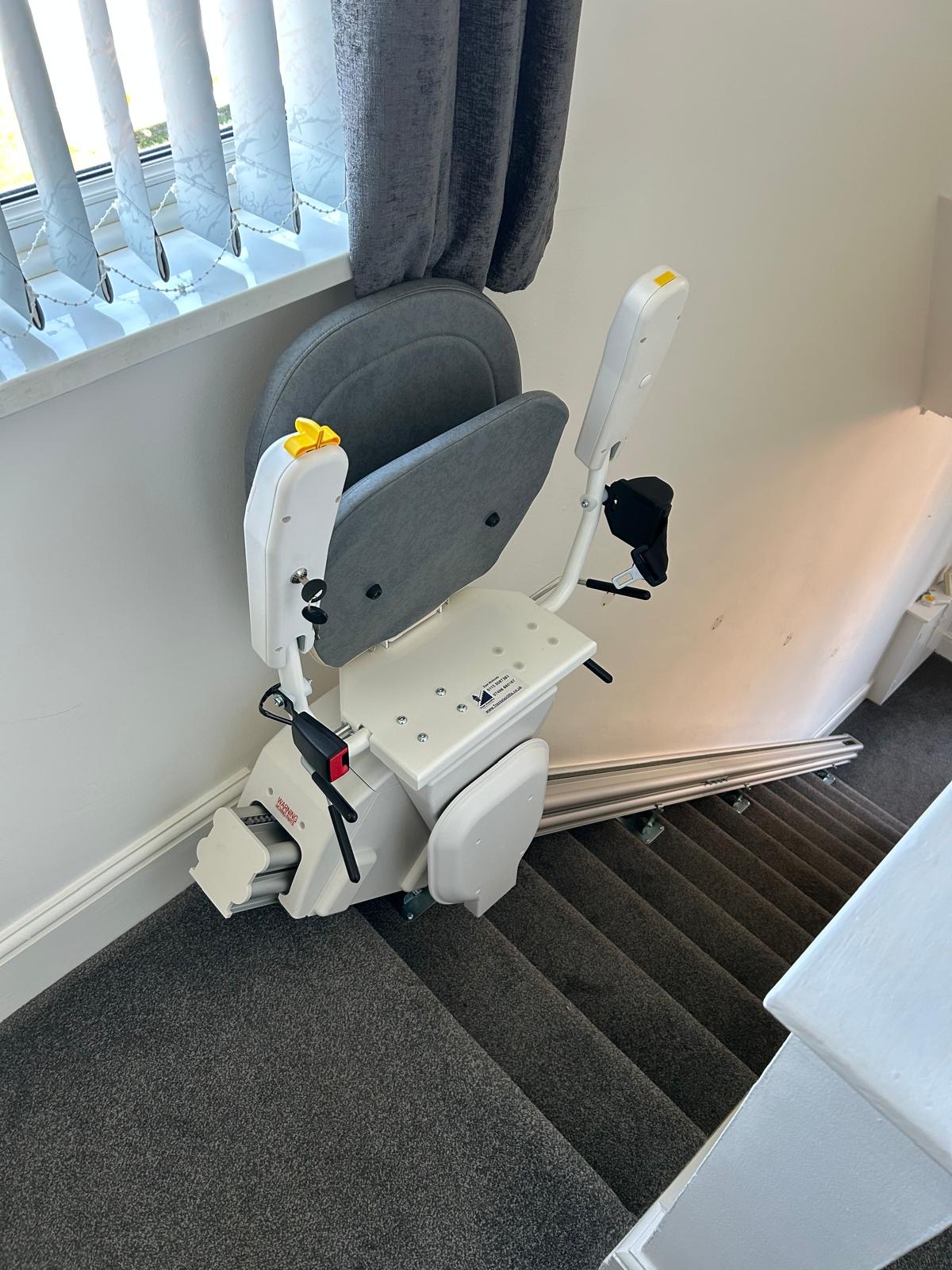
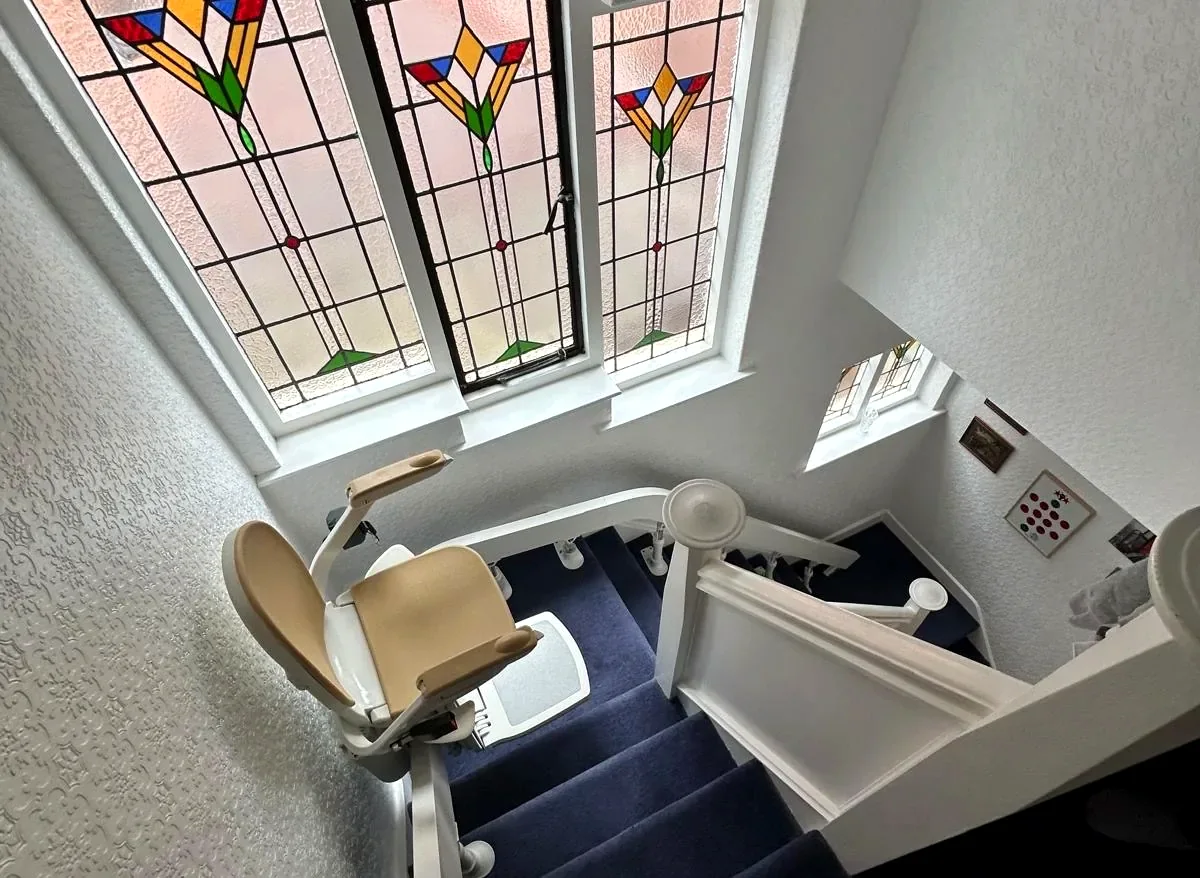
A stairlift is quite different from buying an ordinary household product. It’s chosen to suit the person who’ll use it, measured to fit the staircase and then professionally installed in the home.
So what happens if somebody has a stairlift fitted and later decides they no longer want it?
Generally speaking, stairlifts aren’t products you can simply expect to return after installation because you’ve changed your mind. Before ordering, ask for the written cancellation and returns terms that apply to your purchase. A change-of-mind request after installation is different from a problem with a faulty or misdescribed product, which should be raised with the installing company promptly.
Why a stairlift isn’t a normal shop purchase
Before an installation, the staircase is surveyed and the customer’s requirements are discussed in detail. The installer needs to consider the layout of the stairs, the user, getting on and off safely and whether a straight or curved system is appropriate.
Once the lift has been installed, it has been handled, fitted and used in that particular home. Even if the user changes their mind almost immediately, the equipment is no longer in exactly the same condition as an untouched new product.
That’s one reason returns can be complicated and why it’s important to understand the agreement before going ahead.
Curved stairlifts are particularly complicated
Many curved stairlift tracks are manufactured specifically for an individual staircase, taking account of the bends, landings and changes in angle.
If that track is removed, another customer may have a completely different staircase and be unable to use it. The main chair and carriage might be reusable, but the rail may require substantial alteration or replacement.
This is why custom-manufactured curved systems need particular care around ordering, cancellation and returns. Ask for the written terms that apply before you order, especially where a rail is made for a particular staircase — do not assume that calling a lift ‘curved’ or ‘bespoke’ settles the position by itself.
Are straight stairlifts easier to return?
Straight stairlifts are generally more adaptable than curved ones, but removal is still work and the rail may not suit another property without changes.
If the next staircase is shorter, the track may need cutting. If it’s longer, extra rail sections or a replacement track may be required. There are also collection, inspection, transport and reconditioning costs to consider.
A stairlift that was sold and fitted as brand new becomes a used product once it has been installed and subsequently removed.
Check the written terms before you order
This is the point where it’s important not to make blanket statements.
Before ordering, ask for the written cancellation and returns information that applies to your purchase. Stairlift contracts can differ depending on how the order was placed and what was supplied, including whether a rail was made for a particular staircase.
A supplier’s change-of-mind policy is not the same as the separate protections that can apply if goods are faulty, not as described or have been incorrectly installed. Those fault-related protections are not removed simply because a company does not normally accept returns for change of mind.
If you’re considering cancelling an order or disputing a problem, check the written terms for your purchase and, if needed, seek independent advice. The circumstances need to be considered individually.
What if the stairlift doesn’t work as agreed?
If the supplied lift doesn’t match the contract or develops a fault, that’s different from somebody deciding they no longer want a correctly supplied product.
Contact the installing company promptly, describe the problem and give them the opportunity to assess it. Depending on the circumstances, a repair, replacement or another remedy may be available under the written terms of the sale and any separate fault protections that apply.
It’s not sensible to treat a genuine fault as merely a change of mind.
Why getting the right lift at the start matters
At Trent Stairlifts, the purpose of a quotation and home survey is to help ensure the correct stairlift is chosen before anything is ordered or installed.
That includes checking whether the user can sit comfortably, whether a powered swivel would help, the available clearances and whether the staircase requires a straight or curved rail.
A customer who understands the product and how it will work in their home is much less likely to have unexpected concerns afterwards.
Can the stairlift be sold back instead?
If a stairlift is no longer needed, there may sometimes be a separate option to sell it to a company that buys suitable second-hand lifts.
That kind of resale arrangement is not the same as returning a purchase for a refund. Any offer may depend on age, condition, model popularity, parts availability and the cost of removal and preparation for reuse.
You should expect any offer to be lower than the original purchase price, sometimes considerably lower. Not every lift will attract interest, and this is not a Trent Stairlifts purchase guarantee.
What about renting a stairlift?
For somebody who expects to need a stairlift only temporarily, a rental may be worth considering from the beginning.
Rental agreements have their own installation, monthly charges, removal arrangements and terms, so the customer should understand those before signing. It may be a better fit than purchasing a lift and then hoping to sell it a few months later.
You can see Trent Stairlifts’ rental options here.
Final thoughts
A stairlift isn’t usually something you can treat like a normal boxed product and return after installation simply because you’ve changed your mind. It has been surveyed, fitted and often adapted for the property, and removing it creates real costs.
Always ask for the written cancellation and returns terms before ordering rather than assuming there are no options or that a refund is guaranteed. Raising a fault or misdescription promptly is different from asking to reverse a correctly supplied installation simply because you’ve changed your mind.
If you’re in Nottingham or the East Midlands and want to understand the options before purchasing, Trent Stairlifts can talk you through the product, installation and available alternatives. You can request a free, no-obligation quote here.
Returning a stairlift – FAQs
Can I return a stairlift simply because I’ve changed my mind?
Not automatically. Ask for the written cancellation and returns terms that apply to your order before you commit.
Are curved stairlifts harder to resell?
Often yes, because many curved tracks are made specifically for the original staircase.
Does an installed straight stairlift count as used equipment?
Once fitted and used, it is no longer an untouched new product, although this does not itself determine your legal rights.
Do I have rights if the stairlift is faulty?
Faults, misdescription or incorrect installation should be raised promptly with the installing company. Those issues are treated separately from a simple change of mind — check the written terms and, if needed, seek independent advice.
Can I sell a stairlift back to a company?
Sometimes, depending on age, condition and demand. Selling used equipment to a third party is different from a refund or cancellation, and not every company will buy every lift.
Would renting be better for a short-term need?
It may be. Rental is worth considering if you expect to need a lift only temporarily.
post tags :
view related content
Previous Jobs