How Does a Curved Stairlift Stay Level Around Bends?
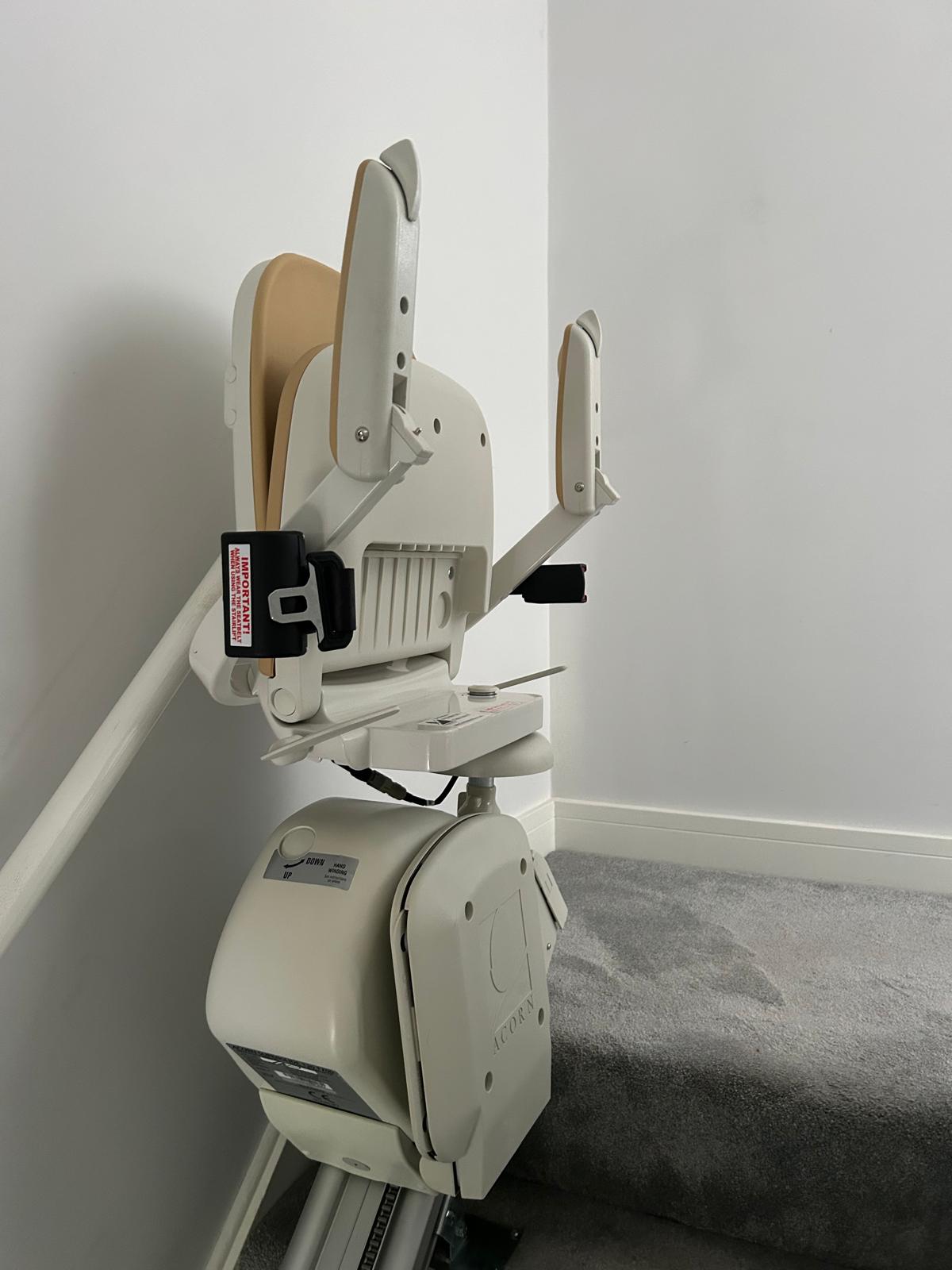
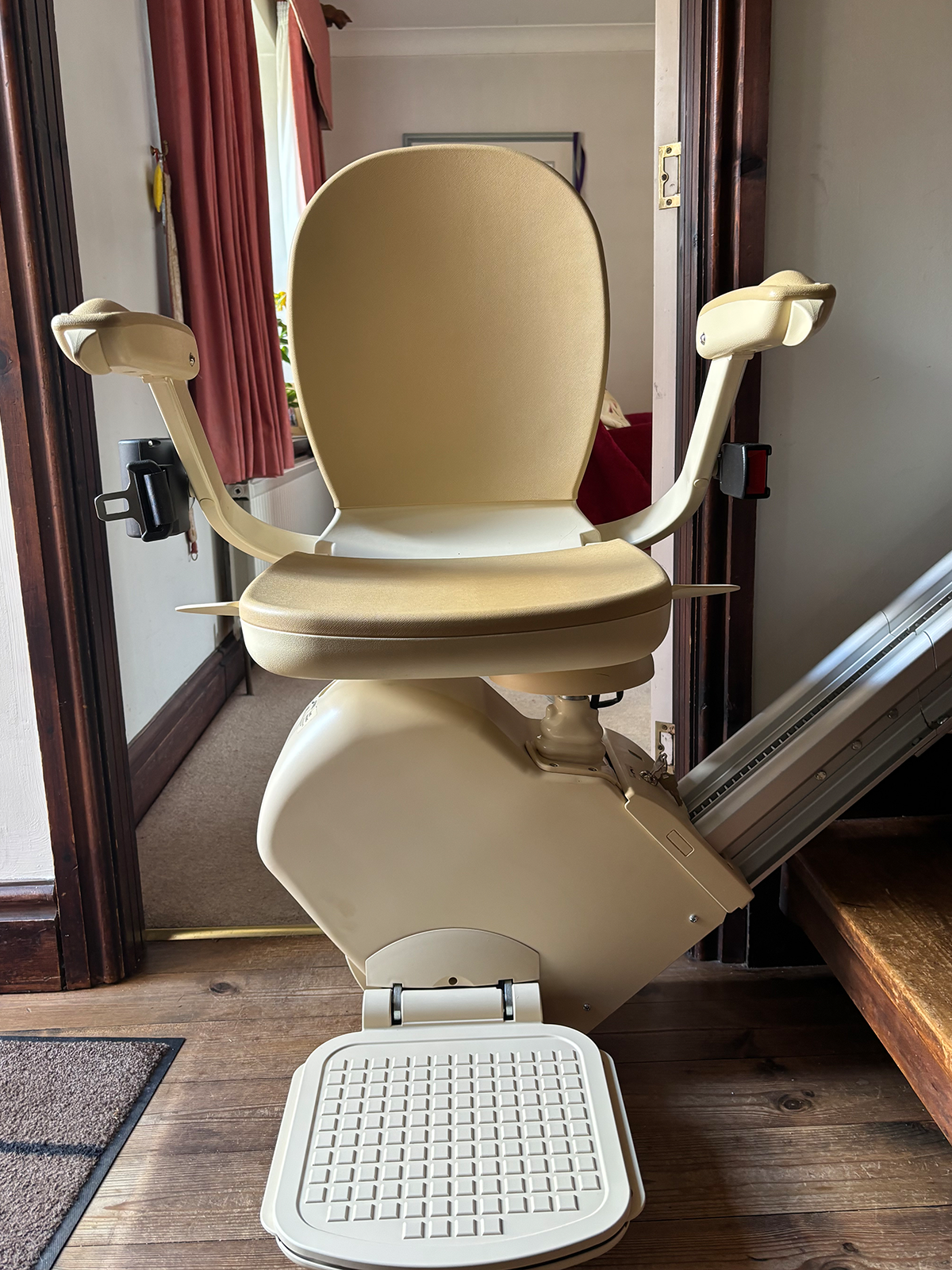
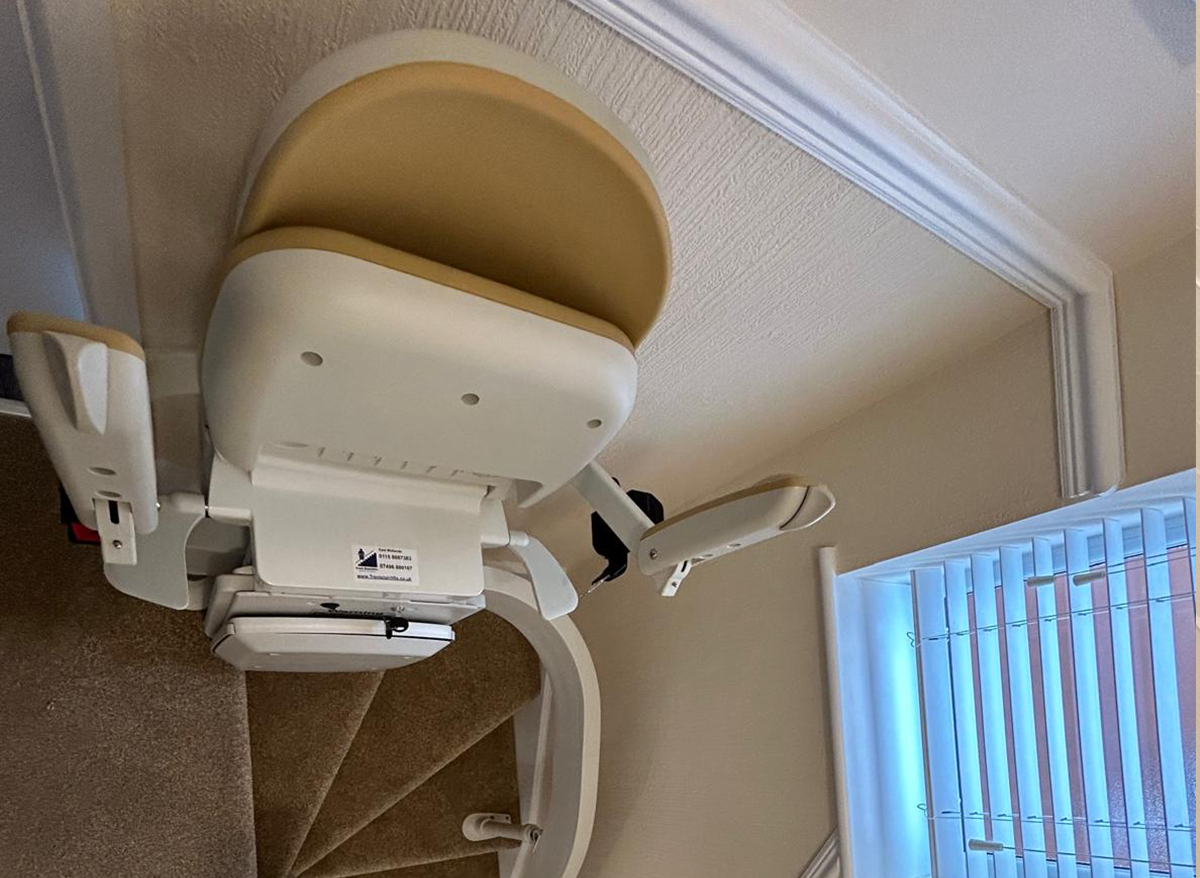
A curved stairlift can travel through surprisingly complicated changes in direction and gradient.
That raises an interesting question: if the track itself is constantly changing angle, how does the chair remain level for the person sitting in it?
Different manufacturers solve this in different ways.
Two of the main approaches are electronic self-levelling systems and mechanical levelling through the carriage and rail design.
Electronic self-levelling systems
Some curved stairlifts use a dedicated levelling motor.
As the stairlift travels, sensors monitor the position of the chair and the system makes continual small adjustments.
The levelling motor moves the chair as required to keep the user sitting in a stable, upright position even as the track changes angle.
Constant adjustments during the journey
These inputs happen continuously.
The user generally doesn’t notice the individual corrections; they simply experience a chair that remains relatively level while travelling around bends and transitions.
It is a clever combination of sensors, electronics and a separate motor.
Mechanical levelling systems
Other curved stairlifts achieve the same result mechanically rather than using an electronic levelling motor.
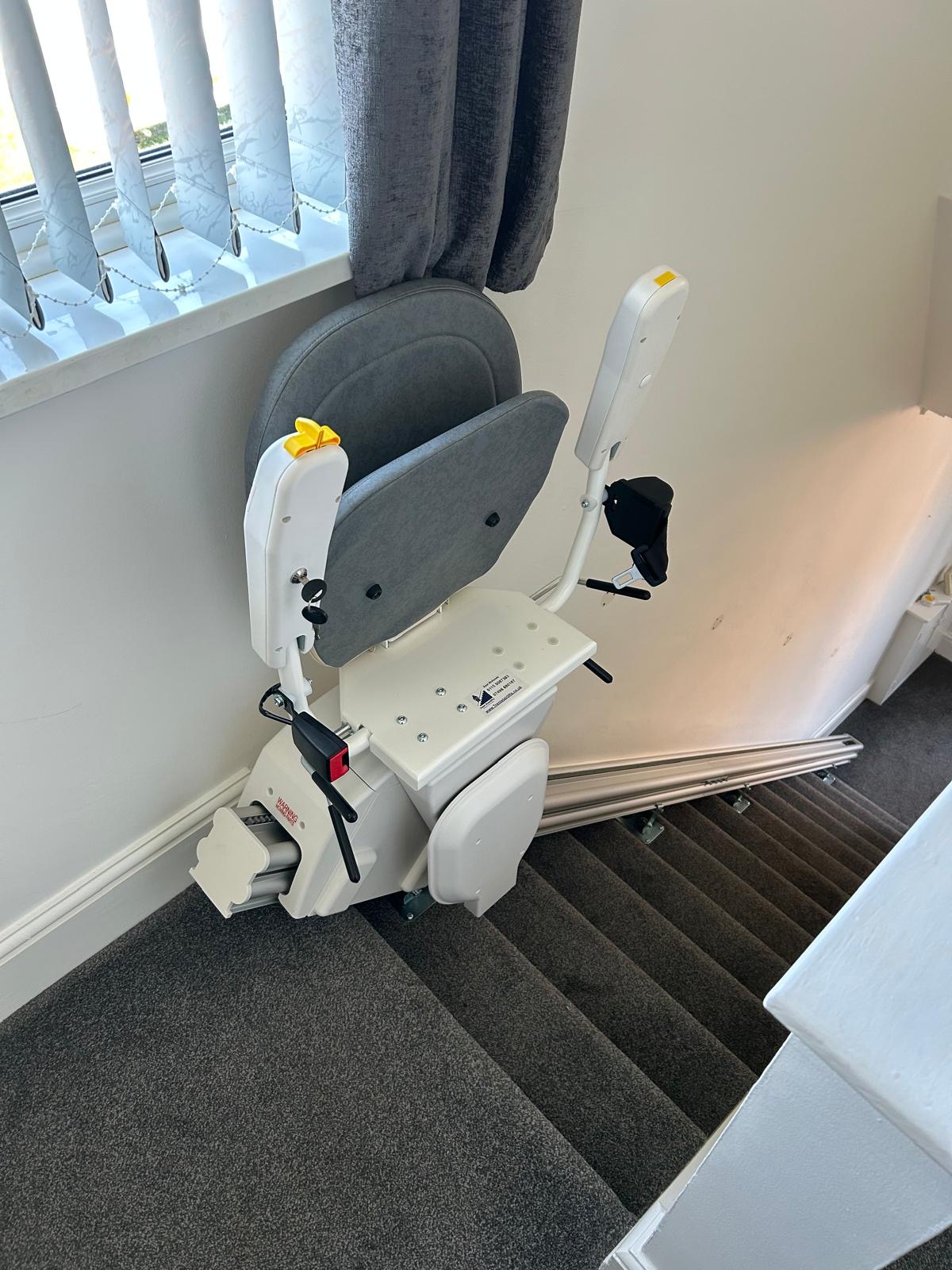
Twin-rail systems can use a bogie or carriage arrangement where the geometry of the rails naturally controls the angle of the chair.
As the carriage follows the track, the engineering of the system keeps the seat level.
The Bespoke Infinity example
The Bespoke Infinity is an example of a twin-rail curved stairlift which uses mechanical engineering to maintain the chair position.
Instead of continually commanding a levelling motor, the relationship between the carriage and twin rails controls the seat orientation.
You can view the Bespoke Infinity curved stairlift here.
Is one method better?
Not necessarily.
Both systems have been engineered specifically to keep the stairlift user comfortable and level.
Electronic systems provide active adjustment, while mechanical systems achieve levelling through the physical track and carriage geometry.
Why correct levelling matters
Without proper levelling, travelling through changing gradients would leave the chair tilting forwards or backwards.
Maintaining the correct seat position keeps the user secure and makes the journey feel smooth and predictable.
Final thoughts
Curved stairlifts use some clever engineering to keep the chair level while the rail itself changes direction and angle.
Some use electronic self-levelling motors, while others use mechanical bogie systems and twin rails.
Both approaches can provide a smooth and stable journey when correctly designed and installed.
If you’re considering a curved stairlift in Nottingham or the East Midlands, Trent Stairlifts can explain the different systems available. Request a free quote here.
Curved stairlift levelling – FAQs
Why does a curved stairlift need levelling?
Because the angle of the track changes as it travels around the staircase.
What is a self-levelling motor?
A motor that continually adjusts the chair position during travel.
Do all curved stairlifts use levelling motors?
No. Some use mechanical levelling systems.
What is a bogie system?
A mechanical carriage arrangement that follows the rails while maintaining the chair’s position.
Do twin-rail lifts stay level mechanically?
Some do, including systems such as the Bespoke Infinity.
Is electronic levelling better than mechanical?
Both are proven approaches with different engineering designs.
post tags :
view related content
Previous Jobs