Manual vs Powered Swivel Seats
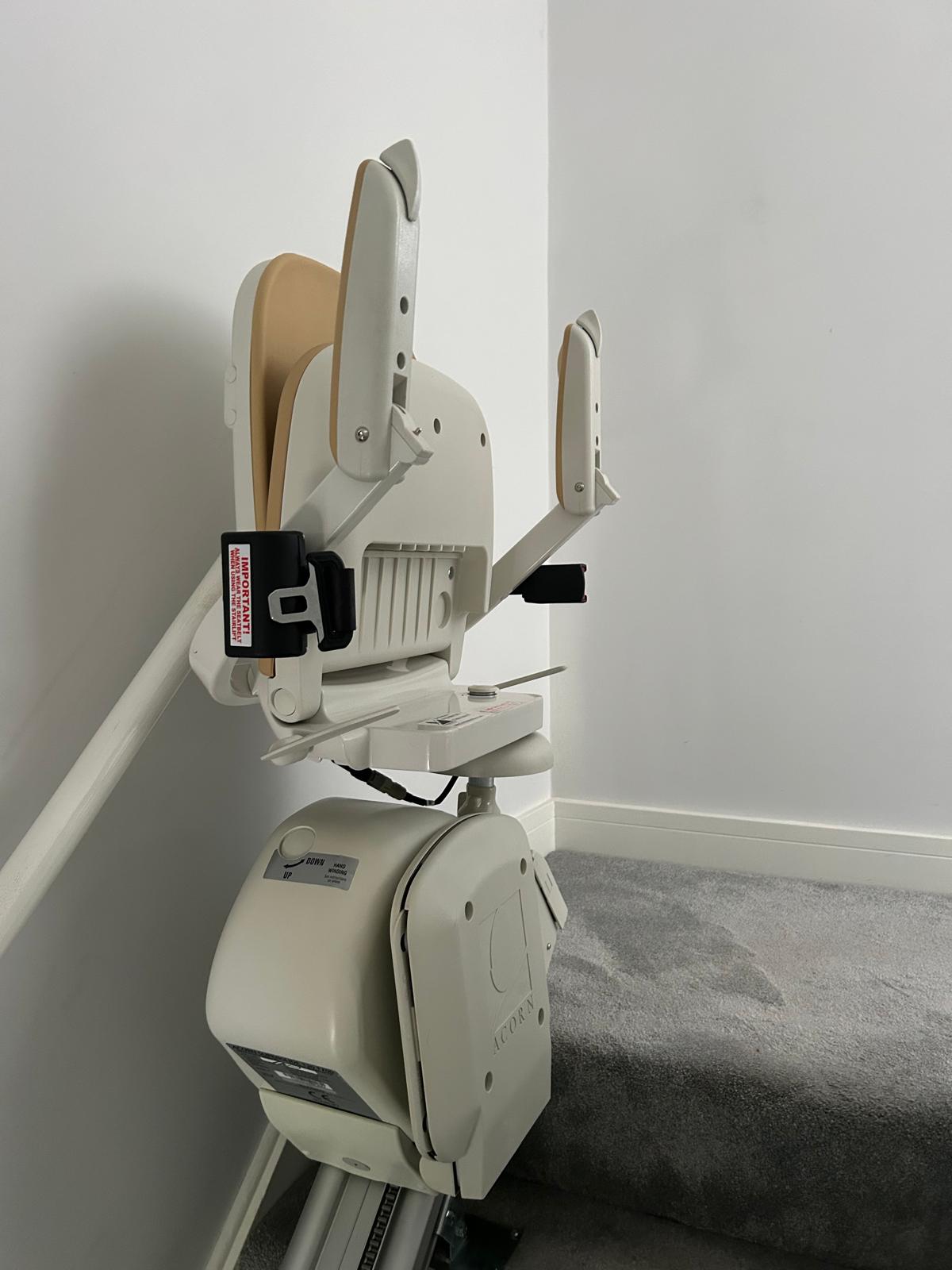
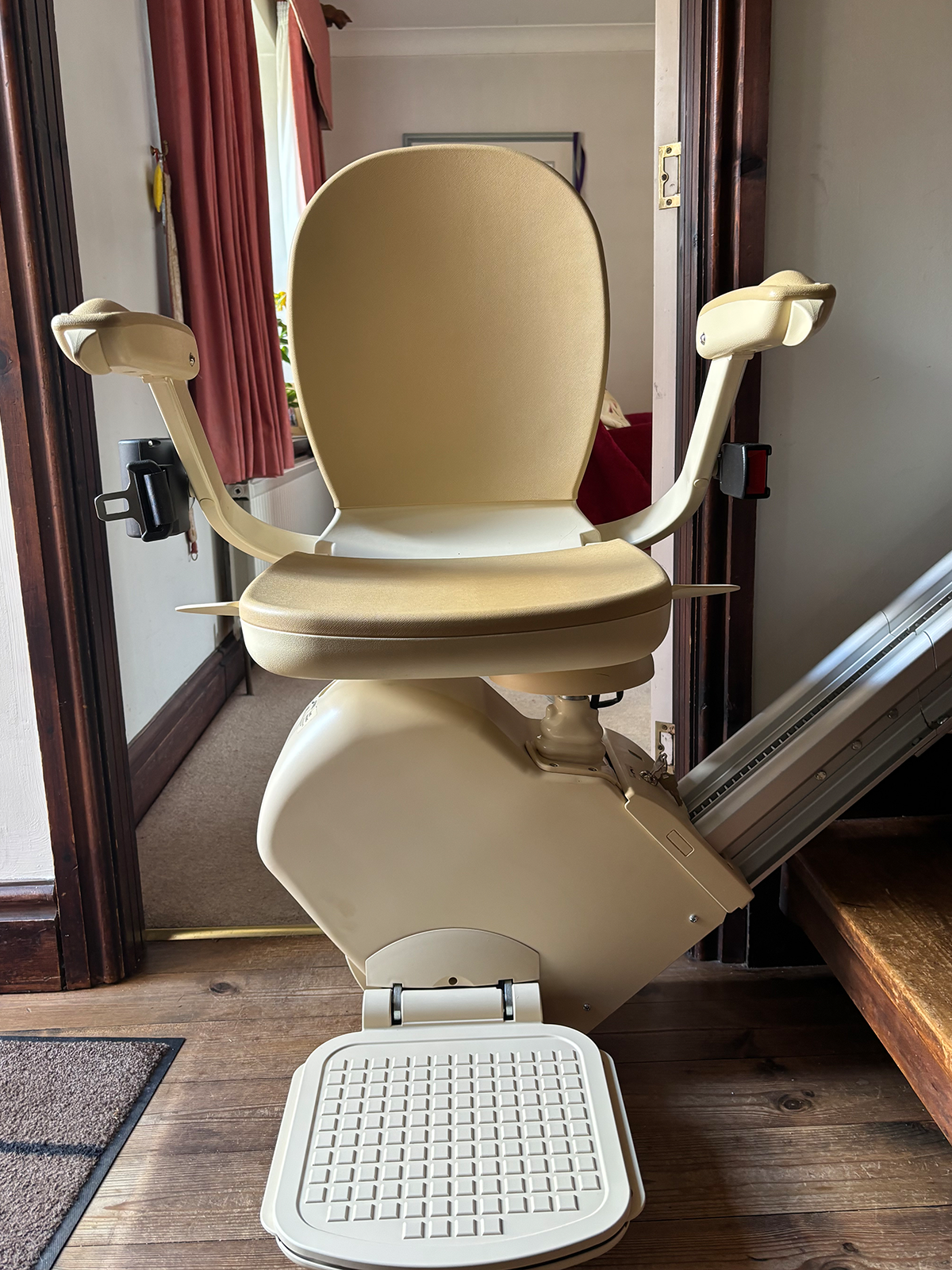
The swivel seat is one of the most useful features on a stairlift, particularly at the top of the stairs.
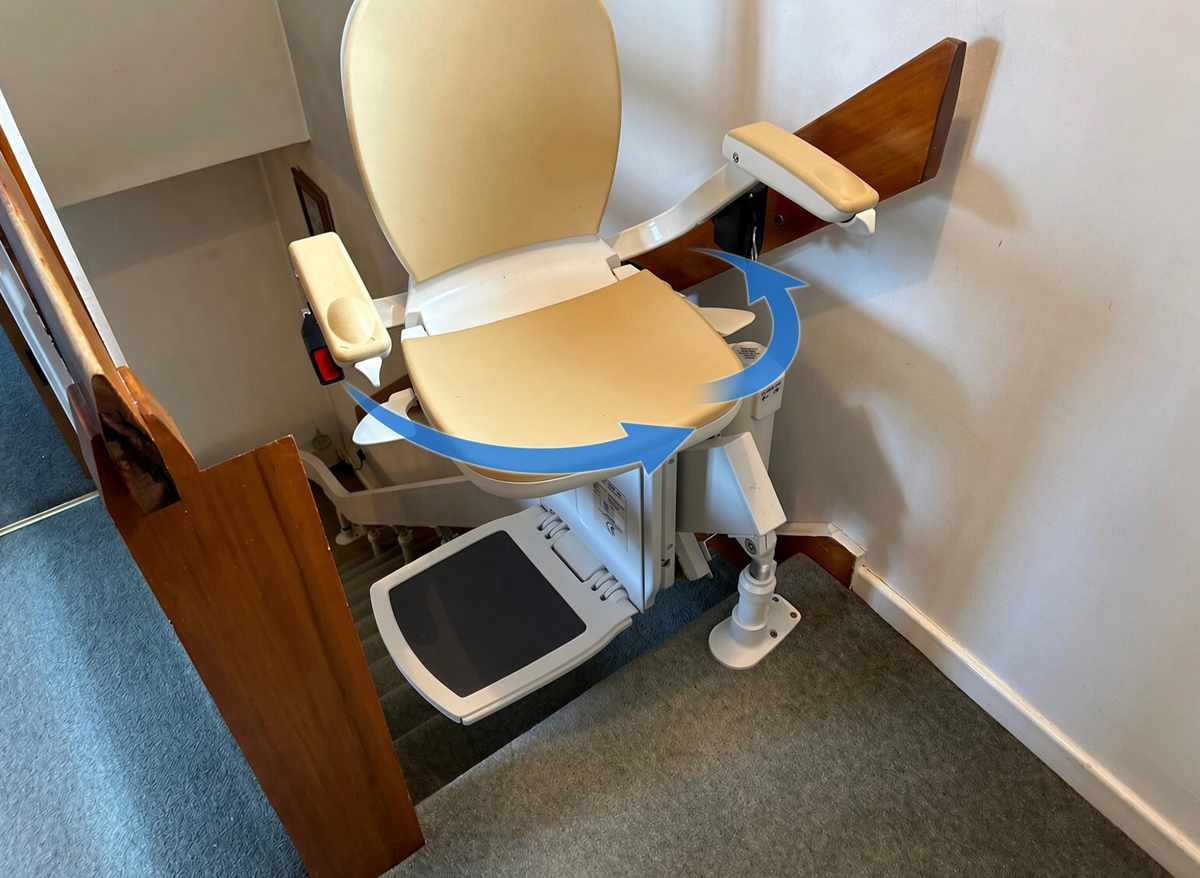
Instead of asking the user to step off the chair while still facing across the staircase, the seat turns towards the landing. This allows the person to get off in a much safer position.
There are two main versions available: manual swivel seats and powered swivel seats.
How a manual swivel seat works
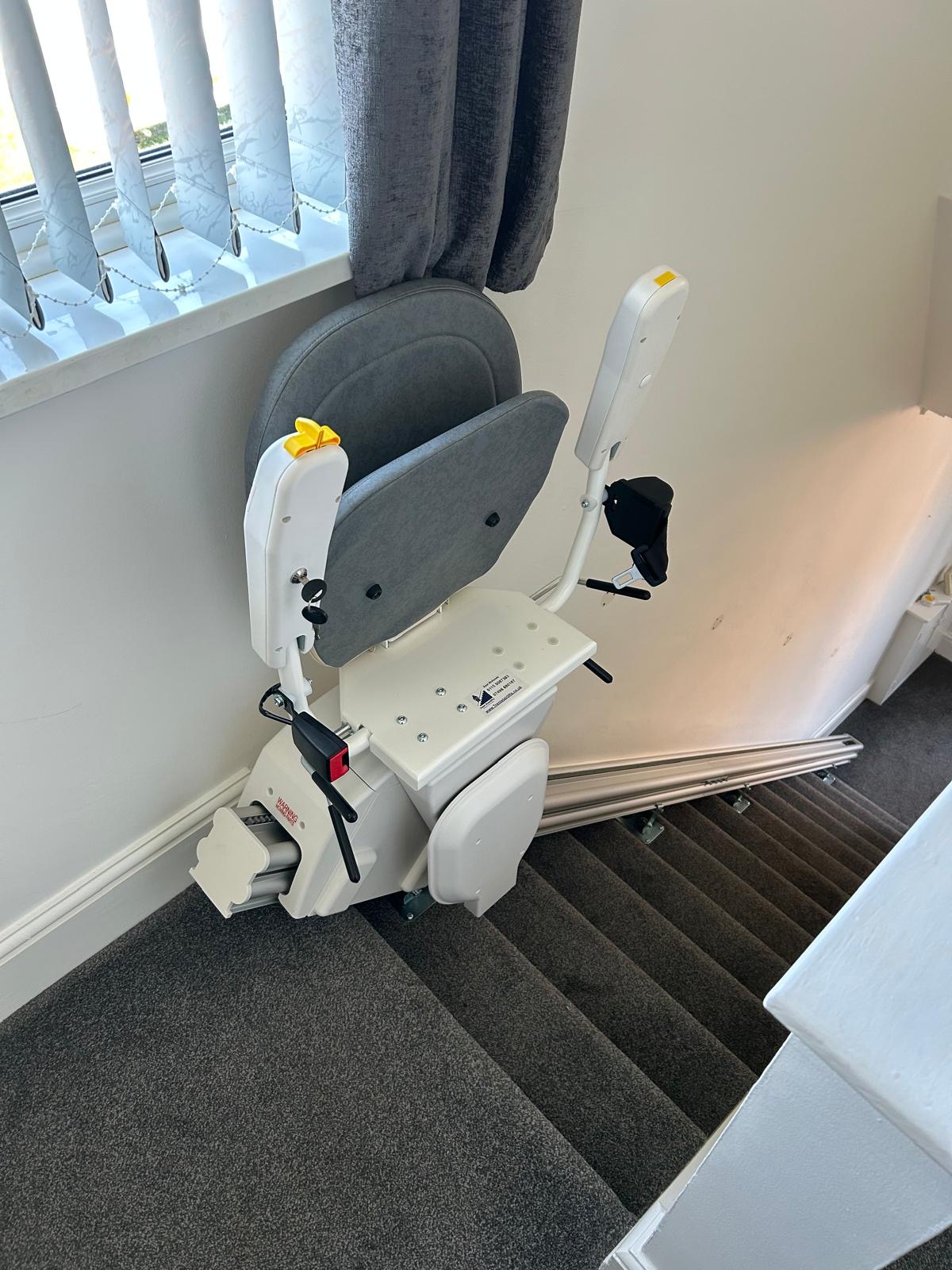
A manual swivel seat is normally operated using a lever positioned beside the chair.
Once the stairlift reaches the top, the user operates the lever and physically turns the seat themselves.
Depending on the stairlift model, there may be one or two locking positions.
A common arrangement is an initial position around 45 degrees and then another position around 85–90 degrees, where the user is more or less facing directly onto the landing.
What is a powered swivel seat?
A powered swivel seat does the same job using an electric motor.
Rather than pulling a lever and physically turning the chair, the mechanism rotates the seat automatically.
On many powered systems, the seat can turn progressively and stop during the movement if required, with the maximum movement generally around 90 degrees.
The exact behaviour does vary between manufacturers.
Who benefits from a powered swivel?
A manual seat works perfectly well for many people.
However, a powered swivel can be particularly useful for somebody with:
- Reduced upper body strength
- Limited movement in their arms or shoulders
- Difficulty twisting
- Poor balance
- Reduced hand strength or dexterity
Removing the need to physically turn the seat can make daily use considerably easier.
Powered swivels can help when two people share a lift
A powered seat can also be useful where two people in the same home regularly use the stairlift.
Some manually swivelled stairlifts cannot be called away from the top if the previous user has left the seat in its turned position.
With suitable powered systems, the seat can automatically return to the travel position before the stairlift moves.
Does every stairlift offer both options?
No.
The exact options depend on the manufacturer and stairlift model.
Some lifts can also be upgraded later, while others need the powered swivel to be specified when the stairlift is originally ordered.
If you know the user would benefit from a powered seat, it’s normally better to discuss it at the beginning.
Which one should you choose?
There isn’t anything wrong with a manual swivel seat. For a user with good mobility and enough strength to operate it comfortably, it is a simple and reliable system.
Powered swivels are about making the process easier.
It’s worth choosing based on the person using the stairlift rather than automatically assuming the more expensive option is necessary.
Final thoughts
Both manual and powered swivel seats allow a stairlift user to safely turn towards the landing at the top.
The difference is mainly how much physical effort is required from the user.
Trent Stairlifts can demonstrate the different options and recommend something suitable for the person actually using the lift. You can view our stairlift range here or request a free quote.
Swivel seat – FAQs
What does a stairlift swivel seat do?
It turns the chair towards the landing so the user can get off away from the staircase.
How far does a manual swivel seat turn?
Many have positions around 45 degrees and approximately 85–90 degrees.
Does a powered swivel turn automatically?
Yes. A motor rotates the seat rather than the user doing it manually.
Is a powered swivel safer?
It can make using the stairlift easier and safer for someone who struggles to turn a manual seat.
Can powered swivels stop part way around?
Many can, although operation depends on the particular model.
Are powered swivel seats standard?
No. They are an optional feature on many stairlifts.
post tags :
view related content
Previous Jobs