A modern stairlift has quite a few safety features, but some of the most useful ones are things the owner may never notice until the stairlift refuses to move.
One example is a safety interlock. In simple terms, it’s a system that prevents the stairlift from travelling unless a particular safety condition has been met.
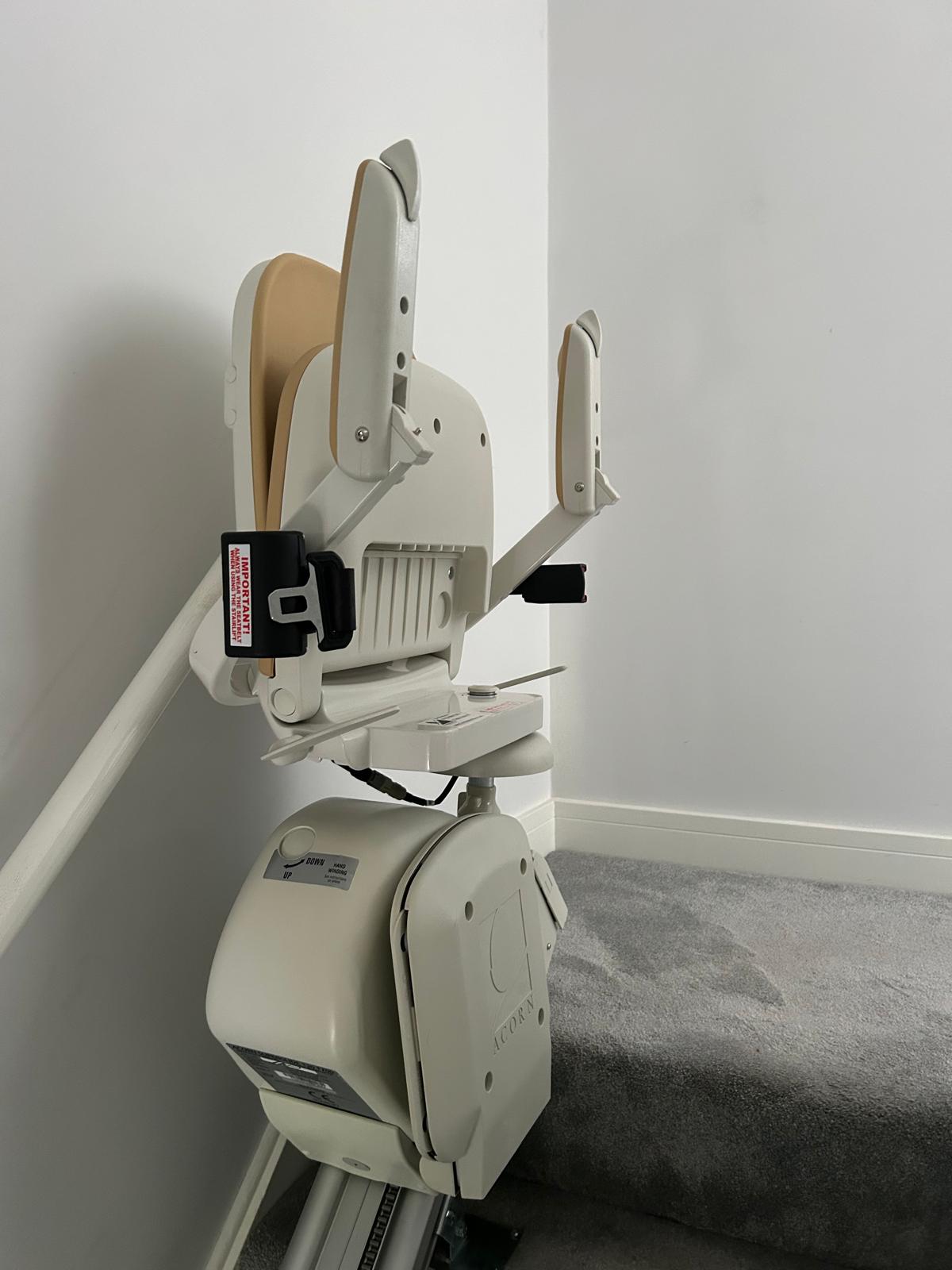
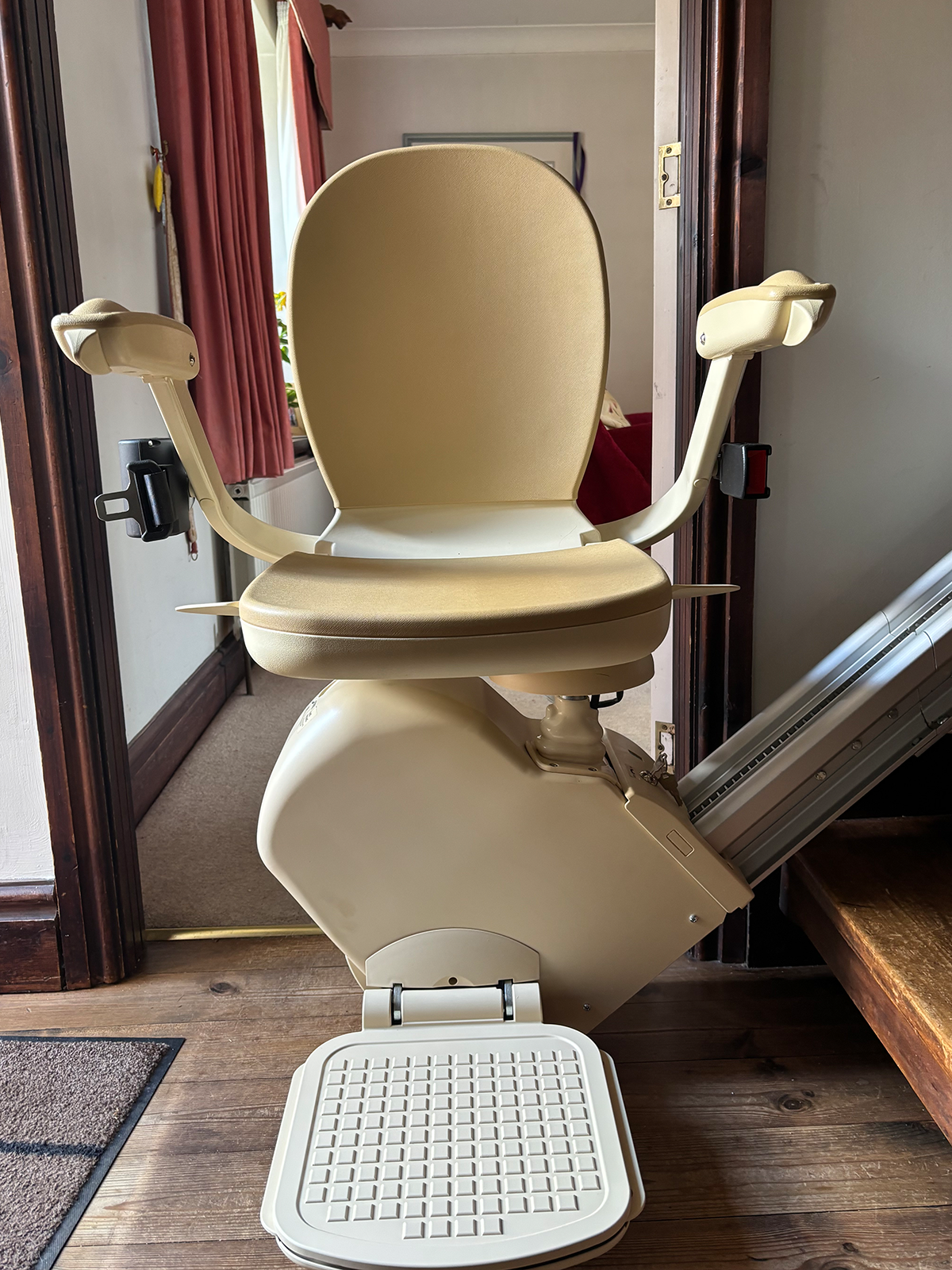
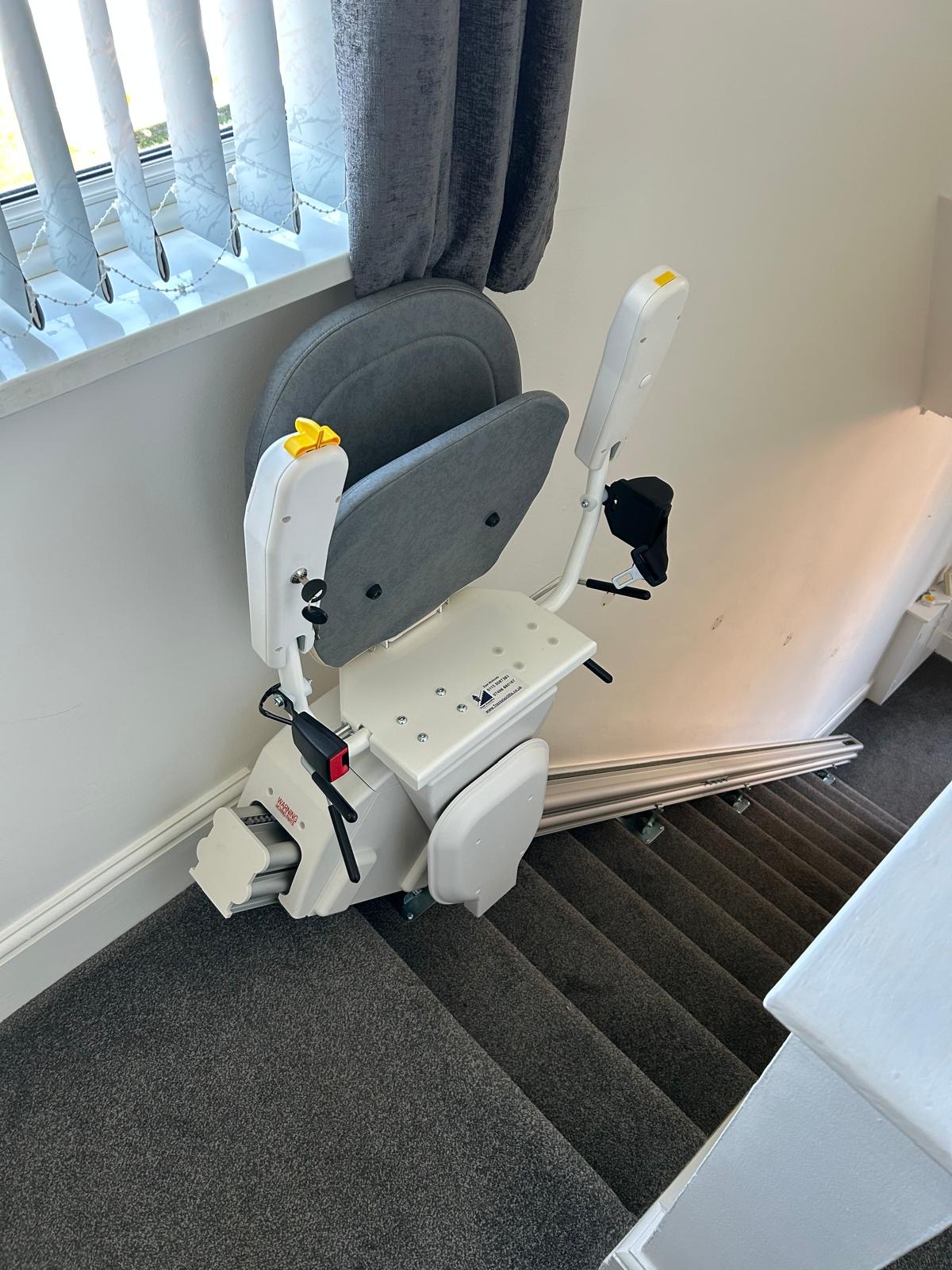
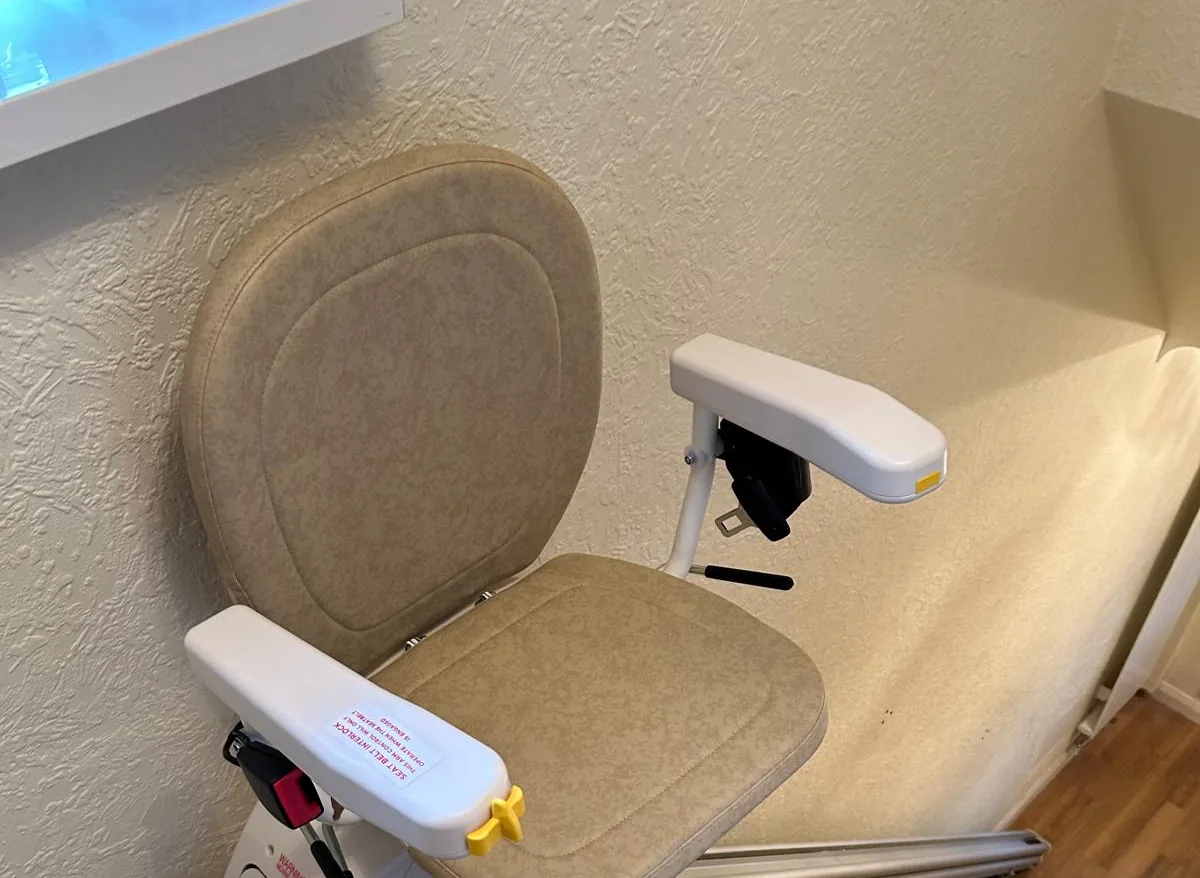
That might mean the seat needs to face the correct direction, an armrest must be lowered or, on a model with a monitored seatbelt, the belt must be fastened.
What does an interlock actually do?
An interlock is normally linked into the stairlift’s control or safety circuit. When the required condition isn’t met, the system prevents the motor from driving the chair along the track.
This isn’t the stairlift being temperamental. It’s the machine checking that something which should be in place has been correctly positioned before movement begins.
Different manufacturers use different switches, sensors and electronic arrangements, so not every stairlift has precisely the same set of interlocks.
The swivel seat is a good example
At the top of the stairs, the seat normally swivels towards the landing so the user can get off safely.
Before the stairlift can travel again, the seat generally has to be returned to its forward-facing travel position and locked securely. If it remains swivelled, the relevant safety interlock can prevent the lift from moving.
This is particularly useful because a chair travelling while turned towards the landing could create a serious clearance and stability problem.
Armrest interlocks
Many stairlifts also monitor the position of one or both armrests.
If an armrest is still raised, the stairlift may refuse to travel until it is lowered into the normal operating position. This helps keep the user correctly seated and prevents moving away before the chair is ready.
Some models have different arrangements, so it’s worth learning which positions matter on your own stairlift.
What about seatbelt interlocks?
Seatbelts are a basic safety feature and should be used on every journey.
On many newer stairlifts, the seatbelt is also monitored electronically. If the belt isn’t fastened, the lift won’t travel. Other models, particularly some older machines, may operate without an electronically monitored buckle.
The specific requirements and implementation depend on the model and applicable safety standards, so it’s best not to assume every stairlift has identical seatbelt circuitry.
Regardless of whether a particular model has a seatbelt interlock, wearing the belt properly is always the recommended practice.
Interlocks and obstruction sensors aren’t quite the same thing
An interlock normally checks whether a required condition is present before movement is allowed, or stops it if the condition changes.
An obstruction sensor is generally designed to stop the stairlift if something contacts a safety edge or another protected area during travel.
Both are part of the wider safety system, but they solve slightly different problems. One checks that the stairlift is ready to move; the other helps it respond to obstacles while travelling.
Why does my stairlift refuse to move?
A safety interlock is one possible explanation when the lift has power but won’t respond to the armrest control.
Before assuming there’s a major fault, check the ordinary user-accessible items described in the manual:
- Is the seat fully facing its travel direction and locked?
- Are the armrests correctly lowered?
- Is the seatbelt fastened where required?
- Is the key or main power switch in the correct position?
- Is anything contacting a safety edge?
If the lift continues to refuse movement, a faulty switch or another problem may need an engineer’s attention.
Can you bypass a safety interlock?
You should never bypass or defeat a stairlift safety interlock simply to make the machine travel.
The system has been included for a reason. Forcing it to run while the seat isn’t locked or an armrest is in the wrong position can create a real risk to the user.
If an interlock seems faulty, arrange a repair rather than tampering with the wiring or removing the switch.
Do these systems need servicing?
Yes. Interlock switches, seat locks and other safety devices are among the components an engineer may inspect during a routine service, following the manufacturer’s procedures.
A sticky seat mechanism or worn switch can sometimes cause intermittent faults, which are much easier to investigate when the engineer knows the exact circumstances in which the lift refuses to move.
Our stairlift repairs and servicing page has more information about getting a lift checked.
Final thoughts
A safety interlock is a simple but important idea: the stairlift should only move when the relevant safety conditions are met.
Swivel-seat locks, armrest positions and monitored seatbelts are all examples of how manufacturers can prevent unsafe operation. They work alongside obstruction sensors, brakes and other protective systems.
If your stairlift in Nottingham or the East Midlands is refusing to move and you can’t identify the reason, Trent Stairlifts can help diagnose it. You can get in touch for a free, no-obligation quote here.
Stairlift safety interlocks – FAQs
What does a stairlift interlock do?
It prevents movement unless a particular safety condition, such as a locked seat position, has been met.
Will a stairlift move with the seat swivelled?
Normally not. Most swivel-seat systems require the chair to lock in its travel position first.
Do stairlifts stop if an armrest is raised?
Many models do, although the exact behaviour depends on the manufacturer.
Do all stairlifts have a seatbelt interlock?
No. Many newer models monitor the buckle, while older models may use a different arrangement. The seatbelt should still be worn.
Is an interlock the same as an obstruction sensor?
Not exactly. An interlock checks a required safety condition; an obstruction sensor responds to something interfering with travel.
Can an engineer repair a faulty interlock?
Yes. A qualified engineer can diagnose switches, seat mechanisms and related control faults.
post tags :
view related content
Previous Jobs