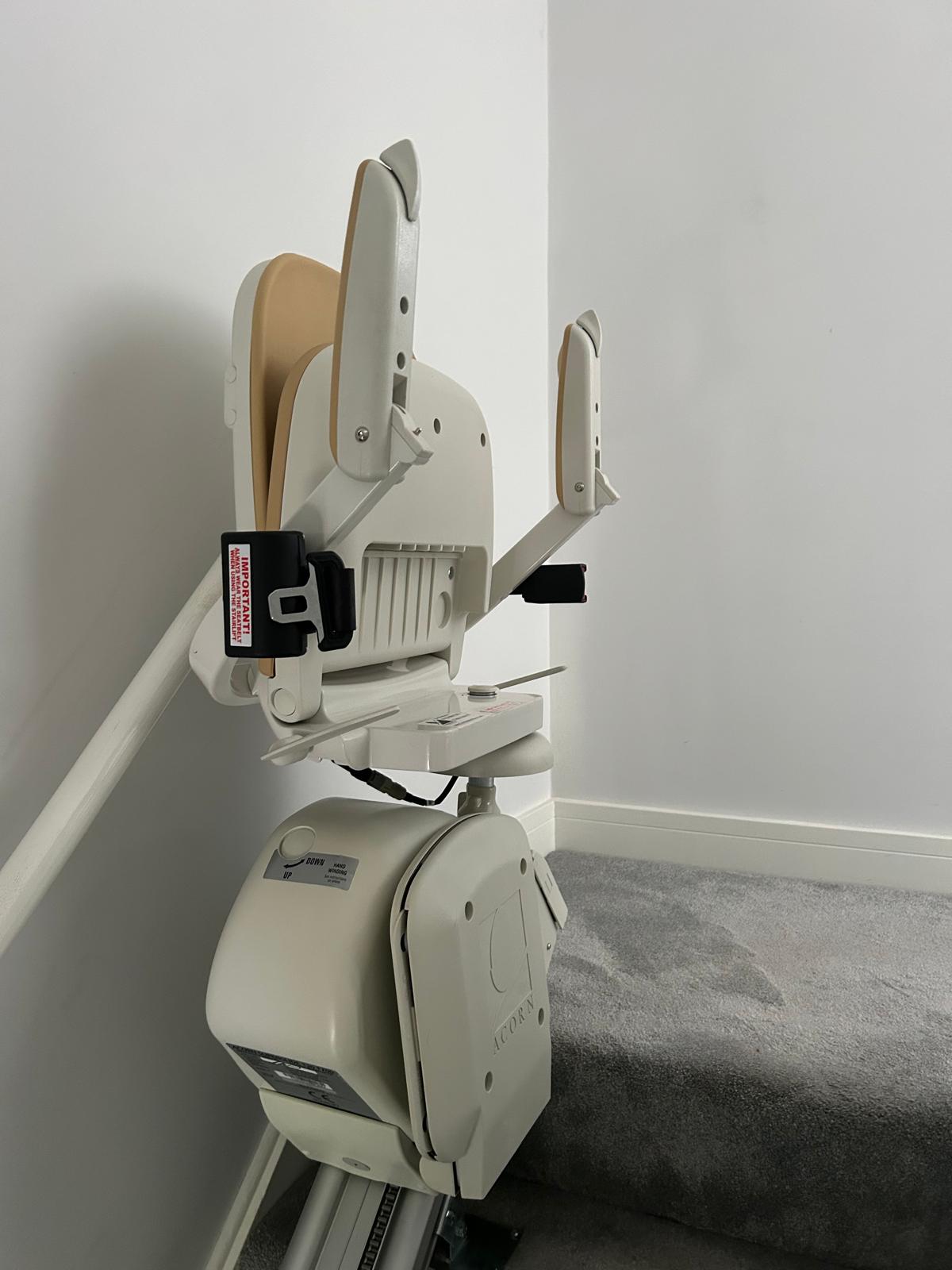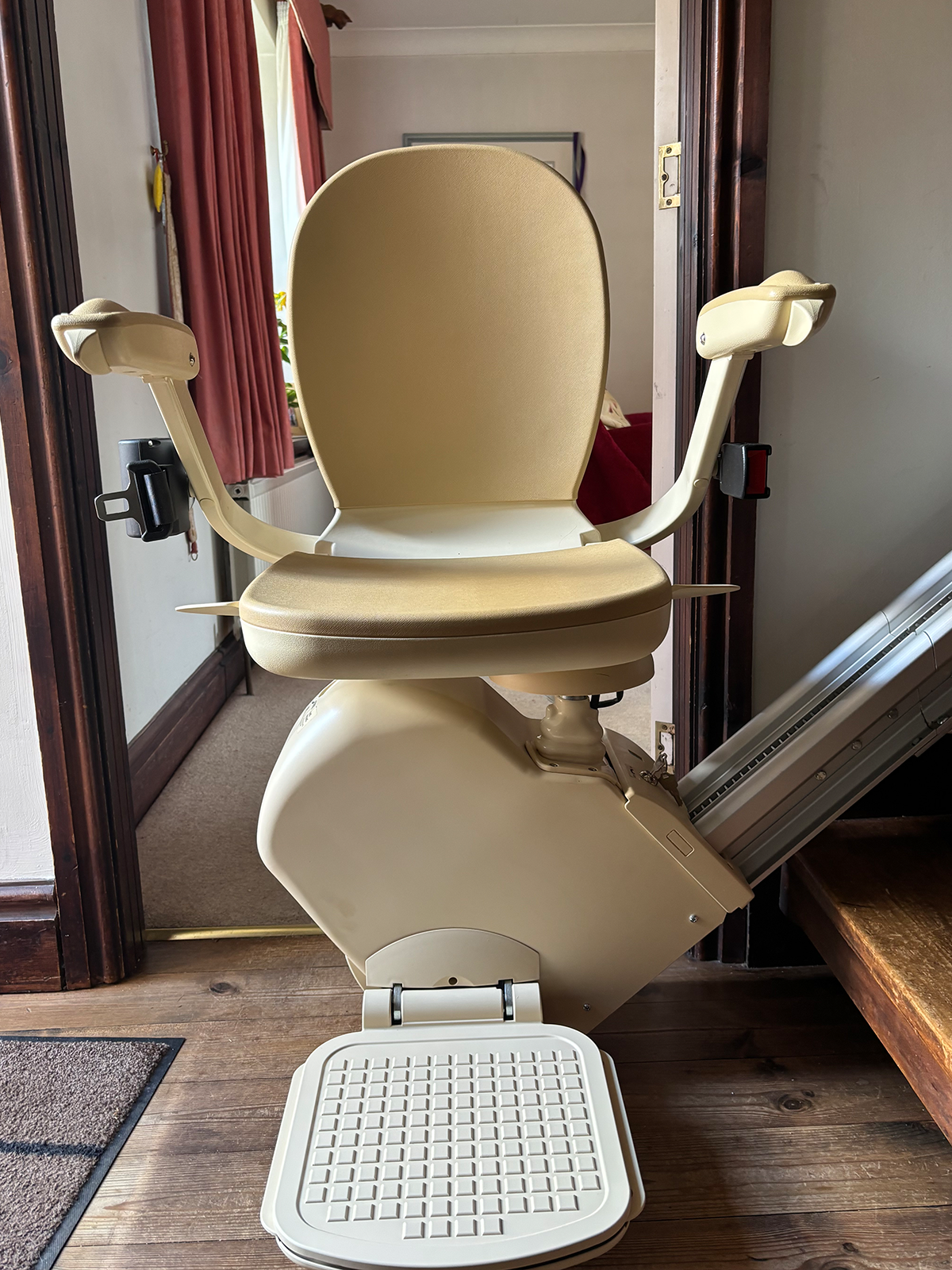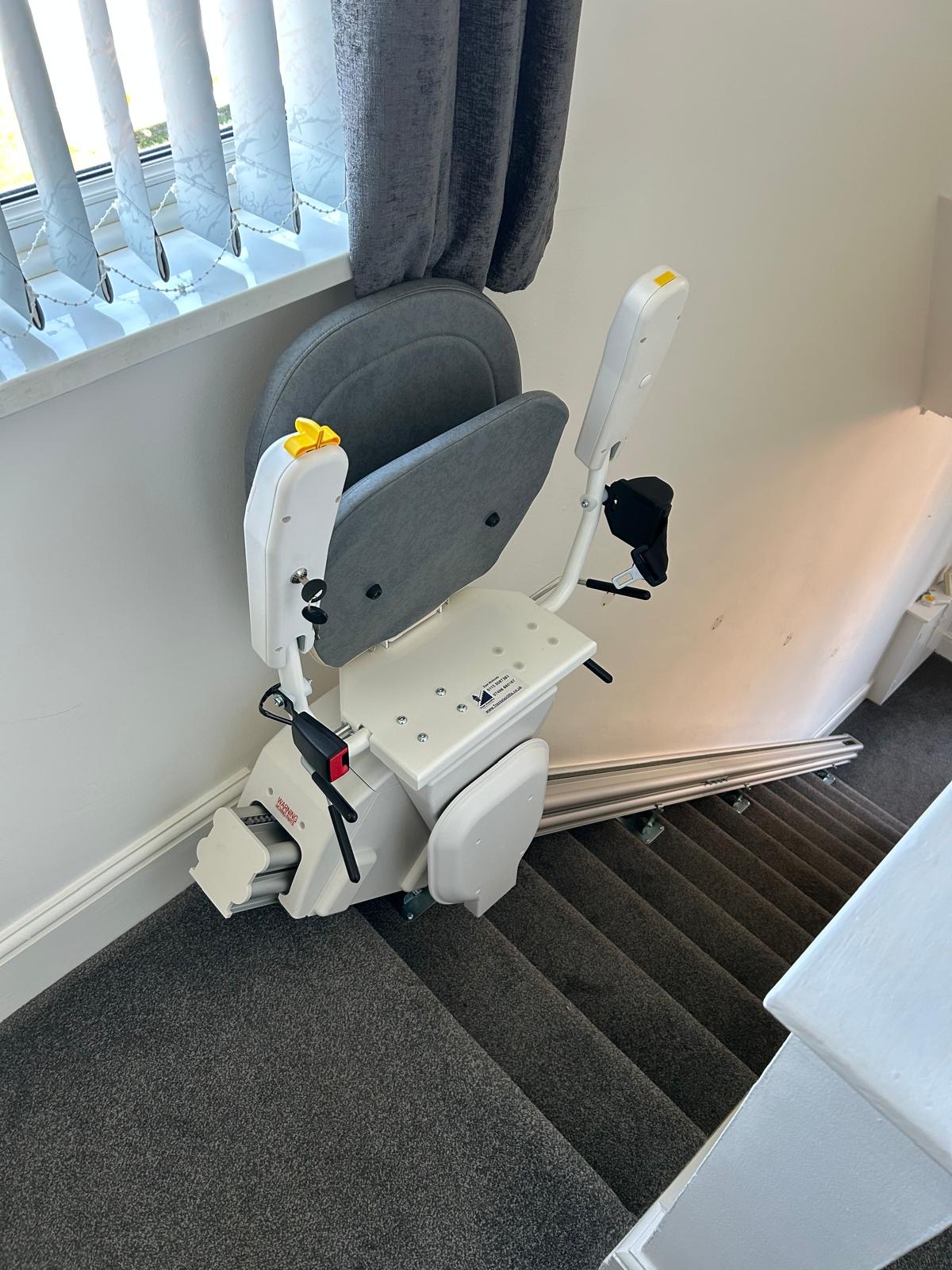
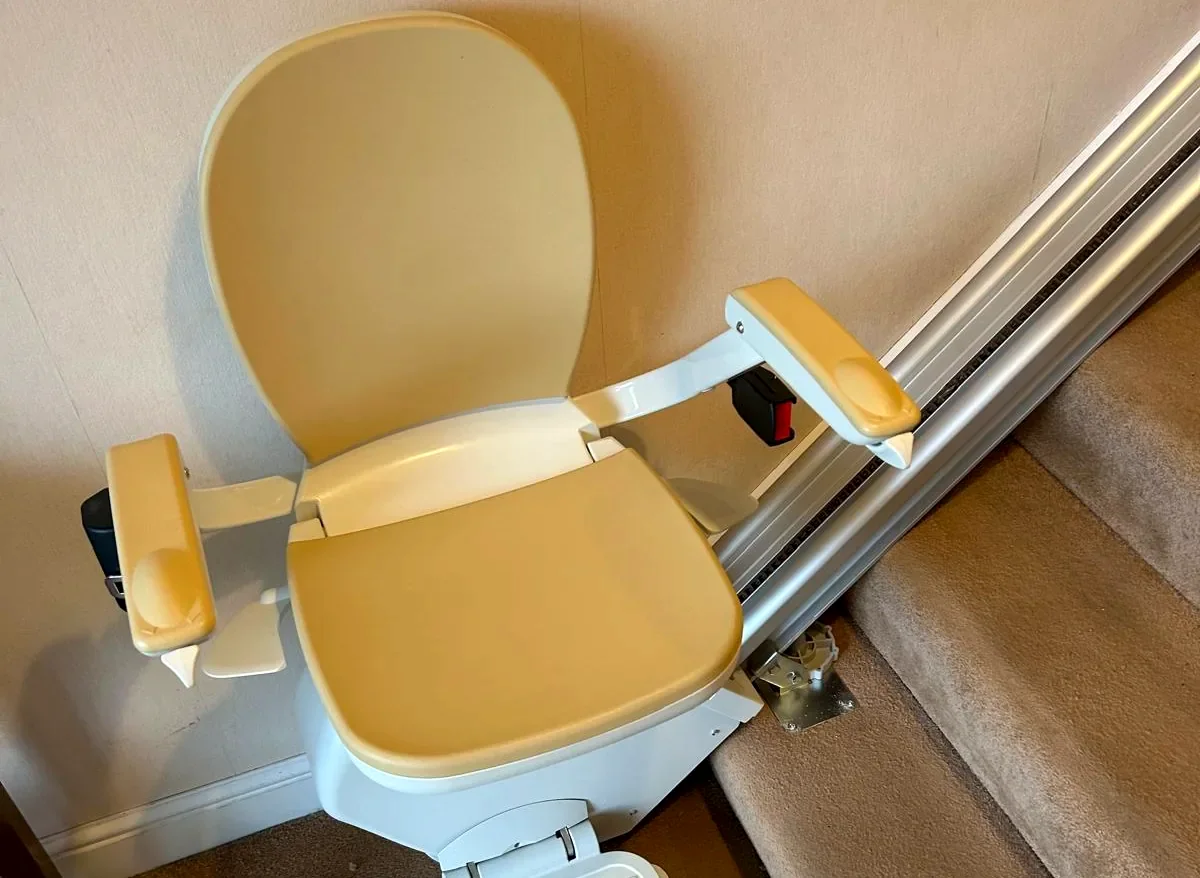
A stairlift shouldn’t feel as though it’s suddenly taking off when you press the control or abruptly slamming to a halt when you reach the landing.
Thankfully, nearly all modern stairlifts are designed to start and stop in a reasonably smooth, controlled way. Some manufacturers go a step further with a more noticeable soft start and soft stop feature.
It’s a useful thing to understand when comparing stairlift models, although it isn’t necessarily a feature you should pay extra for without considering whether the difference really matters to you.
What does soft start actually mean?
Instead of immediately driving the motor at its normal travelling speed, a soft-start system gradually increases the speed over a short period.
The chair begins moving gently, builds up to its normal speed and then continues along the track. For someone who is nervous or has difficulty maintaining a comfortable sitting position, that gradual increase can feel reassuring.
The effect can be subtle. You may only notice it when comparing two different stairlifts side by side.
And what is soft stop?
Soft stop works at the other end of the journey. As the chair approaches its intended stopping position, the control system reduces speed so the lift comes to rest smoothly.
This is different from the normal holding brake, which is there to keep the lift stationary once travel has ended. The soft-stop feature controls the speed reduction before that final stationary position.
Don’t ordinary stairlifts already stop smoothly?
Yes. This is an important point that sometimes gets lost in marketing descriptions.
Even when a stairlift isn’t advertised with a special ‘soft start and stop’ feature, most modern machines already have controlled starting and stopping. They are not designed to jerk the user around during normal operation.
Enhanced soft start/stop can make the ramp-up and ramp-down more gradual, but for many customers the everyday difference compared with a normal modern stairlift will be fairly small.
Does every model offer it the same way?
Enhanced soft start and soft stop features vary between manufacturers and individual models. Different electronics and motor-control strategies mean the exact feeling and behaviour are not identical across every stairlift.
It is worth asking about the actual lift being quoted, rather than assuming every brand or model behaves in the same way.
How does it work?
Modern stairlifts have electronic controllers which manage power to the drive motor. Instead of treating movement as just ‘full power’ or ‘no power’, the controller can vary the motor command as the lift begins moving or prepares to stop.
That controlled change in motor speed is what creates a smoother transition. It doesn’t normally require the user to do anything special. You hold the usual travel control and the stairlift handles the movement.
Does it matter more on curved stairlifts?
Curved stairlifts already need to negotiate bends, changing track angles and sometimes different travelling speeds on sections of the route.
The overall smoothness of the journey depends on the whole design, including the track, carriage, levelling system and motor controller. A curved model with well-designed travel control can feel very smooth whether or not it is sold using the specific words “soft start”.
You can see different curved stairlift options here.
Does soft start make a stairlift safer?
A smooth start can improve comfort and help avoid an unnecessarily abrupt feeling, but it’s important not to confuse that with the main safety equipment.
Seatbelts, obstruction sensors, correct seating position, brakes and other interlocks still perform their own important roles. A lift isn’t automatically unsafe just because it doesn’t have an especially slow motor ramp.
What if my stairlift suddenly starts jerking?
That’s a separate issue. A stairlift that used to travel smoothly but now jerks, bangs or stops harshly may have a battery, drive, sensor or other mechanical problem.
Don’t assume the answer is simply adjusting the soft-start settings. Unexpected movement or a new change in behaviour should be checked by an engineer.
Our repairs and servicing page explains how Trent can help with faults.
Should you choose a stairlift based on this feature?
For most people, it should be one consideration rather than the deciding factor.
The correct staircase fit, user comfort, suitable swivel and footrest options, aftercare and overall reliability are generally more important than a slightly more gradual start or stop.
Final thoughts
Soft start and soft stop describe how some stairlifts gradually increase and decrease their travelling speed. The result is a controlled, gentle beginning and end to the journey.
It’s a nice feature, but most modern stairlifts already move smoothly enough that the difference may not be dramatic for everyday use.
If you’re comparing stairlifts in Nottingham or the East Midlands, Trent Stairlifts can explain the real differences between the models rather than just listing features. You can request a free quote here.
Soft start and stop – FAQs
What is soft start on a stairlift?
It means the chair gradually accelerates rather than immediately travelling at its normal speed.
What is soft stop?
A controlled slowing down as the stairlift approaches its stopping position.
Do all stairlifts have it?
Most modern lifts start and stop smoothly, but enhanced soft start/stop features vary between models.
Which models offer especially gradual starting?
It varies. Ask about the exact model being quoted rather than relying on brand-wide assumptions.
Does soft start replace the normal brake?
No. The normal brake still holds the stairlift in its stationary position.
Does a lift without enhanced soft start feel uncomfortable?
Not necessarily. Standard modern stairlifts are also designed for controlled, comfortable travel.
post tags :
view related content
Previous Jobs