Why Do Some Stairlifts Have Digital Displays?
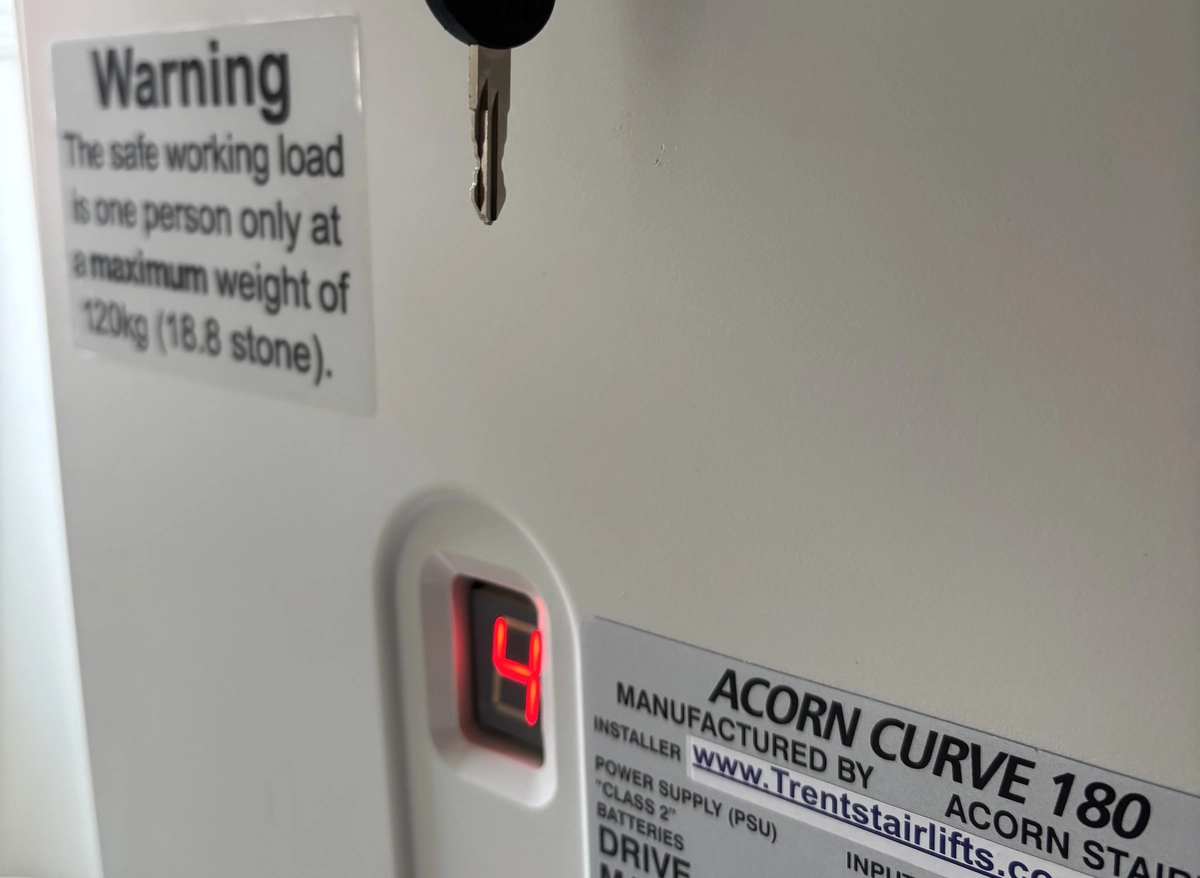
If you look at the side or front of many modern stairlifts, you will notice a small display. Sometimes it shows a letter or number. Other stairlifts have a more detailed screen which can show a message about charging or a fault.
These displays are not there just to make the stairlift look modern. Their main purpose is to communicate information about the machine’s operating condition.
Not every stairlift has one, though, and the type of information you get depends on the make and model.
What does a stairlift display actually do?
A stairlift has a control system that monitors its normal operation and a range of safety conditions.
When the chair is working normally, the display might indicate that it is ready, charging or parked. If it refuses to move, the display may show a fault code or another diagnostic state.
For an engineer, that information can be a useful first clue. It does not automatically identify every mechanical problem, but it can reduce the amount of guesswork involved in an initial diagnosis.
Simple displays use letters and numbers
One common style is a segmented display, such as a seven-segment digit. It uses a small number of illuminated sections to form a digit or a limited set of letters.
Depending on the stairlift, it may show a single character, alternate between two characters or display a sequence that represents a fault or operating mode.
The meaning of a particular code is specific to the model. An “E” or “1” on one stairlift may not mean the same thing on another.
Other lifts use LCD or matrix screens
Some stairlifts have more detailed displays, including LCD or dot-matrix designs, which can show clearer text or several pieces of information.
Instead of a single character, a screen might be able to communicate a charging status, a safety condition or an instruction to the engineer.
For example, Trent’s Bespoke Infinity curved stairlift page describes a backlit diagnostic display. The details of what it shows will still depend on the installed version and its control software.
Why do manufacturers use different displays?
Stairlift designs have developed over many years, and manufacturers have taken different approaches to diagnosing faults.
Some prefer a compact code display built into the carriage, while others use more detailed screens or rely on status lights and engineering test procedures.
The most useful design is not always the largest screen. A simple, reliable display combined with good diagnostic documentation can work very well for an experienced engineer.
Do all stairlifts have a display?
No. Although diagnostic displays are common, some older and certain current or historic models have little or no user-facing digital display.
Examples include models from manufacturers such as Stannah and the former ThyssenKrupp/Access range, where the diagnostic arrangements vary by product and generation.
With some machines, an engineer may need to inspect indicator lights, electrical signals or service information directly rather than reading a convenient fault code from a screen.
Does an error code always mean the stairlift is broken?
Not necessarily. A display can indicate a condition that temporarily prevents the stairlift from travelling, such as a safety switch not being in its correct position.
It can also show charging or battery information, or a genuine electrical or mechanical fault requiring professional attention.
It is important to consult the correct user instructions for the exact model rather than guessing from codes found on another manufacturer’s website.
What should you do if a code appears?
First, note the make and model, and write down the exact code or take a photograph of the display. This can be very helpful when speaking to a service engineer.
Check only the ordinary user-accessible items covered in your owner’s manual, such as whether the seat is properly locked, the key is switched on or the lift is correctly parked at its charging position.
Do not bypass safety switches, open the carriage or attempt repairs based on an internet list of error codes. If the fault remains, arrange a professional inspection.
Can a display prevent a breakdown?
A display itself does not prevent faults, but it can make them easier to recognise before a problem gets worse.
For example, a charging-related indication may lead to an earlier check of the charger or battery condition, rather than waiting until the stairlift stops during use.
Keeping a record of repeat codes can also help an engineer determine whether a fault is occasional or part of a developing issue. You can find out more about stairlift repairs and servicing.
Final thoughts
Digital stairlift displays help communicate operating conditions and fault information. Some show simple letters and numbers, while others use more detailed LCD or matrix screens.
Not all stairlifts have displays, and codes are not interchangeable between different makes or models. The useful thing is recognising what your own machine is trying to tell you.
If your stairlift is showing an unfamiliar code in Nottingham or the wider East Midlands, Trent Stairlifts can help identify the issue. Contact our team for a free, no-obligation quote.
Frequently asked questions
Why is my stairlift showing a number?
It may be an operating status or diagnostic code. Check the manual for the exact make and model.
Is a stairlift fault code the same on every brand?
No. Error codes and their meanings differ across manufacturers and models.
What is a seven-segment display?
It is a compact display formed from illuminated segments that can show numbers and certain letters.
Do all stairlifts have diagnostic screens?
No. Some models use status indicators or require an engineer to check faults without a user-facing screen.
Can I fix my stairlift just by reading the code?
A code may help identify the problem, but many faults require a proper diagnosis and should not be treated as DIY repairs.
Should I photograph a fault code?
Yes. A clear photograph can help the engineer identify the displayed information accurately.
post tags :
view related content
Previous Jobs