Why Does a Stairlift Have a Toothed Rack?
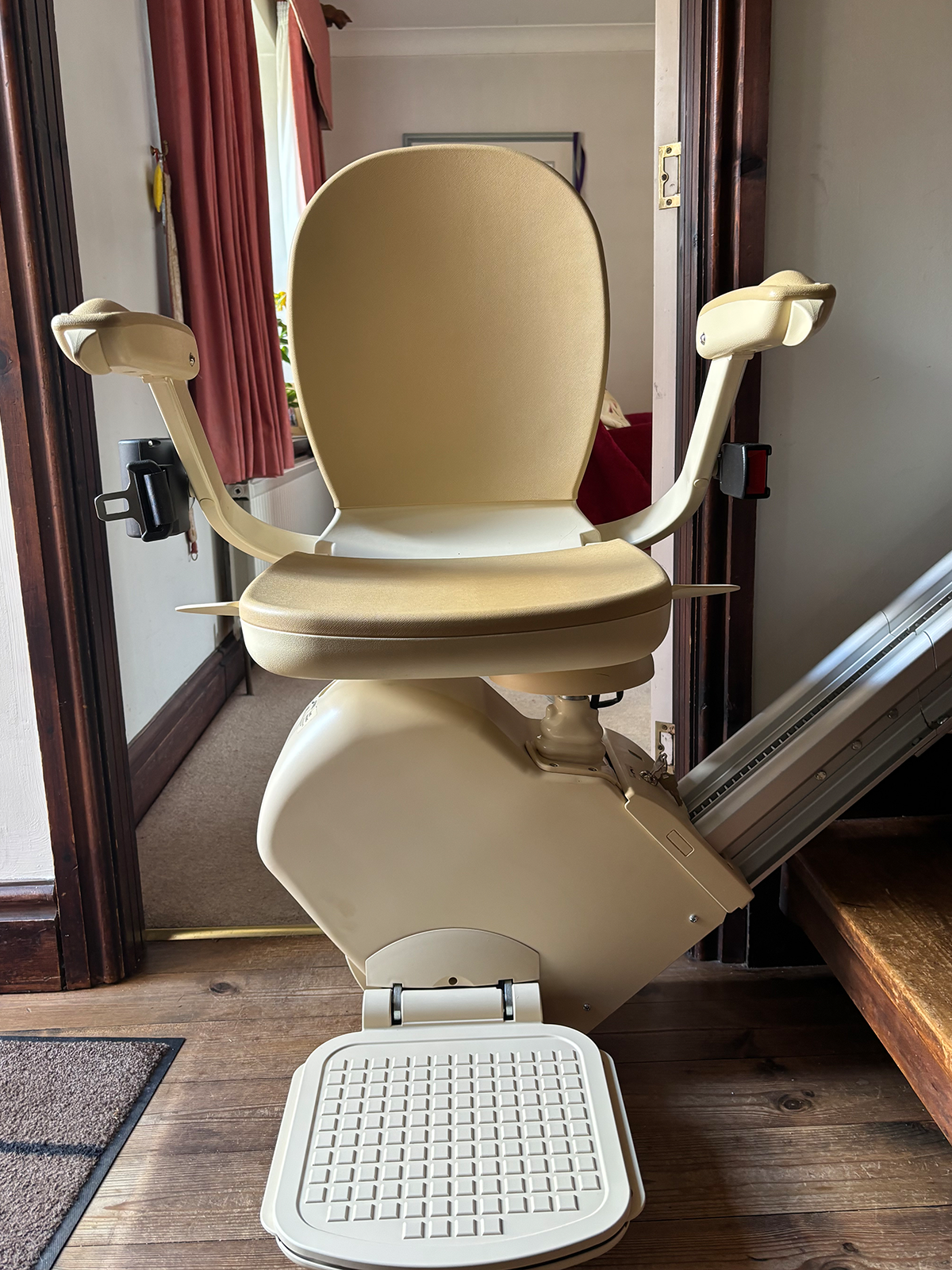
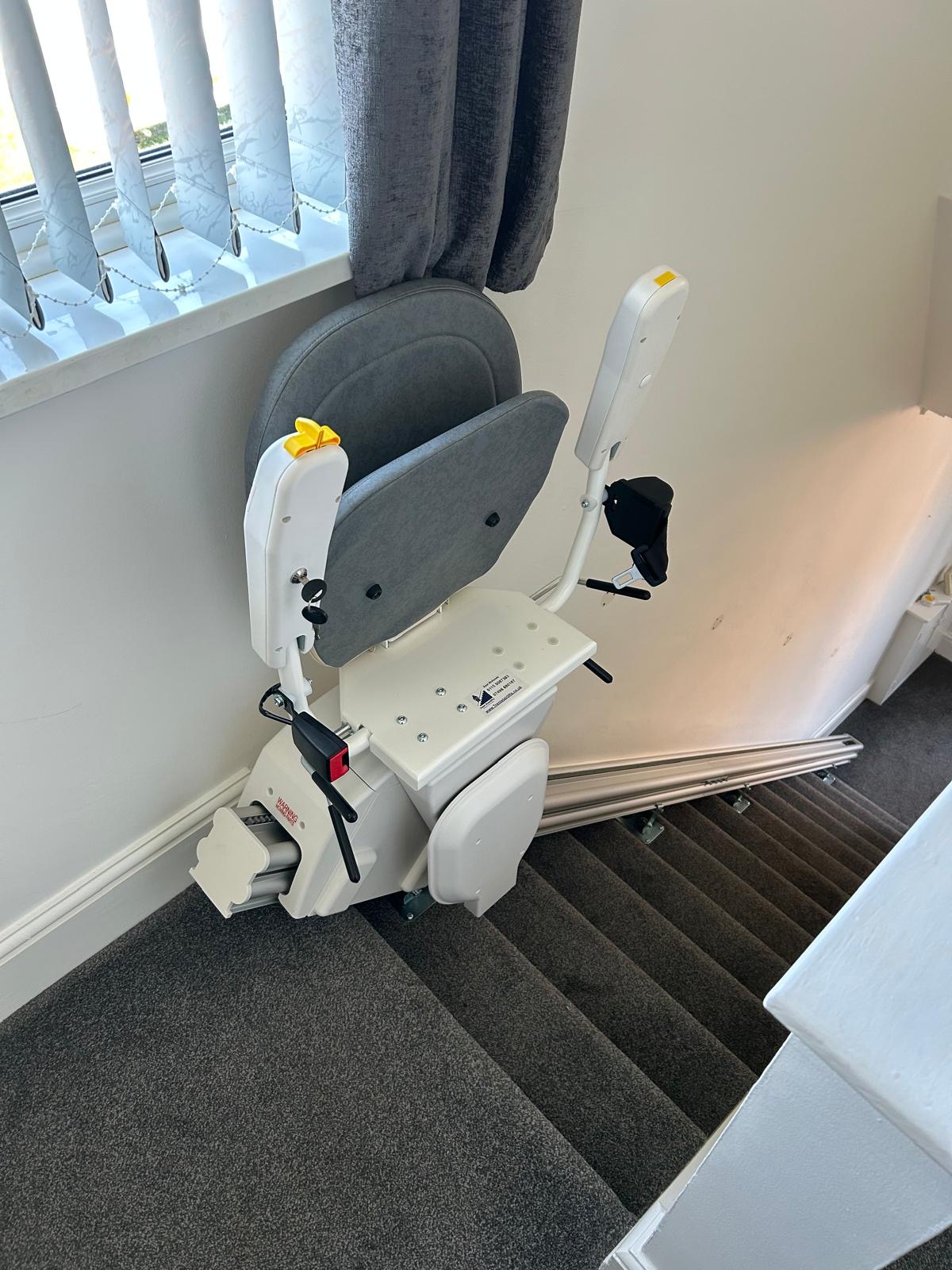
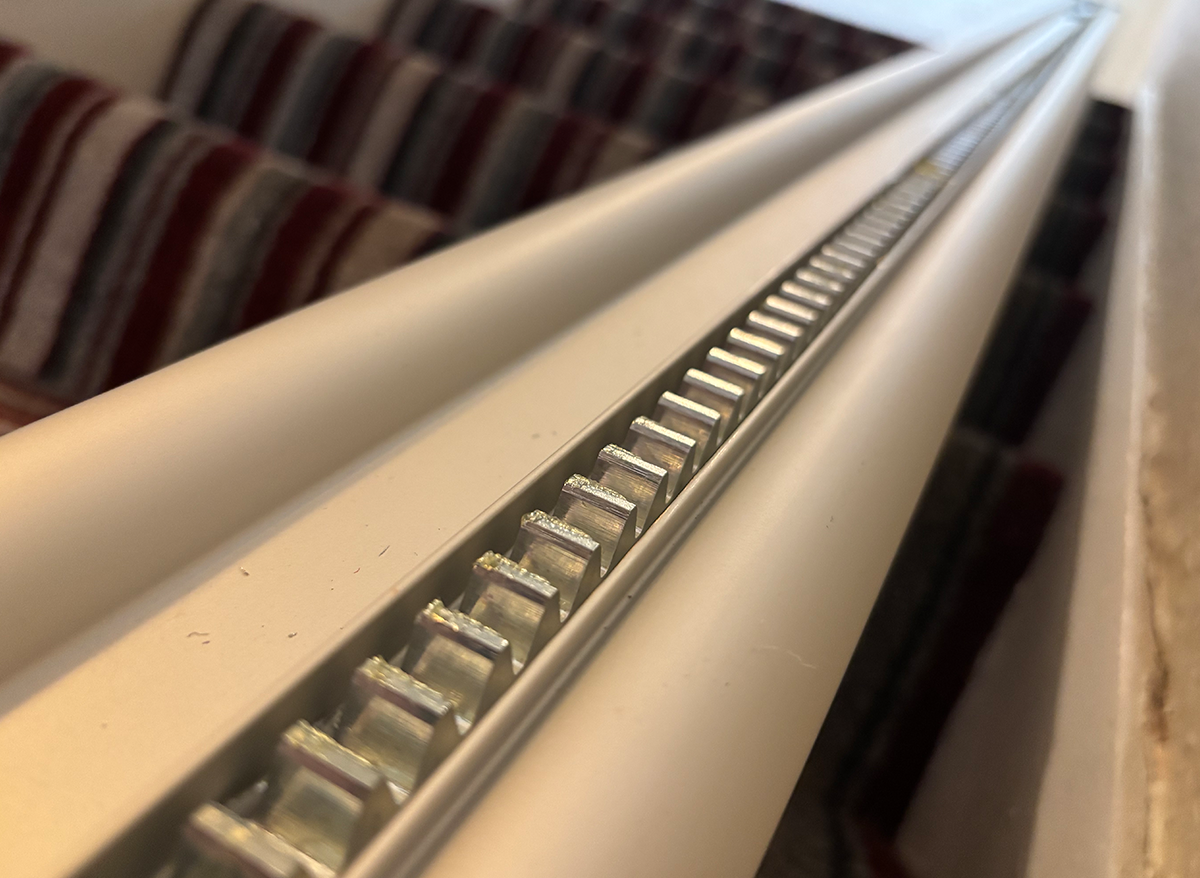
If you look closely at the track on many stairlifts, you’ll notice a long row of teeth running alongside the rail.
At first glance it can look a bit unusual, but this toothed section is actually one of the most important parts of the stairlift’s drive system.
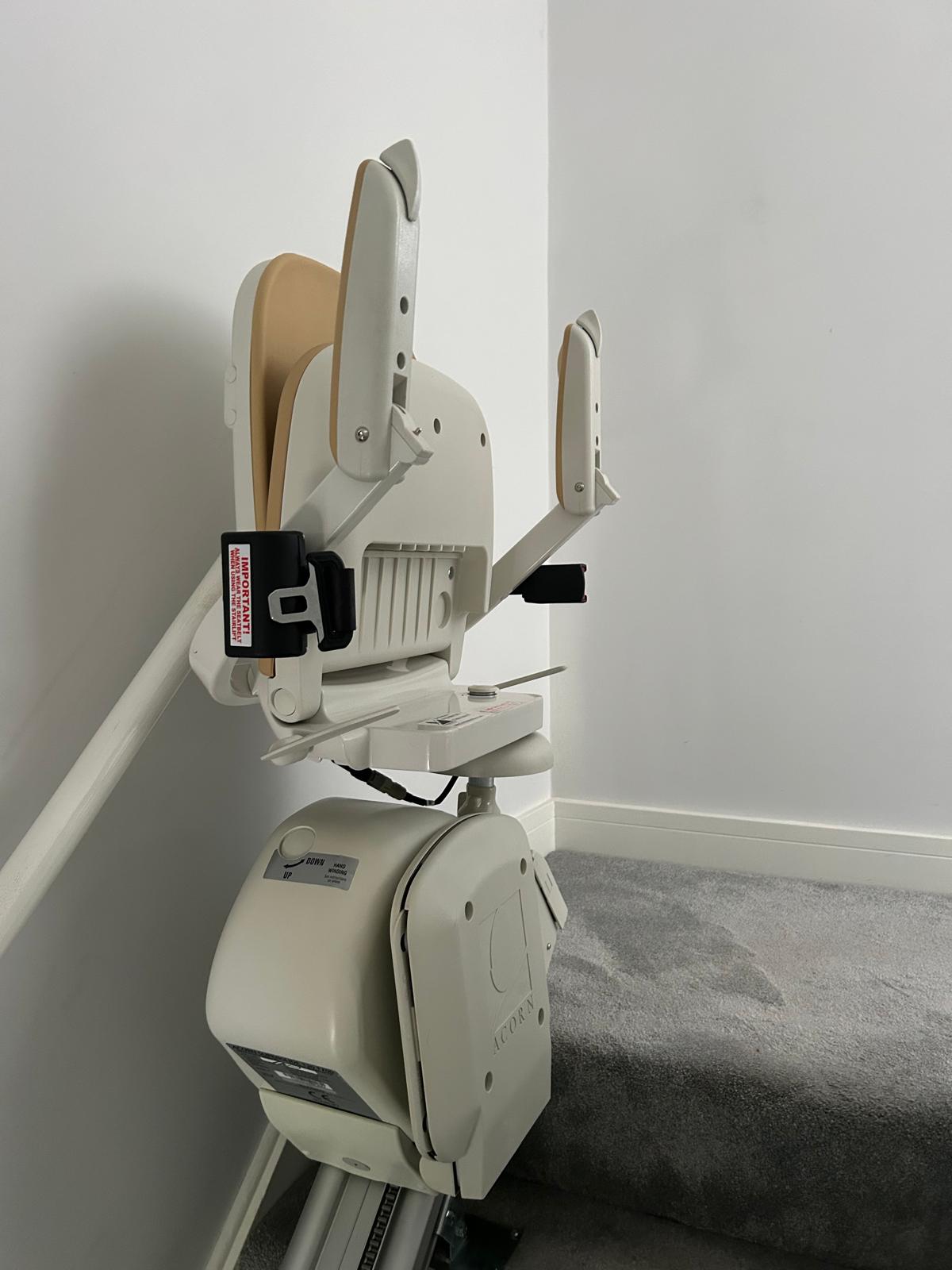
It’s commonly known as the rack or racking, and it works together with a gear inside the stairlift to physically move the chair up and down the stairs.
This type of system is known as a rack and pinion drive, and it’s one of the most common and proven ways of powering a stairlift.
What is the toothed rack on a stairlift?
The toothed strip running along the stairlift track is called the rack.
It contains a continuous series of teeth that run along the route of the rail.
Inside the stairlift carriage is another gear called the pinion.
When the motor turns, the gearbox transfers that power to the pinion gear. The pinion then engages with the teeth of the rack and moves the stairlift along the track.
In simple terms:
- The motor provides the power
- The gearbox controls and transfers that power
- The pinion gear turns
- The pinion engages with the rack
- The stairlift moves along the track
It’s a straightforward mechanical system, but a very effective one.
Why don’t stairlifts simply use wheels?
A stairlift is travelling up a fairly steep incline while carrying both the weight of the chair and the person using it.
Simply relying on friction between ordinary wheels and a smooth rail wouldn’t provide the same positive drive.
The rack and pinion arrangement means the stairlift is mechanically engaged with the track.
As each tooth of the pinion turns, it engages with the matching teeth of the rack and physically moves the lift forward.
This gives the stairlift a predictable and controlled drive system both uphill and downhill.
The motor and gearbox work together
The pinion gear isn’t simply connected directly to a motor running at full speed.
A gearbox sits between the motor and the final drive.
The gearbox reduces the motor speed and provides the torque needed to move the stairlift safely up the staircase.
The output of that gearbox then drives the pinion gear against the rack.
This combination of:
- Electric motor
- Gearbox
- Pinion gear
- Toothed rack
forms the main drive system on many modern stairlifts.
Is rack and pinion reliable?
Yes. It’s a very common and reliable mechanical drive system.
Rack and pinion arrangements are used in many different types of machinery because the design is relatively simple and provides a positive mechanical connection.
On a stairlift, this is especially useful because the lift needs to travel smoothly along a fixed route while climbing an incline.
Provided the stairlift is maintained correctly, the rack and pinion system can continue operating for many years.
Why does the rack sometimes need grease?
Depending on the stairlift manufacturer and model, parts of the rack or drive system may require lubrication.
Correct lubrication helps reduce friction and wear as the pinion repeatedly travels along the teeth.
However, this doesn’t mean you should simply apply grease to any stairlift track yourself.
Different stairlifts have different maintenance requirements, and using the wrong grease or putting lubricant where it shouldn’t be can attract dirt and debris.
It’s better to follow the manufacturer’s instructions or have the stairlift serviced properly.
You can find more information on our stairlift repairs and servicing page.
What happens if debris gets into the rack?
Because the pinion needs to engage cleanly with the teeth, anything caught around the rack can sometimes create unusual noises.
Small pieces of dirt or debris can cause:
- Clicking
- Rough running
- Grinding noises
- Uneven movement
If a stairlift suddenly begins making a new mechanical noise, it’s worth having the track and drive system checked.
Continuing to repeatedly drive the stairlift while something is interfering with the rack may increase wear.
Can the rack wear out?
Like any mechanical component, the rack can wear eventually.
However, this usually happens over a long period and depends on factors such as:
- Age of the stairlift
- Amount of daily use
- Correct servicing
- Condition of the pinion gear
- Whether the system has been properly lubricated where required
On an older stairlift, an engineer may inspect both the rack and pinion when investigating drive noise or excessive movement.
If the teeth become significantly worn, simply replacing another component without considering the condition of the track may not always be the best approach.
Does a curved stairlift use the same system?
Many curved stairlifts also use rack and pinion drive systems.
The main difference is that the rack needs to follow the bends and changes in direction of the curved track.
Whether the stairlift uses a modular curved rail or a track manufactured specifically for the staircase, the same basic principle can still apply: the pinion gear inside the stairlift follows the toothed rack along the route.
You can view the different systems we supply on our curved stairlifts page.
Why is the rack visible?
People sometimes assume the toothed section is an unfinished or exposed mechanical part.
It’s actually supposed to be there.
The pinion gear needs direct access to the rack throughout the journey, which is why the teeth are normally visible along the rail.
The appearance varies between manufacturers, but the basic function remains the same.
Final thoughts
The toothed section on a stairlift track has a very important job.
It forms the rack in the rack-and-pinion drive system, giving the motor and gearbox a positive mechanical way to move the stairlift safely along the rail.
It’s a simple idea that has proven extremely reliable across many different stairlift designs.
If your stairlift is making unusual noises around the track or you’re concerned about wear in the drive system, Trent Stairlifts can inspect it throughout Nottingham and the East Midlands. You can request a free, no-obligation quote here.
Stairlift rack and pinion – FAQs
What is the toothed strip on a stairlift track called?
It is normally called the rack or racking.
What is the pinion?
The pinion is the gear inside the stairlift that engages with the teeth of the rack and moves the lift along the track.
What drives the pinion gear?
The stairlift motor and gearbox provide the power that turns the pinion.
Why use rack and pinion instead of ordinary wheels?
Rack and pinion provides a positive mechanical drive, which is well suited to moving a stairlift safely up and down an incline.
Can the rack wear out?
Yes, although normally over a long period. Age, use and maintenance all affect wear.
Should I grease the stairlift rack myself?
Only where the manufacturer specifies it and with the correct lubricant. If you’re unsure, it’s safer to have the stairlift serviced properly.
post tags :
view related content
Previous Jobs