Using a Stairlift With Limited Grip Strength
Stairlifts are designed to be straightforward to operate, including for many people who find everyday movements more difficult than they once did.
If you have limited grip strength, arthritis or one arm that is weaker than the other, you may wonder whether you will be able to control a stairlift confidently.
In many cases the answer is yes. Most stairlifts do not require a strong grip or much force to operate. The important thing is choosing a control arrangement that suits the person using it and checking that they can hold the travel control safely for the whole journey.
Stairlift controls are usually designed to be easy to press
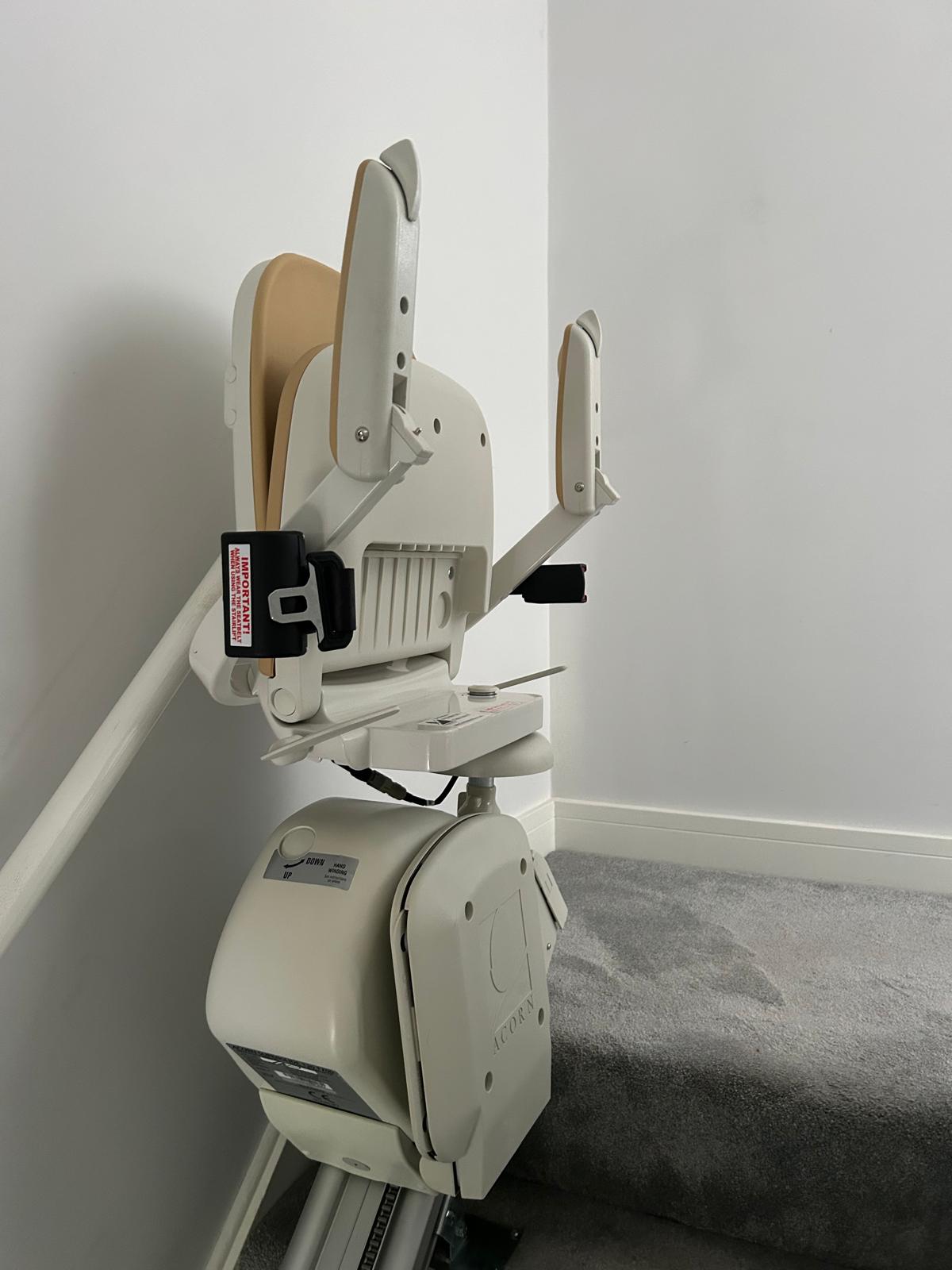
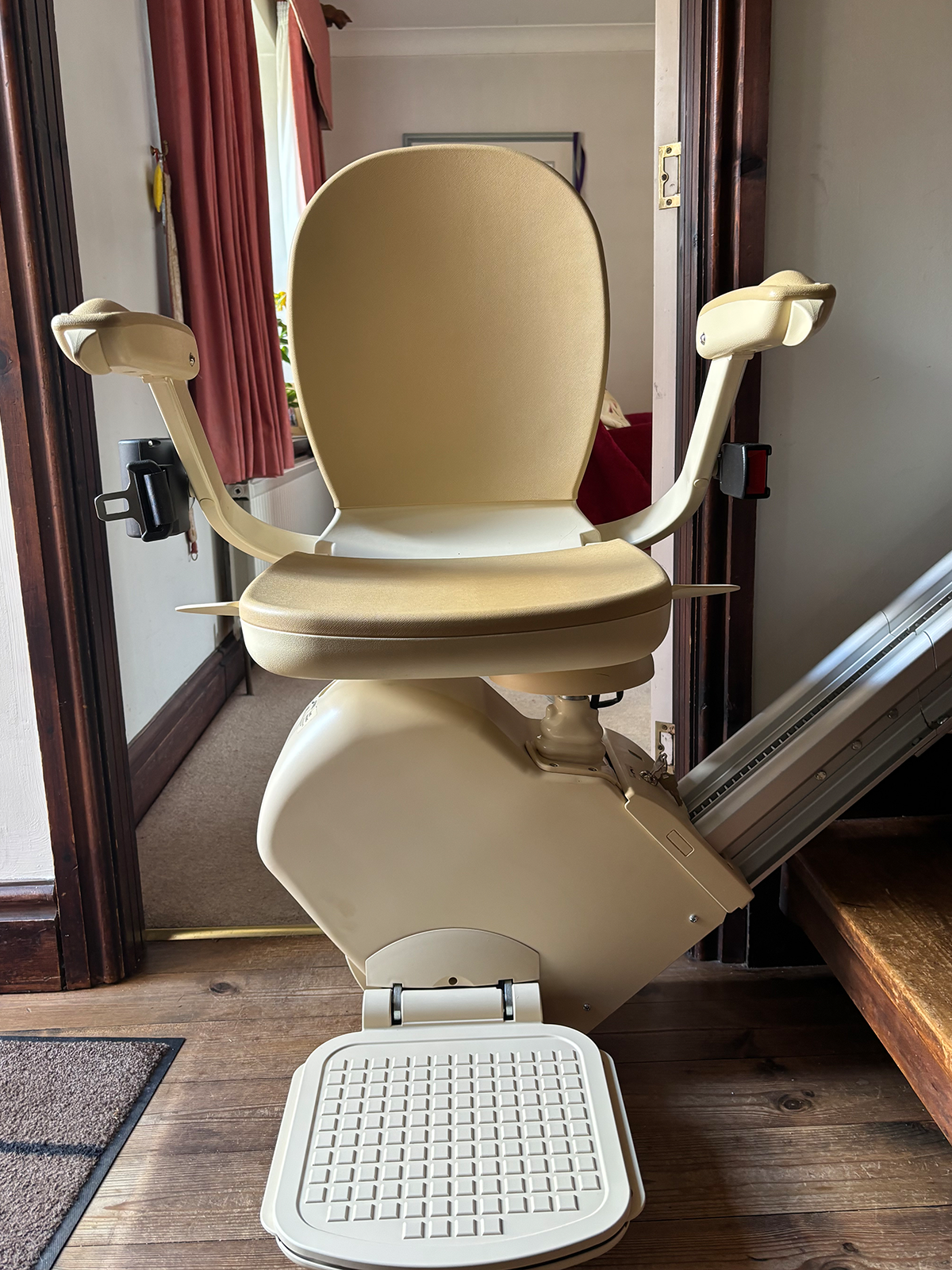
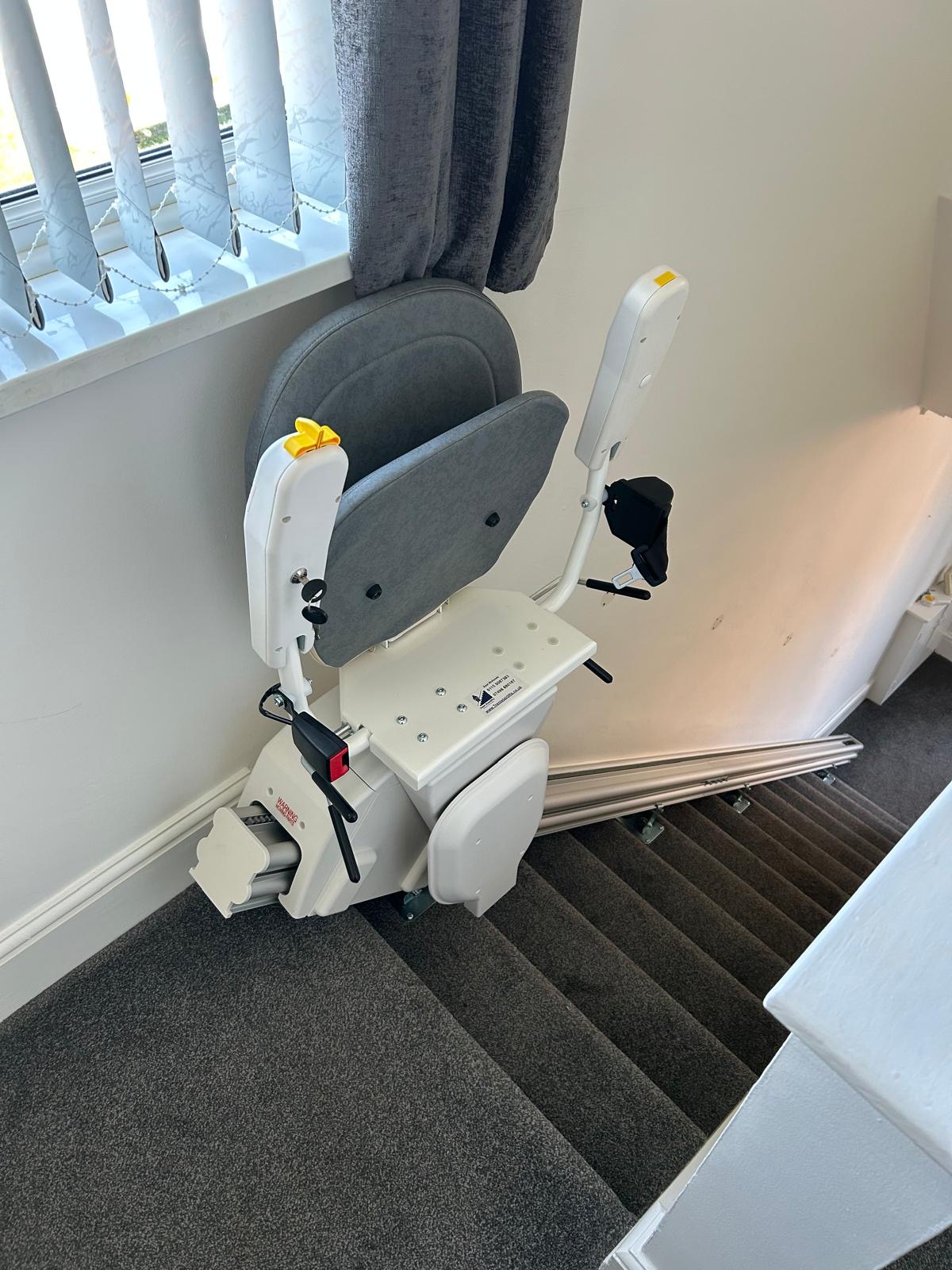
Many modern stairlifts use a small directional toggle, rocker or similar control mounted on an armrest.
The operating force is generally light. You do not need to pull a heavy lever or grip a handle tightly to make the chair move.
However, the exact control design varies by model, and what feels easy to one person may still be awkward for somebody with pain, tremor or restricted finger movement. A practical demonstration is far more useful than assuming any control will suit everybody.
Can the control be operated with either hand?
A number of stairlifts have controls on both arms or offer the option of positioning the main travel control on the preferred side.
If one arm is considerably stronger or more comfortable than the other, using that hand can make a major difference to everyday confidence.
On certain models, an engineer can configure or fit the control on the opposite armrest during installation. This is model-dependent, so it should be discussed before the stairlift is ordered.
You usually need to hold the button throughout the journey
A key point is that most domestic stairlifts use a hold-to-run control. You press or move the control in the direction you want to travel and keep it held while the lift is moving.
When you release it, the stairlift stops. This is an important part of normal operation and should not be bypassed.
A journey can often take roughly 40 seconds to a minute and a half, depending on staircase length, track shape, travel speed and where the lift starts. Somebody with limited hand strength needs to be comfortable operating the control for that period.
A light touch is often enough
For most people, it is not the physical force required to operate the button that causes difficulty. It is keeping a finger or hand in a comfortable position for long enough.
This is why the shape and position of the armrest matter. A well-positioned control lets the user rest their arm rather than keeping it held in an awkward position throughout the journey.
A small change in seating position or the choice of model may be enough to make operation considerably easier.
What if one hand is much weaker than the other?
Where somebody has one stronger hand, a stairlift with the appropriate control layout can often be operated comfortably using that hand.
It is useful to try the travel control while seated in the correct position and with the arm supported.
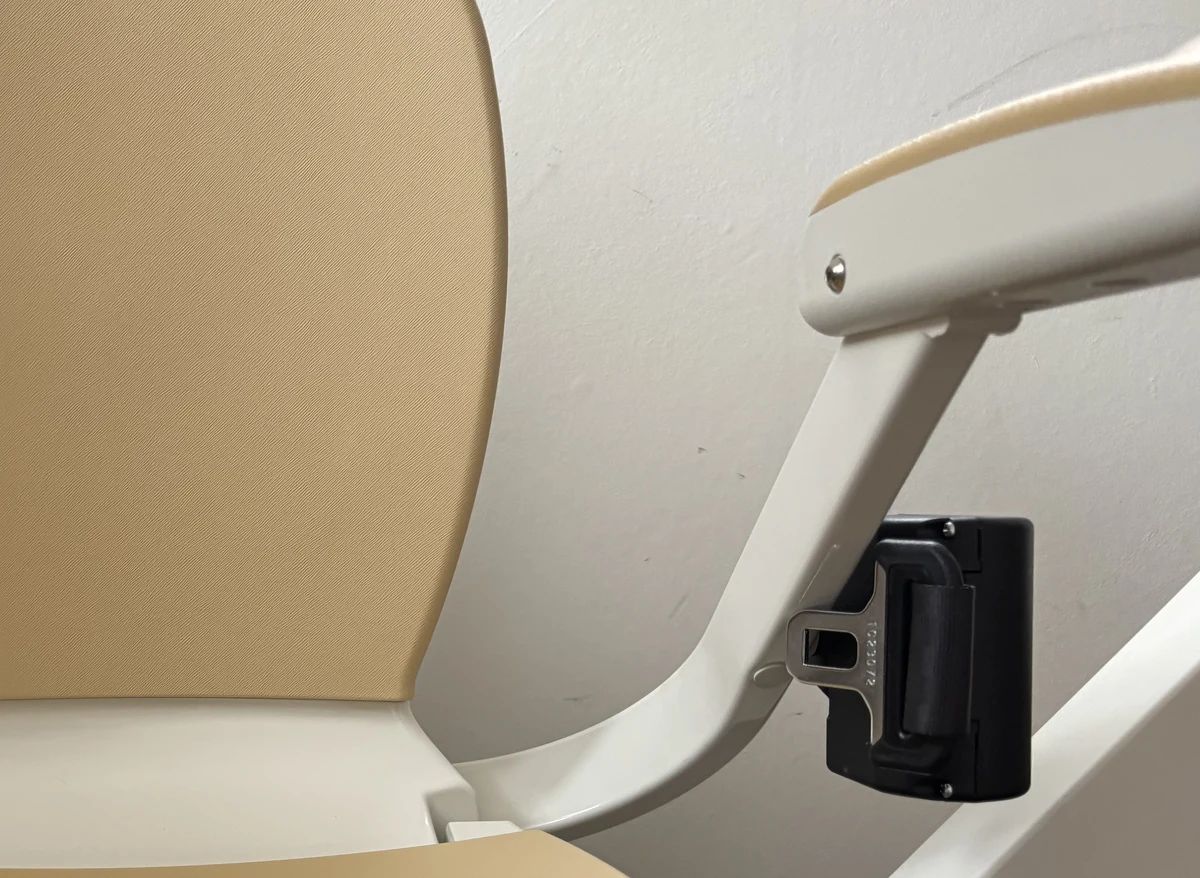
The person should also consider how they will fasten the seatbelt, fold or unfold the armrests and footrest, and operate the swivel seat. These parts of the journey can matter as much as moving the chair itself.
Powered options may reduce the amount of bending or reaching
Certain stairlift models offer powered swivel seats or powered folding footrests. These can reduce the need to bend down, twist or reach awkwardly when preparing for a journey.
They may be helpful where limited hand function is part of a wider mobility difficulty, though they do not eliminate the need to operate the travel control safely.
The suitability of any powered accessory should be considered alongside the user’s balance, transfer ability and overall needs.
What if pressing and holding is not possible?
If the user cannot operate a normal hold-to-run control safely, it is important to say so at the initial survey.
Alternative approved control arrangements may exist for some products, but availability is not universal and the normal safety functions must be preserved.
A properly selected stairlift should match the user’s ability, not force them to adapt to a control they cannot reliably manage. In some situations, advice from an occupational therapist or another mobility professional may be useful.
Try the full journey, not just the button
A few seconds of pressing a control in a showroom does not tell you how it will feel at the end of a longer journey.
When possible, try the seating position, arm support, swivel movement, seatbelt and any folding features as well.
Trent Stairlifts can explain the options available across our stairlift range and discuss the practical needs of the person who will use the lift.
Final thoughts
Many people with limited grip strength can use a stairlift comfortably because the controls generally require very little force.
The more important consideration is whether the person can comfortably maintain the control throughout a journey, and whether the buttons, armrests and other features suit their stronger hand and movement.
If you are looking for a stairlift in Nottingham or the East Midlands for someone with weak hands or reduced dexterity, ask Trent Stairlifts for a free, no-obligation quote and explain the user’s needs during the survey.
Frequently asked questions
Do stairlift buttons need a strong grip?
Usually not. Many models have light-touch toggles or rocker controls that do not need much pressure.
Can I operate a stairlift with one hand?
Often yes, provided you can use the appropriate control safely and manage the other parts of the journey.
Can the controls go on the other armrest?
Some models allow control placement or configuration on the preferred side. This should be confirmed before installation.
Do I have to hold the stairlift button all the way?
Most domestic models require the travel control to be held throughout movement as a safety feature.
How long must I hold the control?
A journey may take around 40–90 seconds, but this depends on the staircase and lift.
Are there stairlifts for people with arthritis?
Many people with arthritis can use stairlifts, but the actual control, seating and transfer requirements should be checked individually.
post tags :
view related content
Previous Jobs